
Affordable Workwear Branding: 7 Budget-Friendly Ways
Branded workwear is one of the most visible investments a small business can make, yet most owners overpay by 30 to 50 percent simply because they do not know where the real savings are. Affordable workwear branding is not about cutting corners on quality. It is about making smarter decisions at every stage, from garment selection to print method to order quantity. According to Statista, the global corporate clothing market is valued at over £30 billion, and small businesses that present a consistent visual identity report significantly higher customer trust scores. This guide gives you seven practical, tested ways to get professional results without blowing your budget.
Table of Contents
- Quick Takeaways
- Why DTF Printing Is the Most Cost-Effective Method for Small Orders
- Choose the Right Garment Before You Think About the Print
- Order Smart, Not Big: How Quantity Tiers Actually Work
- Simplify Your Design Without Sacrificing Brand Impact
- Bundle Your Garment Types to Reduce Per-Unit Cost
- Comparing Budget Workwear Branding Approaches
- Avoid the Hidden Costs That Kill Your Workwear Budget
- Plan for Reorders From Day One
- Frequently Asked Questions
- References
Quick Takeaways
| Key Insight | Explanation |
|---|---|
| DTF printing beats screen printing for small runs | Direct to Film has no setup costs per colour, making it far cheaper for orders under 50 units with full-colour logos. |
| Garment choice drives total cost more than print method | Choosing a mid-weight 250gsm tee over a premium 300gsm alternative can cut garment cost by 20 to 35 percent per unit without visible quality loss. |
| Bundling apparel types unlocks better pricing | Ordering t-shirts, polos, and hoodies in a single bundle order from one supplier like Psyque reduces per-unit cost versus ordering each separately. |
| One-colour or two-colour logos cost the same with DTF | Unlike screen printing, DTF does not charge per colour. A complex four-colour logo costs the same to produce as a one-colour version. |
| Setup fees are a hidden budget killer | Some suppliers charge £25 to £75 per artwork setup. Choosing suppliers who include artwork handling in the unit price protects your budget. |
| Free shipping thresholds change your real per-unit cost | Psyque offers free UK shipping on orders over £45. Hitting that threshold meaningfully reduces your actual cost per garment. |
| Reorder planning prevents emergency premium costs | Placing a small top-up order at short notice often costs 20 to 40 percent more per unit than planning ahead with a scheduled reorder. |
Why DTF Printing Is the Most Cost-Effective Method for Small Orders
The print method you choose determines your cost ceiling more than almost any other variable. Direct to Film (DTF) printing has changed the economics of cheap custom workwear for small businesses in a way that traditional screen printing simply cannot match at low volumes.
Screen printing requires a separate screen for each colour in your design. A three-colour logo can cost £60 to £120 in screen setup fees alone before a single garment is printed. DTF eliminates that entirely. The artwork is printed directly onto film and heat-pressed onto fabric, with no per-colour setup cost and no minimum colour restriction.
In practice, a small trade business ordering 10 branded polos with a two-colour logo will pay between 35 and 60 percent less per unit using DTF versus screen printing, once setup costs are factored in. At Psyque, this is the in-house process used for both individual orders and larger workwear bundles, which means those savings are passed directly to the buyer.
Where DTF Has a Genuine Advantage Over Embroidery
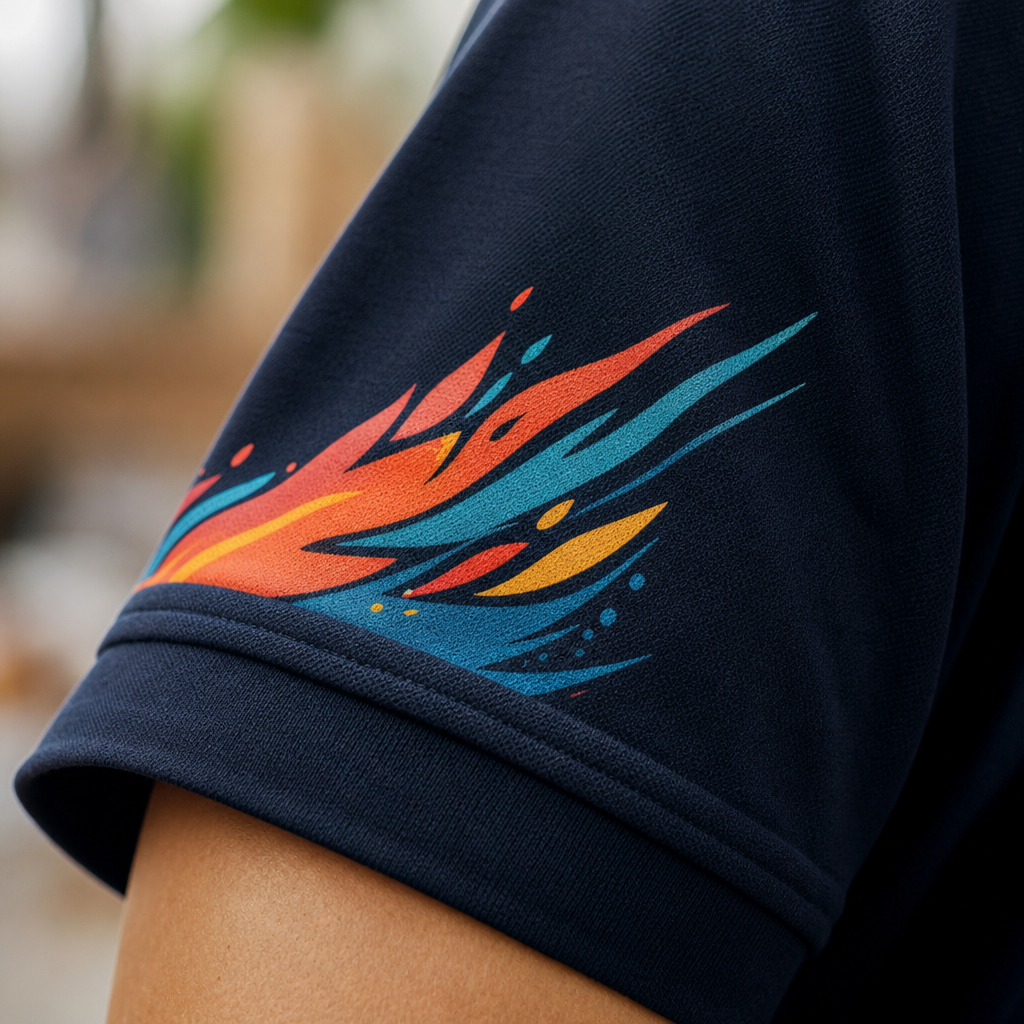
Embroidery looks premium on formal corporate shirts. But it costs significantly more per unit, takes longer to produce, and cannot reproduce photographic detail or fine gradients. For most workwear applications, such as trade uniforms, event staff clothing, or team kits, a high-quality DTF print delivers equal visual impact at a fraction of the price.
A common mistake is assuming embroidery signals higher quality to customers. For industries like construction, hospitality, or logistics, bold and durable prints are what actually read well in real working conditions.
Choose the Right Garment Before You Think About the Print
Most people approach budget branded clothing backwards. They pick a print supplier first, then accept whatever garments that supplier stocks. The smarter approach is to specify your garment requirements first, then find a supplier whose stock matches those needs at the right price point.
For cost-effective workwear, a 240gsm to 260gsm cotton or cotton-poly blend t-shirt hits the sweet spot between durability and price. Going lighter than 180gsm saves money per unit but produces garments that look cheap, fade quickly, and generate customer complaints. Going heavier than 300gsm costs more without meaningful benefit for most workwear contexts.
Polos and Hoodies: Where to Find Value Without Sacrificing Durability
Branded polos are the workwear staple for customer-facing roles, and the price variation is enormous. A pique polo at £8 to £12 per unit from a supplier like Psyque will perform comparably in real-world use to one priced at £20 from a branded wholesale retailer. The difference is largely in label recognition, not fabric performance.
For hoodies, weight matters more than brand. A 300gsm pullover hood in a neutral colourway with your logo heat-pressed cleanly will outlast a cheaper 240gsm version. If your team wears these daily, invest slightly more in the garment and save on the print method instead.
Pro tip: Ask your supplier for fabric composition specifications before ordering. A 100 percent cotton garment takes DTF heat press differently than a 65/35 poly-cotton blend. Psyque's in-house pressing process is calibrated for both, but knowing your fabric type helps you choose the right base for the sharpest possible print output.
Order Smart, Not Big: How Quantity Tiers Actually Work
The instinct to order in bulk to save money is not wrong, but it needs to be applied carefully. Ordering 200 units when you need 30 does not save money if those 170 extra garments sit in a storage box for 18 months or have to be discarded because your logo changed.
Most DTF suppliers, including Psyque, work with a cost-per-unit model where pricing drops at defined quantity thresholds. Understanding where those thresholds sit lets you plan orders that hit the next price break without significant overstock risk.
How to Calculate Your Real Break-Even Quantity
Take your expected 6-month usage and multiply it by 1.2 to give yourself a small buffer. If your team of 5 needs new workwear twice per year, your target order size is 12 to 15 units per order, not 50. Ordering 50 to chase a bulk discount makes no financial sense unless you have a firm plan to use those garments.
Where bulk ordering does make sense is for event-specific merchandise or team kit where the usage occasion is fixed and the number of recipients is known in advance. Event organizers ordering custom t-shirts for a 100-person staff event, for example, should absolutely calculate whether the price break at 100 units versus 80 justifies the additional 20 garments.
"The brands that get the best value from custom workwear are the ones who treat it like any other inventory decision: they forecast accurately, order at the right tier, and reorder before they run out rather than scrambling at the last minute." -- Industry insight from Printsome's UK garment market analysis
Simplify Your Design Without Sacrificing Brand Impact
This is the section most workwear buyers skip, and it is often where the most money is wasted. A complex, multi-element logo that works perfectly on a website header does not necessarily translate well to a chest print on a polo shirt. And with DTF, file complexity does not affect cost, but print quality can be affected by artwork that was not prepared for garment application.
The biggest visual mistake in budget branded clothing is using a rasterised or low-resolution logo file. A blurry print makes your brand look amateur regardless of how good the garment is or how professional your service actually is. Always supply artwork as a vector file (AI or EPS) or a high-resolution PNG at 300 DPI minimum.
What Print Placement Decisions Actually Do to Your Cost
A standard left chest print (roughly 10cm x 10cm) is the most cost-effective placement because it uses the least film area. Adding a full back print doubles the film usage and typically adds £3 to £6 per unit to your cost. That is worth it if your team works in environments where the back of a jacket is the most visible surface. It is not worth it for office staff or front-of-house roles where the chest logo is what customers see.
Pro tip: If you want both a chest logo and a sleeve or back detail, ask your supplier whether combining those elements in a single print run costs less than treating them as separate print jobs. At Psyque, placement options are discussed as part of the ordering process, and combining elements efficiently is standard practice.
Bundle Your Garment Types to Reduce Per-Unit Cost
One of the most overlooked strategies for cost-effective workwear is bundling multiple garment types into a single supplier order. Instead of ordering 10 t-shirts from one supplier, 5 polos from another, and 8 hoodies from a third, consolidating with a single supplier like Psyque gives you several compounding financial benefits.
First, you hit shipping thresholds faster. Psyque's free UK shipping on orders over £45 applies to your total order value, so combining garment types that might individually fall below the threshold means you pay nothing for delivery on the combined order. Second, single-supplier bundling simplifies the artwork approval process. You submit your logo once, and it is applied consistently across all garment types with the same colour calibration and heat press settings.
What a Workwear Bundle Typically Includes
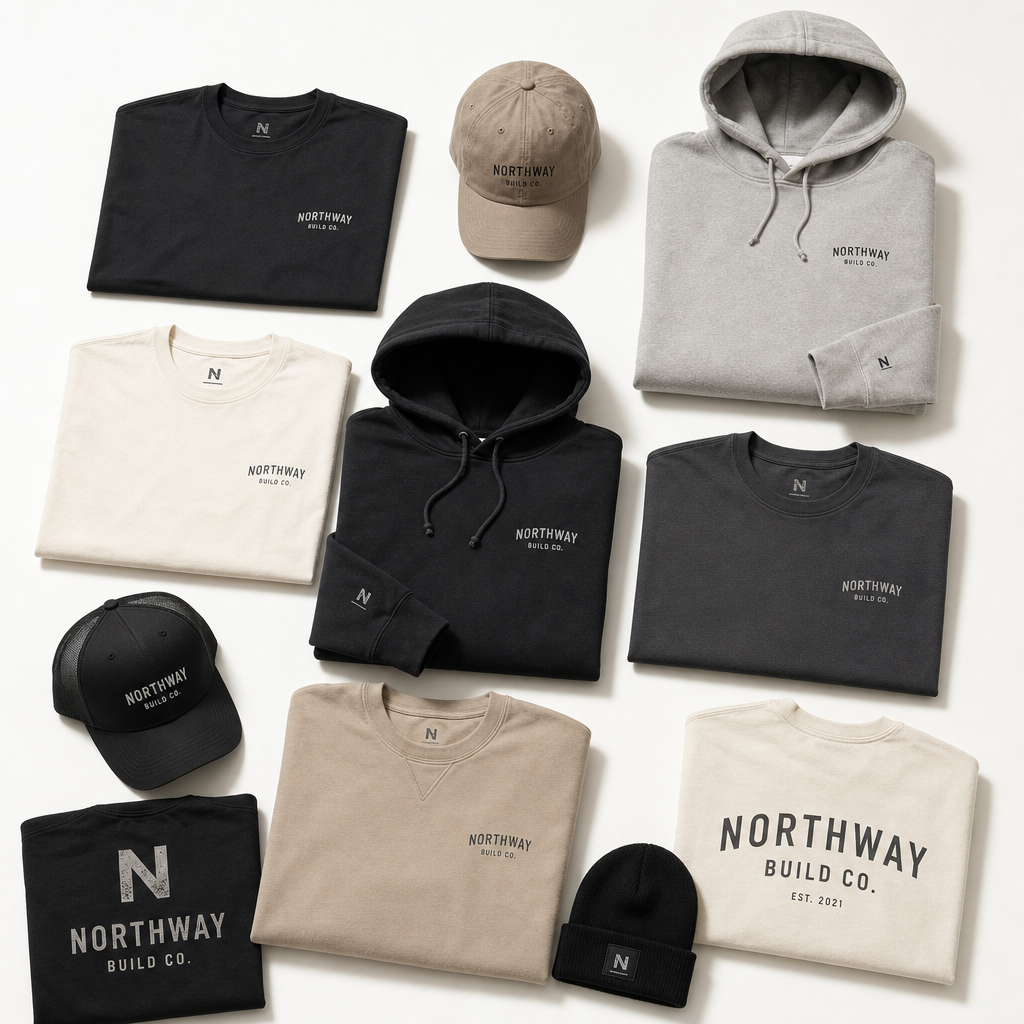
A practical starter bundle for a small trades business or retail team might include 5 printed t-shirts for casual or warm-weather use, 5 branded polos for customer-facing roles, and 3 hoodies or sweatshirts for colder conditions or outdoor work. That combination, ordered together, often costs less per unit than the same garments ordered separately across three individual orders.
Psyque specifically offers workwear bundle options structured around this logic, which makes the calculation straightforward for small business owners who want professional branded clothing without managing multiple supplier relationships.
Comparing Budget Workwear Branding Approaches
Not every print or supply method suits every buyer. Here is a clear comparison of the three most common approaches for small businesses pursuing affordable workwear branding.
| Approach | Best For | Key Cost Consideration |
|---|---|---|
| DTF printing via specialist UK supplier (e.g., Psyque) | Small to medium orders (5 to 100 units), full-colour logos, fast turnaround, mixed garment types | No per-colour setup fee. Unit price is consistent and predictable. Free shipping thresholds available. Best all-round value for most small businesses. |
| Screen printing via trade printer | Large single-garment orders (100 plus units) with a simple one or two-colour logo | Setup fees of £60 to £150 per colour make small runs expensive. Cost per unit drops significantly at high volumes. Not practical for complex or multi-colour artwork at low quantities. |
| Print-on-demand platforms (e.g., Spreadshirt) | Zero-inventory retail or gifting, one-off personal use | High per-unit cost (often 40 to 70 percent more than trade pricing). No control over garment quality. Slow UK dispatch. Not appropriate for professional workwear applications. |
Avoid the Hidden Costs That Kill Your Workwear Budget
Every workwear buyer eventually encounters a quote that looks competitive but ends up costing significantly more than expected. The culprits are almost always the same, and knowing them in advance is the difference between staying on budget and overspending by 25 to 40 percent.
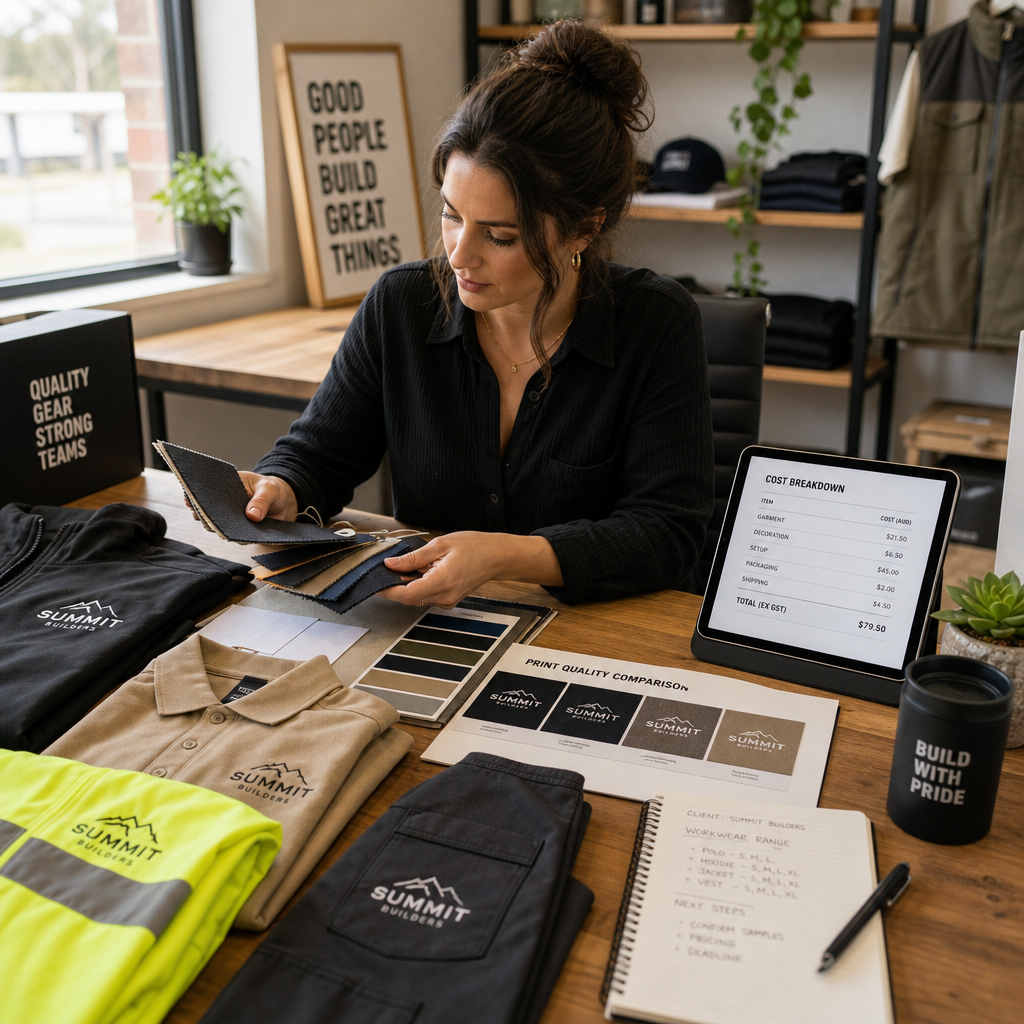
Artwork setup fees are the most common hidden cost. Some suppliers charge £25 to £75 per logo submission, even if your file is production-ready. Others charge for colour matching, print proofs, or digitisation. These fees do not show up on the headline unit price, so always ask for a fully itemised quote before committing.
Delivery Costs That Add Up Faster Than You Expect
A supplier offering t-shirts at £7.50 per unit but charging £12.95 for delivery on a 10-unit order is effectively charging you £8.79 per unit once delivery is factored in. A supplier charging £8.50 per unit with free delivery on orders over £45 is cheaper in real terms. Always calculate cost per unit inclusive of delivery, not exclusive of it.
Psyque's free shipping threshold at £45 is set deliberately low enough that most small business orders qualify without needing to inflate quantities. That makes true cost-per-unit comparison straightforward.
Rush Fees and How to Avoid Them
Rush or express production fees are legitimate costs when turnaround is genuinely urgent, but they are easily avoided with basic planning. Most DTF suppliers, including Psyque, offer standard turnaround times that are fast enough for most workwear needs. The mistake is leaving an order until a week before your event or launch date and then absorbing a 20 to 35 percent premium for priority processing.
Plan for Reorders From Day One
The businesses that get the best long-term value from branded workwear are the ones who treat their first order as a template, not a one-off transaction. If your logo, colour codes, and preferred garment specifications are documented and stored correctly with your supplier, reorders become faster, cheaper, and less prone to colour inconsistencies.
Ask your supplier whether they store your artwork files on file for repeat orders. Psyque maintains customer artwork for reorders, which means you are not paying for or waiting on re-digitisation every time you need new stock. That alone can save £20 to £50 per reorder cycle.
Build a simple workwear schedule into your annual budget. If you replace team clothing twice per year, plan those orders 4 to 6 weeks in advance. That window gives you time to check garment availability, confirm sizes, and avoid any rush processing charges. It also gives you the flexibility to adjust quantities if your team has grown or reduced since the last order.
Pro tip: Keep a sizing record for every team member who receives branded workwear. When reorder time comes, you already have the exact quantities and sizes needed without running a new survey. This prevents both undersizing errors and costly over-ordering of sizes that no one needs.
Frequently Asked Questions
What is the minimum order quantity for affordable custom workwear in the UK?
Most DTF specialists in the UK, including Psyque, can fulfil orders from a single unit, though the per-unit cost is naturally higher at very low quantities. For genuinely budget-friendly pricing, 10 to 20 units is typically where the cost per garment becomes competitive. If you need fewer than 10 pieces, DTF is still the most cost-effective print method available because it has no screen setup costs.
Is DTF printing durable enough for daily workwear use?
Yes. A properly applied DTF transfer on a quality base garment will withstand 40 to 50 industrial washes without significant colour fading or edge peeling, provided washing instructions are followed. The key variables are the quality of the film and adhesive used, and the precision of the heat press application. In-house pressing, as used by Psyque, gives more consistent results than outsourced pressing because temperature and pressure are controlled directly.
How does cheap custom workwear from a print-on-demand platform compare to a trade DTF supplier?
Print-on-demand platforms like Spreadshirt are optimised for individual retail orders with no stock commitment. For branded workwear, they are the wrong tool. Per-unit costs are typically 40 to 70 percent higher than trade pricing, garment quality is inconsistent, and you have no control over which print method is used. A trade DTF supplier gives you predictable quality, consistent colour reproduction, and significantly lower per-unit cost for any order above 5 units.
Can I brand different garment types with the same logo and expect consistent colour across all of them?
Yes, but only if you work with a supplier who calibrates their press settings per fabric type and uses the same colour profile across all garment runs. DTF printing is colour-consistent by nature because the same digital file is used for every transfer. The variation risk comes from heat press settings differing between a lightweight t-shirt and a heavier hoodie. Suppliers with in-house pressing who handle mixed garment orders regularly, like Psyque, manage this automatically.
What file format should I supply for my logo to get the sharpest print result?
Vector files are always the best option. An AI or EPS file from Adobe Illustrator, or an SVG, can be scaled to any print size without quality loss. If you only have a raster file, supply a PNG with a transparent background at 300 DPI or higher, sized to the intended print dimensions. Never supply a logo copied from a website or email signature. Those files are typically 72 DPI and will produce a visibly blurry print result regardless of how good the printer or press is.
Does ordering branded workwear in a bundle actually save money compared to separate orders?
In most cases, yes. The savings come from two sources. First, combined order values hit free shipping thresholds faster. Second, submitting a single artwork file for multiple garment types means you are not paying separate setup or handling charges per garment category. At Psyque, bundle orders are structured to reflect these savings directly in the per-unit pricing, making bundles a practical choice for any small business kitting out a mixed team.
Have you tried budgeting for workwear branding for your business? Share what worked or what surprised you most about the process.
References
- Statista: market size data and consumer research for the corporate clothing and branded apparel sector
- Forbes: business branding and small business marketing insights including uniform and workwear strategy
- HubSpot Marketing Statistics: data on brand consistency, visual identity, and customer trust
- UK Government Business Support: guidance for small businesses on managing operational costs and supplier relationships
- Ahrefs Blog: research and data on small business marketing strategies and audience targeting