

Choosing a DTF Printing Supplier UK: What to Look For
Picking the wrong DTF printing supplier can cost your business far more than a reprinted order. Faded prints after three washes, missed event deadlines, and branded workwear that looks nothing like your approved design are problems that happen every week to UK businesses who chose a supplier on price alone. If you are a small business owner, event organiser, or team manager searching for a reliable partner for custom apparel, the criteria for choosing a DTF printing supplier UK should go well beyond a quick price comparison. This guide walks through every checkpoint that actually separates a dependable supplier from one that will let you down.
Table of Contents
- Quick Takeaways
- Why DTF Printing Quality Varies So Much
- Print Quality Benchmarks to Demand
- Turnaround Times and UK Dispatch Reliability
- Garment and Substrate Range
- Minimum Order Quantities and Pricing Transparency
- Supplier Comparison: Three Approaches
- In-House Printing vs Outsourced Production
- Customer Service and Design Support
- Sustainability and Ink Safety Standards
- Frequently Asked Questions
- References
Quick Takeaways
| Key Insight | Explanation |
|---|---|
| In-house printing is a strong quality signal | Suppliers who own their DTF equipment control quality at every step. Outsourced production adds a layer of risk you cannot inspect. |
| Wash durability matters more than initial vibrancy | Ask for wash-test results. A print that looks sharp on day one but cracks at wash five is a liability for branded workwear. |
| UK dispatch speed should be confirmed, not assumed | "Fast dispatch" is a marketing phrase. Ask for a specific number of working days and check whether that includes production time or just shipping. |
| No-minimum-order flexibility suits small teams | Many UK suppliers apply minimum order quantities that price out small businesses. True DTF suppliers can print cost-effectively at low volumes. |
| Pricing transparency reveals supplier integrity | If you cannot get a clear per-unit price including setup and delivery, treat that as a red flag before placing any order. |
| Garment quality affects print outcome directly | DTF transfers bond differently on budget polyester versus premium cotton blends. Always confirm what garment brands the supplier stocks. |
| A physical UK address reduces risk | Suppliers operating from a confirmed UK location are accountable under UK consumer law and are easier to contact when something goes wrong. |
Why DTF Printing Quality Varies So Much
DTF printing technology is accessible enough that almost anyone can set up a basic operation, but accessible does not mean consistent. The gap between a professional DTF supplier and a bedroom operation running a cheap converted printer is enormous, and it shows up in your finished garments.
The quality differences come down to three variables: the printer hardware itself, the type of hot-melt adhesive powder used during transfer, and the heat-press calibration on the final application. A supplier cutting costs on any one of these will produce prints that peel, crack, or shift colour after repeated washing. According to the British Printing Industries Federation, print durability complaints are among the most common quality disputes in the decorated apparel sector, with wash performance being the leading failure point.
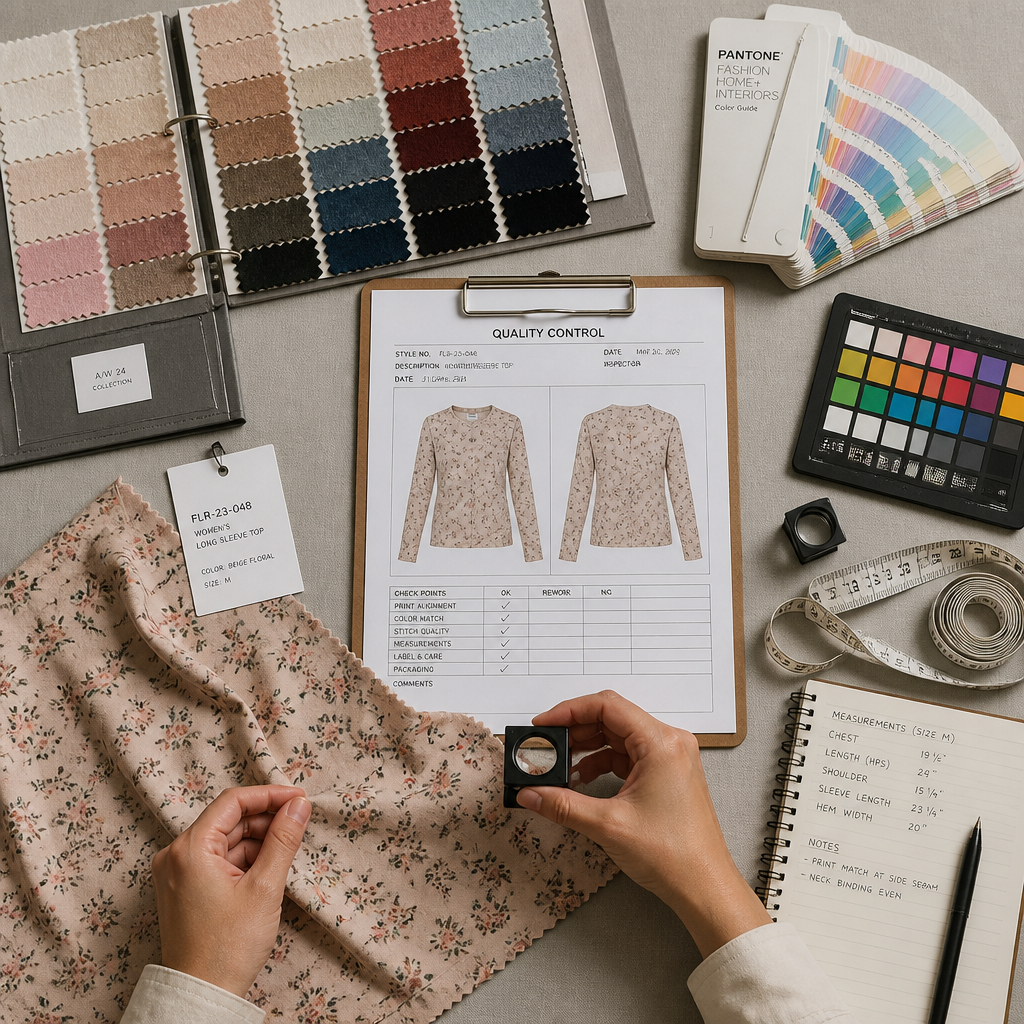
In practice, the best way to evaluate this before committing to a bulk order is to request a sample print on the specific garment you intend to order. Any legitimate supplier will accommodate this. If they refuse, or charge an inflated sample fee, move on.
Print Quality Benchmarks to Demand
When evaluating any supplier for custom printed clothing, you need specific quality benchmarks rather than vague assurances. The following are the standards a reputable UK DTF supplier should meet without hesitation.
Resolution and Colour Accuracy
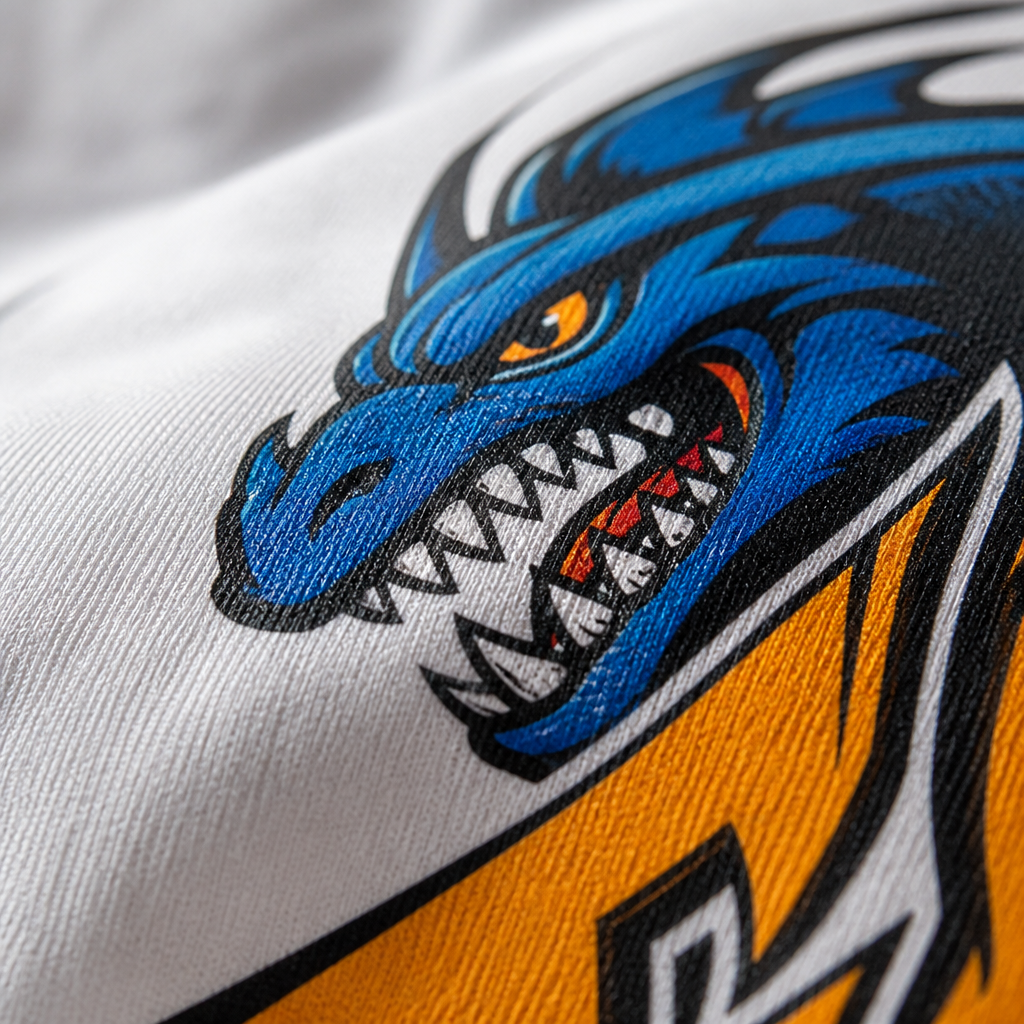
Professional DTF prints should be produced at a minimum of 1440 DPI. Anything lower will show visible pixelation on detailed logos, especially at smaller print sizes. Colour accuracy should be matched to your supplied artwork file, ideally using a colour-managed workflow. Ask whether the supplier uses ICC colour profiles for their RIP (Raster Image Processor) software.
A common mistake is accepting a supplier's word on colour matching without seeing a printed proof. Submit your artwork, request a proof, and compare it against your brand colours before approving a full run.
Wash and Stretch Durability
DTF prints, when applied correctly, should survive at least 50 wash cycles at 40 degrees Celsius without significant cracking or peeling. This is the practical standard for workwear and team apparel that gets regular use. The print should also stretch with the fabric without fracturing, which is particularly important for hoodies and fitted shirts.
Pro tip: Ask suppliers directly: "How many wash cycles do your prints survive?" If they cannot give you a number or point you to test data, that is a clear signal they have not validated their own process.
Turnaround Times and UK Dispatch Reliability
For event organisers and businesses with product launch deadlines, turnaround time is non-negotiable. A supplier who quotes "3-5 days" but means 3-5 days after production, which itself takes 7 days, is not being honest with you.
When assessing turnaround, always ask for the total lead time from artwork approval to delivery at your door. A reliable UK supplier like Psyque operates with transparent timelines and offers fast UK dispatch as a core part of their service promise, not a premium add-on. Look for suppliers who confirm dispatch speed in working days and who ship from a UK location to avoid customs delays that affect suppliers routing through Europe.
Free shipping thresholds are also worth checking. Psyque, for example, offers free shipping on orders over £45, which makes economic sense for small business orders. Suppliers who charge premium shipping on top of already-high unit prices are eroding your margin with every order.
"Lead time transparency is one of the simplest tests of a supplier's operational competence. If they cannot tell you exactly when your order will arrive, they do not have enough control over their own process." - Industry perspective shared by the Chartered Institute of Procurement and Supply (CIPS)
Garment and Substrate Range
A serious DTF printing supplier in the UK should offer a meaningful range of garment types and fabrics, not just a single blank t-shirt. If you are ordering branded workwear bundles that include polo shirts, hoodies, sweatshirts, and t-shirts, you need a supplier who can produce consistent results across all of them.
DTF transfers can be applied to cotton, polyester, cotton-poly blends, nylon, and even leather-effect fabrics. However, not every supplier has calibrated their process for all substrates. Ask specifically which garment brands they stock and whether they can show print results on the fabric weight you need. Premium blanks such as Stanley/Stella, Gildan Softstyle, or Continental Clothing behave very differently under a heat press than budget alternatives.
For businesses ordering workwear bundles, the ability to print on multiple product types from one supplier also simplifies reordering, invoicing, and brand consistency. Splitting your order between two suppliers almost always results in colour inconsistencies across your range.
Minimum Order Quantities and Pricing Transparency
One of the most significant practical differences between DTF printing and older methods like screen printing is that DTF removes the traditional argument for large minimum order quantities. Screen printing requires expensive screens to be made for each colour, which only becomes cost-effective at 50 or 100 units. DTF has no such setup requirement.
This means any UK DTF supplier insisting on a minimum order of 20 or 50 units for a simple design is either using a different technology or applying an unnecessary business restriction. Small businesses and event organisers frequently need runs of 5, 10, or 15 garments, and a true DTF supplier can handle these economically.
What to Look for in a Pricing Structure
Pricing should be clearly broken down into: per-garment cost, print cost (which may decrease at higher volumes), and any delivery charge. Setup fees are a legacy of older print methods and should not apply to standard DTF orders. If a supplier charges a one-time setup fee for a file they will reuse on future orders, ask them to waive it for repeat business.
Be cautious of suppliers who only display pricing in ranges rather than fixed per-unit costs. "From £8 per shirt" can mean very different things depending on hidden charges applied at checkout.
Pro tip: Always ask for a full quote in writing before placing your first order with a new supplier. This protects you from verbal commitments that differ from the invoice.
Supplier Comparison: Three Approaches
| Supplier Approach | Best For | Key Limitations |
|---|---|---|
| In-house UK DTF specialist (e.g., Psyque) | Small businesses, workwear bundles, event teams needing reliable quality and fast UK dispatch | May have a narrower catalogue than large generalist suppliers, but quality control is tighter |
| Large generalist uniform supplier (e.g., orderuniform.co.uk) | Large corporate orders with standardised uniform requirements | DTF is often a secondary service; minimum quantities tend to be higher and customisation flexibility is limited |
| Print-on-demand platform (e.g., Spreadshirt) | Individual consumers or very low-volume hobby projects | Per-unit costs are high, print quality is inconsistent, and you have no direct relationship with a printer for bulk branded orders |
In-House Printing vs Outsourced Production
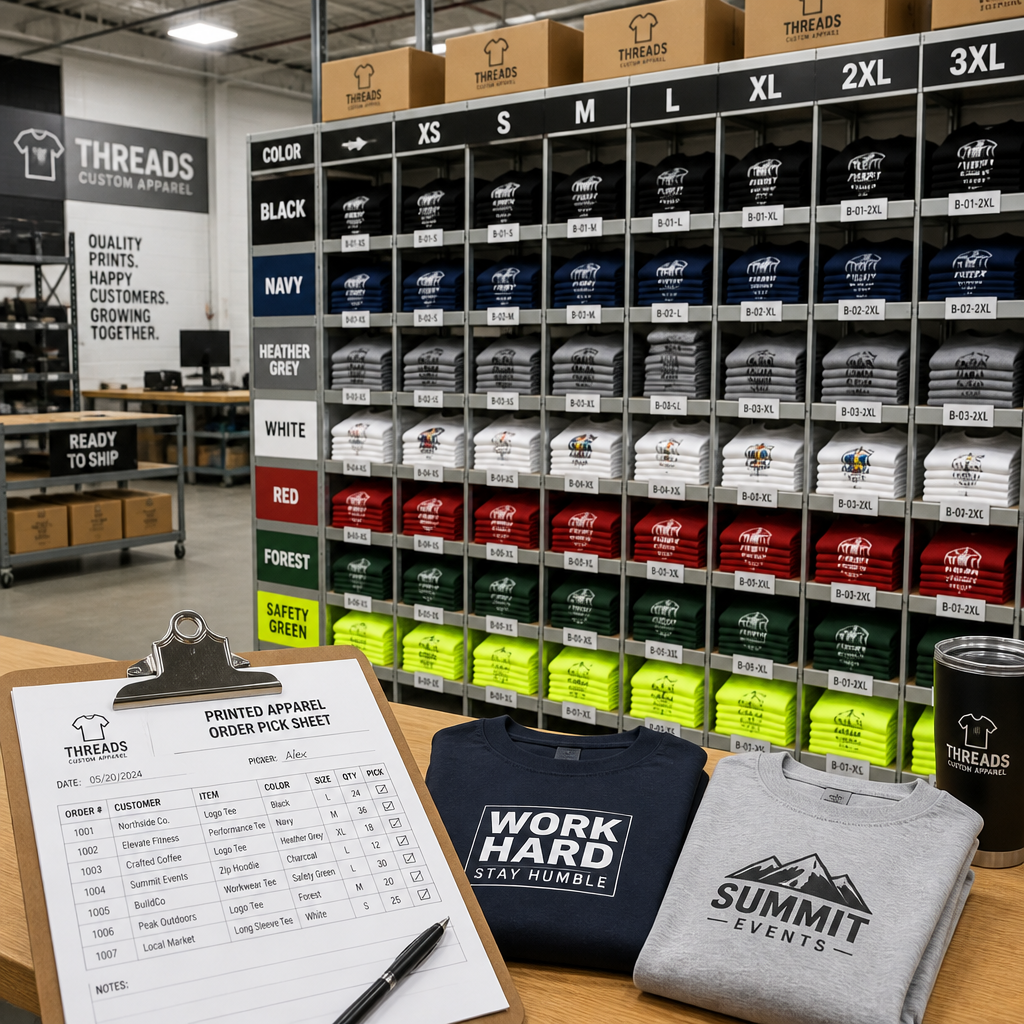
This is perhaps the single most important question to ask a potential supplier and the one most likely to be answered evasively. Does this supplier own their printing equipment and produce your garments themselves, or do they pass your order to a third-party printer?
Outsourced production is not automatically bad, but it introduces a quality control gap that the supplier cannot close. When something goes wrong, an outsourcing supplier cannot walk to their press and reprint your order that afternoon. They have to submit a reprint request to someone else's schedule.
Why In-House Capability Matters for Workwear
For branded workwear that needs to be consistent across multiple reorders, in-house production is the only reliable model. A supplier running their own DTF equipment and heat presses can calibrate colour settings, maintain their own ink quality standards, and offer accountability that an outsourced model simply cannot match. Psyque operates with in-house printing and heat-press capabilities specifically to maintain this standard for their customers.
When you are speaking with a new supplier, ask them directly: "Is printing done on your premises?" A confident answer with details about their equipment is a good sign. Vague responses about their "production network" are a reason to push further before committing.
Customer Service and Design Support
The operational relationship with your supplier matters as much as the product quality, particularly if you are ordering regularly for a growing business. A supplier who is unreachable when your artwork needs adjusting or when a delivery goes missing creates business risk that accumulates over time.
Assess customer service before your first order by sending a pre-sale enquiry. Measure how long it takes to get a clear, helpful response. A supplier who takes three days to answer a simple product question will not suddenly become fast and communicative when your order is delayed before an event.
Artwork and File Support
Not every business owner is a graphic designer. A good DTF supplier should be able to advise on file formats (PNG with transparent background is standard for DTF), minimum resolution requirements, and maximum print dimensions. Some, including Psyque, offer custom t-shirt design support as part of their service, which removes the need for a separate design agency for straightforward branded apparel.
For businesses building a branded identity, having design support integrated into your apparel supplier relationship means faster iteration and fewer communication errors between a designer and a printer who have never met.
Sustainability and Ink Safety Standards
DTF inks contain pigments and adhesive powders that, if not properly managed, create disposal and safety concerns. For businesses with a sustainability policy, or those supplying garments to children and schools, the safety standards of the inks and adhesives used matter.
Look for suppliers who use OEKO-TEX certified materials or whose inks comply with REACH regulations, which govern chemical safety in the UK and EU. These certifications confirm that the finished garment is safe for skin contact, which is a basic requirement for clothing that will be worn regularly.
According to the UK Health and Safety Executive, chemical compliance in textile printing is a growing area of enforcement, particularly for businesses supplying workwear or school uniform garments. A supplier who cannot tell you whether their inks are REACH-compliant is a liability, not a partner.
Frequently Asked Questions
What is the difference between DTF printing and screen printing for custom apparel?
DTF (Direct to Film) printing transfers a full-colour design via a heat-pressed film, while screen printing applies each colour separately through a stencil. DTF handles complex multi-colour designs and photographs at any order quantity, with no setup screens required. Screen printing is typically more cost-effective only at very high volumes of a single simple design. For most small business workwear and event apparel needs, DTF is the more practical choice.
How do I know if a DTF supplier's prints will last on workwear?
Ask for a sample printed on the specific garment and fabric you intend to order, then wash it at 40 degrees five times before assessing it. A reputable supplier will also be able to cite a wash-cycle durability figure for their prints. If neither a sample nor a durability claim is available, do not order in bulk from that supplier.
Is there a minimum order quantity for DTF printed garments in the UK?
DTF technology does not require a minimum order in the way screen printing does, so there is no technical reason for high minimums. Suppliers who impose a minimum of 20 or more units are usually working around their own operational costs rather than a technical necessity. Look for suppliers who are transparent about their pricing at low quantities.
What file format should I supply for a DTF print job?
The standard file format for DTF printing is a high-resolution PNG with a transparent background, ideally at 300 DPI or higher at the intended print size. Vector files (AI or PDF) are also accepted by most professional suppliers and offer the best scaling flexibility. Avoid sending low-resolution JPEGs, as they will produce soft edges and visible artefacts on the finished print.
How do I compare DTF printing quotes fairly between UK suppliers?
Request quotes based on identical specifications: the same garment brand and colour, the same print size and position, the same order quantity, and including delivery to your postcode. Ensure each quote shows the per-unit cost, any setup fees, and the total including VAT. A supplier who cannot provide a fully itemised quote is one you should treat with caution.
Can I order a mix of different garment types in one DTF printing order?
Yes, and this is one of the genuine advantages of working with a DTF specialist rather than a single-product print shop. Suppliers with in-house equipment and a broad garment range can produce t-shirts, hoodies, polo shirts, and sweatshirts in a single order run, applying the same design across all garment types. Always confirm the supplier can match colour consistently across different fabric weights before committing to a mixed bundle order.
Have you ordered from a DTF printing supplier in the UK recently? Share what made the experience work well or what you wish you had checked before placing the order.
References
- UK Health and Safety Executive: guidance on chemical safety and compliance in workplace and textile environments
- Statista: market data and statistics on the UK custom apparel and printed merchandise industry
- Forbes: business guidance on supplier vetting, quality assurance, and small business procurement decisions
- British Printing Industries Federation: industry standards and quality benchmarks for UK print suppliers
- Chartered Institute of Procurement and Supply: professional standards for evaluating and managing supplier relationships