
Custom Merchandise for UK Pop-Up Shops & Market Stalls
If you run a pop-up shop or market stall in the UK, you already know the problem: customers walk past dozens of stalls before they reach yours. Custom merchandise UK pop-up shop owners use is one of the fastest ways to create a visual identity that stops people mid-stride. Yet most small traders either skip it entirely or rush into low-quality printed clothing that fades after two washes, which does more damage than no branding at all. This guide covers exactly what to order, how to order it, and which print methods actually hold up in the real conditions of an outdoor market or a busy pop-up event.
Table of Contents
- Quick Takeaways
- Why Custom Merch Matters for Pop-Up Shops and Market Stalls
- DTF Printing Explained: Why It Outperforms Other Methods for Small Runs
- What to Actually Order for Your Stall or Pop-Up
- Print Method Comparison for Market Stall Merchandise
- Design Tips That Work in Real Market Conditions
- Ordering Logistics: Quantities, Timelines, and Budgets
- Frequently Asked Questions
- References
Quick Takeaways
| Key Insight | Explanation |
|---|---|
| DTF printing suits small runs | Direct to Film printing has no minimum order requirement for setup costs, making it ideal for pop-up traders ordering 10 to 50 units rather than hundreds. |
| Staff uniforms convert browsers into buyers | When your whole team wears the same branded apparel, customers instinctively perceive your stall as a legitimate business rather than a casual seller, which directly increases purchase confidence. |
| Bold, simple designs outperform detailed artwork outdoors | At a market stall viewed from 5 to 10 metres, intricate multi-colour designs blur. A two-colour logo on a contrasting garment reads clearly from a distance every time. |
| Printed merch doubles as a selling product | Many pop-up traders sell branded tees, tote bags, and hoodies alongside their core product, generating additional revenue and walking advertising simultaneously. |
| Free shipping thresholds matter for tight margins | Suppliers like Psyque offer free UK shipping on orders over £45, which means grouping staff apparel and sellable merch into a single order cuts fulfilment costs significantly. |
| Heat-press finishing improves durability on workwear | For garments worn repeatedly at outdoor events, heat-press applied DTF transfers produce a wash-resistant bond that survives repeated laundering without cracking or peeling. |
| Lead time planning is non-negotiable before events | Ordering branded clothing within 48 hours of a pop-up event is the single most common and preventable mistake traders make. A two-week buffer removes that risk entirely. |
Why Custom Merch Matters for Pop-Up Shops and Market Stalls
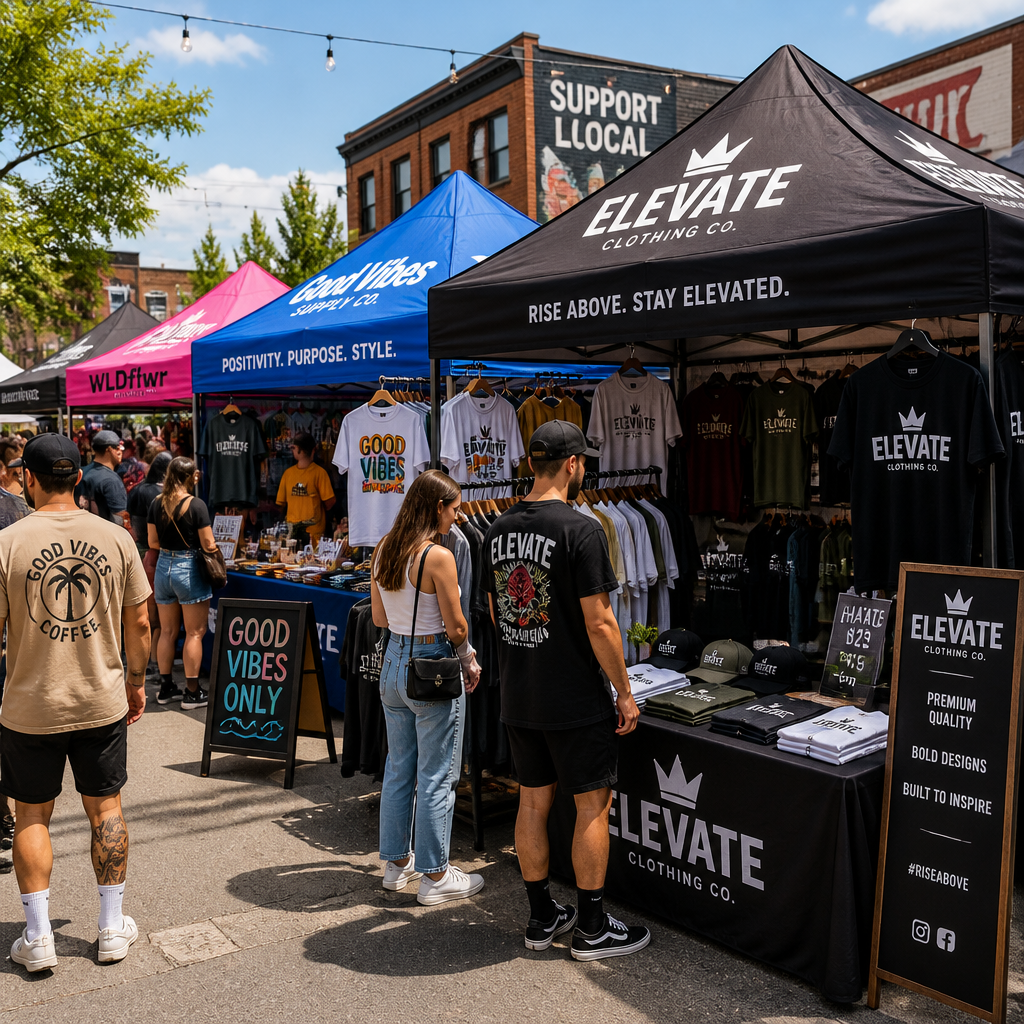
A market stall competes for attention in a way a fixed retail unit does not. You have roughly three seconds to give a passing shopper a reason to slow down. Printed clothing for market stalls UK traders wear is one of the few tools that works passively, communicating brand identity without any effort from the stall holder in that moment.
The data consistently shows that branded environments increase perceived product quality. According to a 2023 consumer perception study referenced by Forbes, customers rate products sold by visibly branded staff up to 33% higher in quality than identical products sold by unbranded sellers. For a pop-up shop with no permanent shopfront to signal credibility, that perception gap is significant.
"Branded merchandise is not decoration. It is a business asset that signals permanence, professionalism, and trust at the exact moment a customer is deciding whether to stop walking." - Retail Branding Insights, Forbes Small Business
In practice, traders who invest in even a basic set of matching branded t-shirts for their team report consistently higher engagement from passing foot traffic. The visual uniformity signals that the business is organised and that the product is worth paying attention to. That effect compounds when the branded apparel is also available for customers to purchase, turning buyers into walking advertisements after the event ends.
Pro tip: If you sell at multiple markets throughout the year, order a small additional stock of branded tees or hoodies in popular sizes. Many loyal customers at recurring markets will buy the apparel as a memento, and the margin on a branded garment is often higher than on your core product.
DTF Printing Explained: Why It Outperforms Other Methods for Small Runs
DTF printed merch UK suppliers offer a print method that has become the practical standard for small-batch custom apparel over the last three years. Direct to Film printing works by printing a design onto a special film, applying a hot-melt adhesive powder, and then heat-pressing the finished transfer onto the garment. The result is a vibrant, full-colour print with no minimum colour restrictions and no screen setup fees.
Why Screen Printing Falls Short for Pop-Up Traders
Screen printing is cost-effective at 100 units or more because the setup cost, which includes creating a separate screen for each colour, is spread across the full run. Below 50 units, that setup cost makes each item expensive. A pop-up trader ordering 12 branded t-shirts for a seasonal market gets very little value from screen printing.
DTF printing has no per-colour setup cost. A 12-piece order with a full-colour logo costs almost the same per unit as a 12-piece order with a single-colour logo. That flexibility is exactly what market traders need when they are testing a design or ordering for a one-off event before committing to a larger stock.
Durability in Real Market Conditions
A common mistake is assuming that DTF prints are fragile compared to embroidery or screen printing. Properly heat-pressed DTF transfers applied by an experienced operator, which is standard practice at Psyque's in-house production facility, bond to the fabric fibres and survive repeated washing at 40 degrees without cracking, peeling, or significant fading. For staff workwear worn at weekly markets throughout a summer season, that durability is the baseline requirement.
Embroidery remains better for a small set of use cases, particularly polo shirts and caps where a textured, premium finish is part of the product positioning. But for full-colour designs, photographic elements, or gradient logos, DTF produces results that embroidery simply cannot match.
What to Actually Order for Your Stall or Pop-Up
The most productive approach is to split your order into two categories: staff workwear that projects professionalism, and sellable branded merchandise that generates additional revenue. Many pop-up traders focus exclusively on one and miss the other entirely.
Staff Workwear for Market Stalls
For a team of two to four people working an outdoor market stall, a practical starting kit includes matching printed t-shirts for warmer months and branded hoodies or sweatshirts for autumn and winter markets. Custom printed polo shirts are worth considering if your brand positioning is slightly more formal, for example if you sell premium food products, handmade jewellery, or professional services at corporate pop-up events.
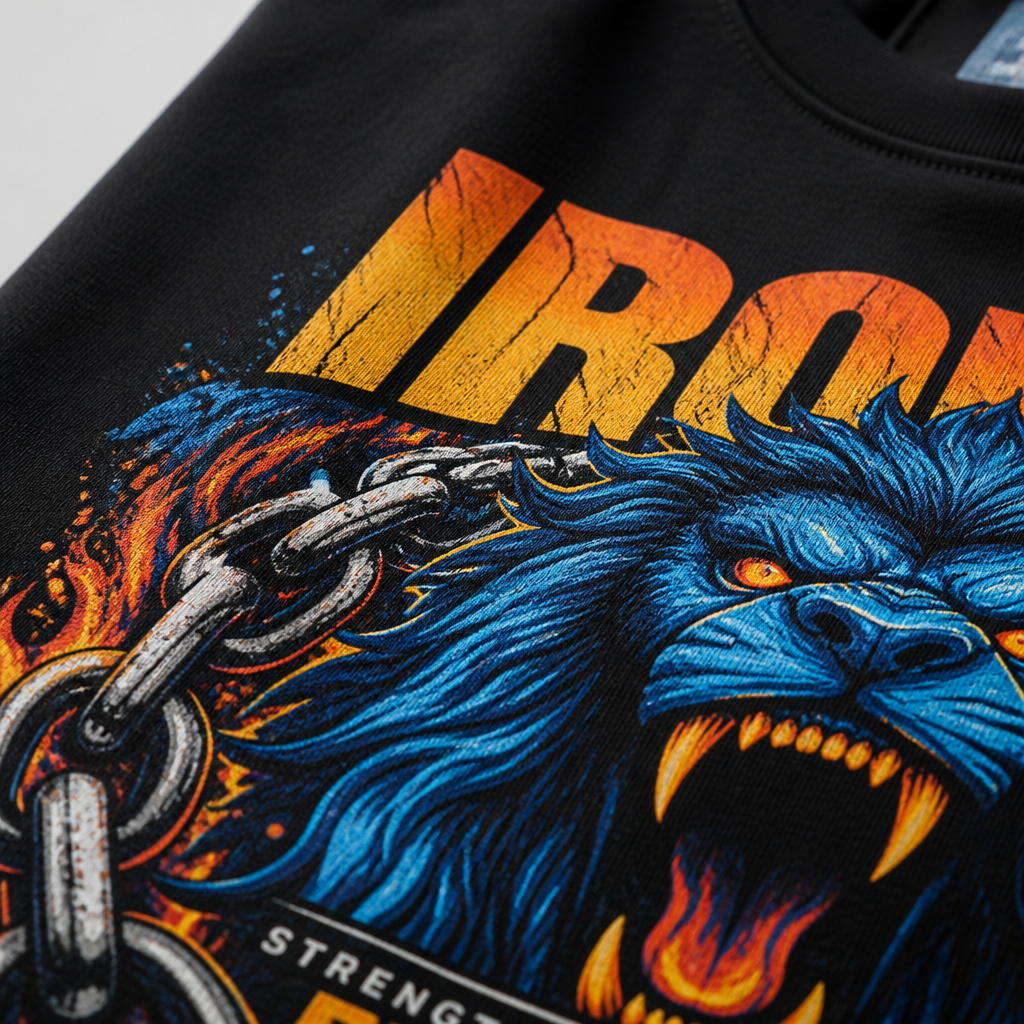
The colour choice matters more than most traders realise. A dark garment with a light-coloured logo reads clearly in low light and under the inconsistent lighting of a covered market. A white tee with a dark print works well outdoors in good daylight but looks grubby quickly, which undermines the professional effect you are trying to create.
Sellable Branded Merchandise
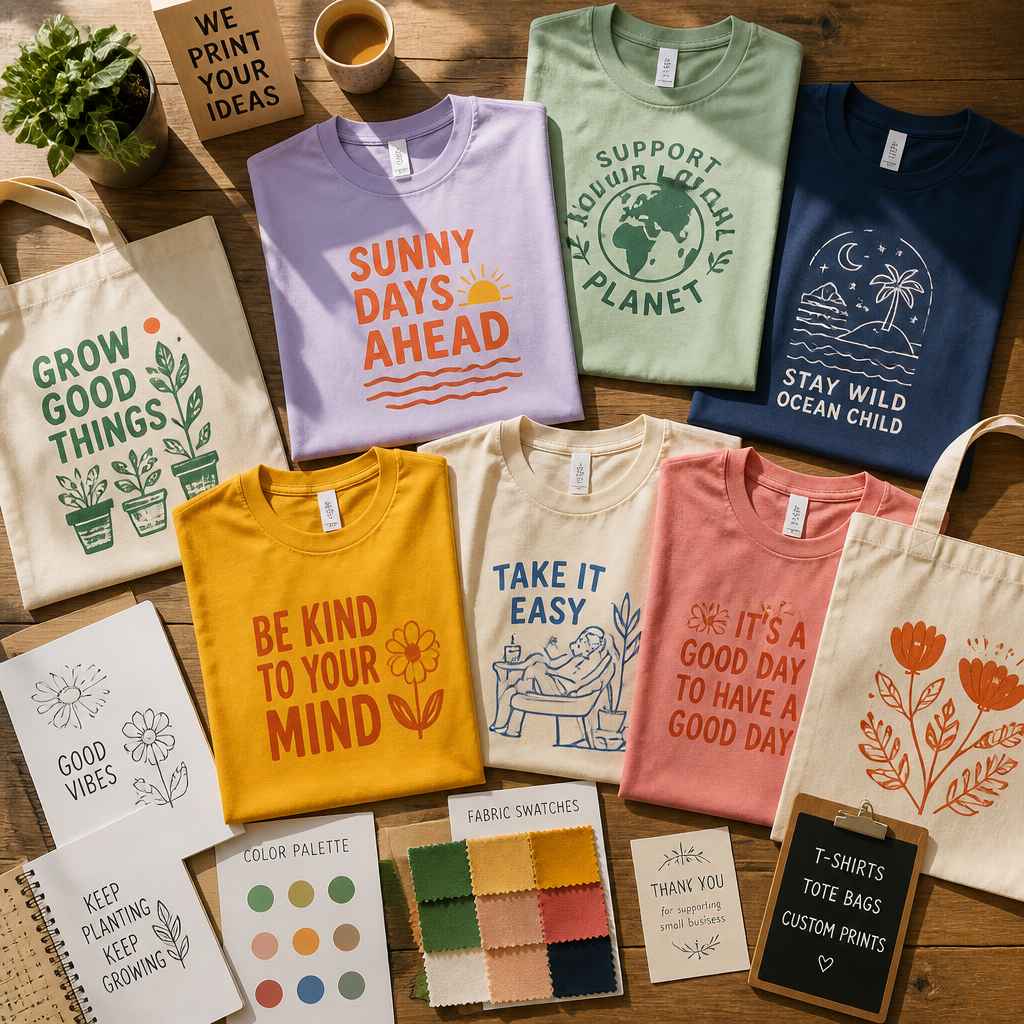
The items that sell consistently well as branded merchandise at UK pop-up markets are unisex t-shirts in sizes S to XL, hoodies in neutral colourways, and tote bags. Tote bags in particular have a very low unit cost relative to their perceived value and are easy for customers to carry alongside their other market purchases.
Price your sellable merch at a minimum 2.5x your cost price. A branded tee that costs you £8 to produce should retail at £20 to £22. That margin is standard for market-sold apparel and customers at pop-up shops expect it. Pricing below that range actually reduces perceived quality rather than increasing sales volume.
Pro tip: Order your sellable merch and your staff workwear in the same Psyque order to reach the free shipping threshold on orders over £45. Splitting them into two orders costs you unnecessary delivery fees on tight trading margins.
Print Method Comparison for Market Stall Merchandise
Choosing the wrong print method for your specific use case wastes budget and produces disappointing results. The table below compares the three methods most relevant to pop-up shop and market stall operators in the UK.
| Print Method | Best Use Case for Market Traders | Key Limitation |
|---|---|---|
| DTF (Direct to Film) | Full-colour logos, small batch staff uniforms (10 to 50 units), sellable branded tees and hoodies with detailed artwork | Slightly higher cost per unit than screen printing at very large quantities (200+) |
| Screen Printing | Simple one or two colour designs in quantities above 100 units where cost per unit is the primary concern | Setup fees make it expensive below 50 units. No cost-effective way to print gradients or photographic images. |
| Embroidery | Polo shirts and caps for premium or corporate brand positioning at higher-end pop-up events | Cannot reproduce full-colour or photographic designs. Higher per-unit cost. Not suitable for large chest prints. |
The practical takeaway is clear: for the vast majority of UK pop-up shop and market stall operators ordering between 10 and 75 units, DTF printing is the correct choice. It delivers the colour fidelity, flexibility, and durability needed without the minimum quantity constraints that make screen printing impractical at the scale most traders operate.
Design Tips That Work in Real Market Conditions
A design that looks impressive on a screen can fail completely when printed on fabric and worn in a busy outdoor market. The conditions are different: natural light, movement, distance, and the visual noise of competing stalls all affect how your branded apparel reads to a passing customer.
Simplicity at Distance
The most effective market stall apparel designs follow a clear rule: your logo or brand name must be readable from at least six metres away. Test this before you order. Print your design at actual size on paper, pin it to a wall, and walk back six metres. If you cannot immediately read the brand name, the design is too complex.
High-contrast colour combinations perform best. Dark navy or black garments with white or yellow print. White garments with a bold single-colour logo. Avoid mid-tones on mid-tones, for example grey print on a grey garment, which becomes invisible in overcast outdoor lighting.
File Preparation for DTF Printing
Supply your artwork as a vector file (AI or EPS format) or a high-resolution PNG with a transparent background at a minimum of 300 DPI at print size. A common mistake is supplying a logo exported from a website at 72 DPI, which produces a visibly pixelated print. If you only have a low-resolution file, a competent supplier can often vectorise a simple logo, but it is better to start with the correct file format.
According to HubSpot's branding research, consistent colour use across all branded materials increases brand recognition by up to 80%. For a pop-up shop, that means using the exact same logo colours across your garments, your signage, and your packaging. Request a colour proof from your printer before approving a full run if colour accuracy is critical to your brand.
Ordering Logistics: Quantities, Timelines, and Budgets
The operational side of ordering custom merchandise for a pop-up event is where most traders encounter problems. Lead times, size distribution, and budget allocation all require planning that does not happen the week before the event.
How Many Units to Order
For staff workwear, the calculation is simple: one garment per team member plus two spare units in the most common size (usually medium or large) to cover replacements and new team additions. For sellable merch, a first order of 20 to 30 units across sizes S to XL is a sensible test quantity. Order heavier in sizes M and L, which consistently sell first at UK market events, and lighter in XS and XXL.
Timeline Planning
Psyque offers fast UK dispatch, but that is not a substitute for planning. A realistic timeline for a custom order is as follows: finalise your design at least three weeks before the event, place the order two weeks before, and use the final week as buffer for any courier delays or reprint needs. Traders who order seven days before a market and then experience a courier delay have no options left.
Budget Allocation
For a small pop-up stall operator on a tight budget, a practical starting allocation is £80 to £150 for staff workwear (covering three to four branded t-shirts or a mix of tees and one hoodie) and £120 to £200 for an initial sellable merch stock. That total investment of £200 to £350 is recoverable in a single busy market day if the merchandise is priced and displayed correctly.
Suppliers like Psyque, which handle both printing and fulfilment in-house, consistently offer better per-unit pricing and faster turnaround than resellers who outsource production. When comparing quotes, always check whether the supplier owns their printing equipment or acts as a middleman, as the latter adds both cost and lead time.
Frequently Asked Questions
What is the minimum order quantity for custom printed merchandise for a pop-up shop?
With DTF printing, there is no practical minimum order quantity in the way screen printing imposes one. Suppliers like Psyque can produce single-unit custom orders, though the per-unit cost is naturally higher on very small runs. For market stall staff uniforms, orders of 5 to 12 units are entirely viable and cost-effective with DTF. For sellable merchandise, ordering at least 20 units gives you enough size variety to display properly and enough margin to absorb any unsold stock.
How long does custom printed clothing take to produce and deliver in the UK?
Production and delivery timelines depend on the supplier's current order volume and the complexity of your design. With an in-house printer like Psyque, standard custom orders typically dispatch within a few working days of artwork approval. Allow a full two weeks from placing your order to receiving stock if you are ordering for a specific event. This buffer accounts for any artwork revision rounds and standard courier transit times across the UK.
Which garments work best as sellable branded merchandise at UK market stalls?
Unisex t-shirts remain the strongest-selling branded apparel item at UK pop-up markets because of their broad appeal, low price point, and ease of display. Hoodies sell well at autumn and winter markets where customers are already thinking about warm outerwear. Tote bags are the best accessory item because of their low production cost, high perceived value, and practical appeal to market shoppers who are already carrying purchases. Avoid items with complex sizing, such as fitted dresses or structured jackets, for a first branded merchandise run.
Is DTF printing durable enough for outdoor market conditions and repeated washing?
Yes, when applied correctly using professional heat-press equipment. A properly cured DTF transfer bonds to the garment at the fibre level and resists cracking, peeling, and colour loss through repeated washing at 30 to 40 degrees. The key variable is the quality of the application process, not the DTF technology itself. Suppliers with in-house heat-press equipment and experienced operators, rather than outsourced finishing, produce consistently more durable results. Always wash branded garments inside out and avoid tumble drying on high heat to maximise the lifespan of any print.
Can I sell branded merchandise at a market stall without a large upfront stock investment?
Yes. The DTF printing model supports a low-inventory approach because there are no large minimum order requirements. A first sellable merchandise run of 20 to 30 units is a realistic test that limits your financial exposure while giving you enough stock to assess which designs and sizes sell best at your specific market. Once you have sales data from one or two events, you can reorder with far more confidence in what to stock heavily and what to avoid.
How do I choose between ordering branded t-shirts, polos, or hoodies for my market stall team?
The choice depends on your brand positioning and the season. T-shirts are the standard choice for casual, food, or creative market brands operating in spring and summer. Polo shirts signal a step up in professionalism and suit traders selling premium products or operating at corporate pop-up events. Hoodies are the practical choice for outdoor autumn and winter markets where your team needs warmth, and they have the added benefit of being a popular sellable item as well as staff workwear. Many regular market traders order all three garment types across the year to match seasonal conditions.
Have you already used custom printed apparel at a UK pop-up shop or market stall? Share what worked and what you would do differently in the comments below.
References
- Forbes Small Business: research and analysis on branded merchandise, consumer perception, and retail brand strategy
- HubSpot Marketing Statistics: data on brand consistency, colour recognition, and consumer buying behaviour
- Statista: UK retail and market stall industry data, branded merchandise market size statistics
- UK Government Business Setup Guidance: official guidance for market traders and pop-up shop operators in the UK
- Ahrefs Blog: research on search behaviour and consumer intent for custom printed merchandise and branded apparel