

Custom Printed Aprons UK: Hospitality Buying Guide
Most hospitality businesses spend serious money on interior design, menu development, and staff training, then hand their team a plain black apron from a wholesale catalogue. That apron is the most visible thing on every member of staff during every customer interaction. Custom printed aprons UK suppliers have made branded alternatives genuinely affordable, yet the majority of cafes, restaurants, and bars are still missing the opportunity. This guide covers everything you need to make a confident, cost-effective buying decision, from fabric and print method through to minimum order quantities and common sourcing mistakes.
Table of Contents
- Quick Takeaways
- Why Branded Aprons Matter in Hospitality
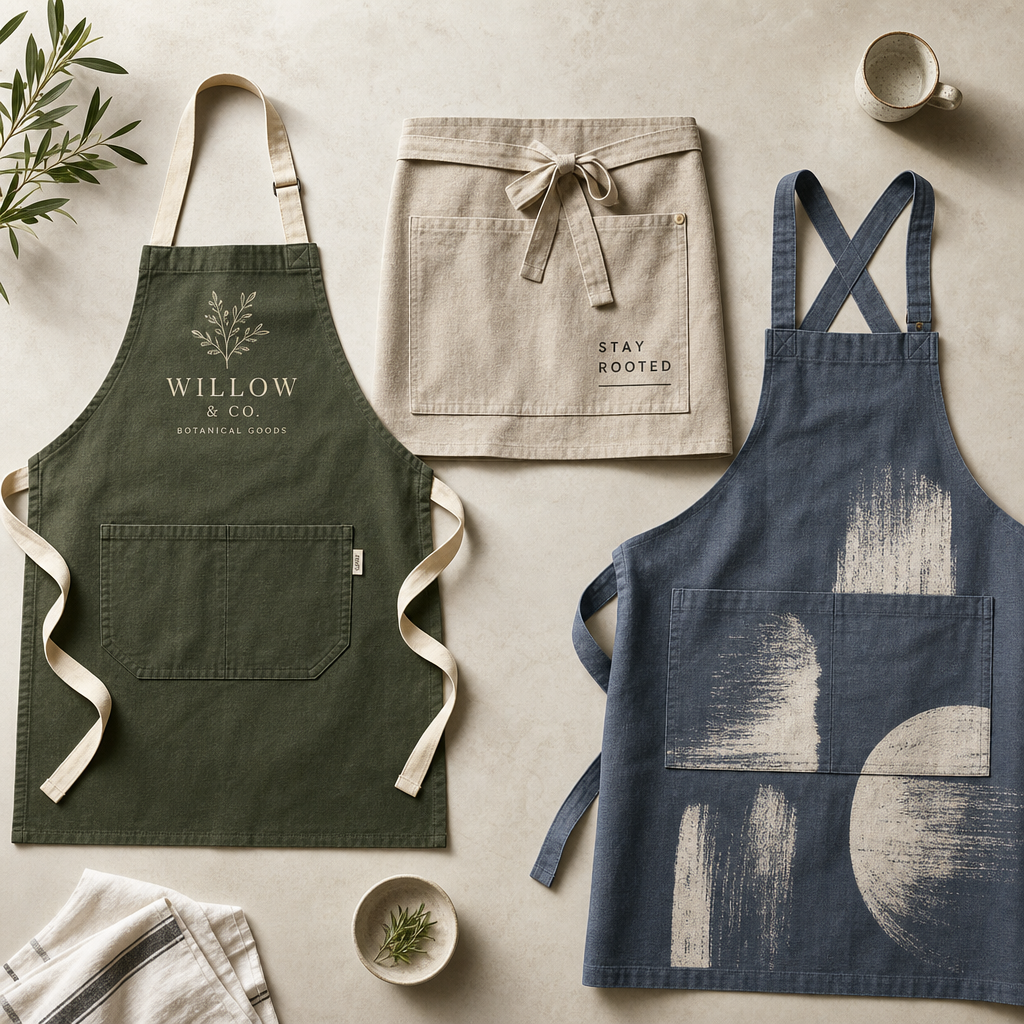
- Apron Styles Explained: Bib, Waist, and Cross-Back
- Print Methods Compared: DTF, Embroidery, and Screen Print
- Fabric and Construction: What Actually Holds Up in a Working Kitchen
- Design Brief Essentials: What to Send Your Printer
- Minimum Orders and Pricing: What to Expect in the UK Market
- Ordering Checklist for Hospitality Buyers
- Frequently Asked Questions
- References
Quick Takeaways
| Key Insight | Explanation |
|---|---|
| DTF printing outperforms screen print for small runs | Direct to Film transfers hold fine detail and full colour at quantities as low as 1 unit, making them ideal for hospitality teams under 20 staff. |
| Personalised bib aprons are the industry standard for front-of-house | The bib format covers the chest, giving maximum branded real estate and protecting clothing from spills during service. |
| Artwork file format is the most common cause of delays | Send vector files (.ai or .pdf) or high-resolution PNGs at 300 dpi minimum. JPEG logos from a website will produce blurry prints. |
| Washing instructions directly affect print lifespan | DTF prints on aprons last 50 or more commercial washes when turned inside out and washed at 40C or below. Tumble drying at high heat degrades transfer edges fastest. |
| Branded aprons hospitality buyers trust most come with wash-care labels | A branded neck label replaces the manufacturer label, reinforcing your brand at zero extra customer cost and signalling quality to staff. |
| Colour consistency matters more than people expect | Request a physical proof or signed-off digital mock-up before bulk production. Pantone-referenced colours are the only reliable way to match brand guidelines. |
| Free shipping thresholds change the unit economics considerably | Suppliers such as Psyque offer free UK shipping on orders over £45, which means consolidating a reorder can save more than a bulk discount on unit price alone. |
Why Branded Aprons Matter in Hospitality
A branded apron does three things simultaneously: it tells customers who your staff are, it reinforces visual identity in every social media photo taken on your premises, and it signals to your team that they belong to something professionally run. None of those outcomes happen with an unbranded poly-cotton apron in generic black.
According to a Statista survey on hospitality consumer behaviour, visual presentation of staff consistently ranks in the top five factors affecting perceived service quality in food service environments. That is not a soft metric. It translates directly into repeat visits and online review scores.
In practice, the businesses that resist branded workwear tend to use one of two justifications: cost, or the belief that customers do not notice. Both arguments collapse under scrutiny. Branded aprons hospitality buyers pay roughly the same per unit as plain alternatives once you account for replacement frequency, because print durability has improved dramatically with modern transfer technology. And customers absolutely notice, even if they cannot articulate why one restaurant feels more polished than another.
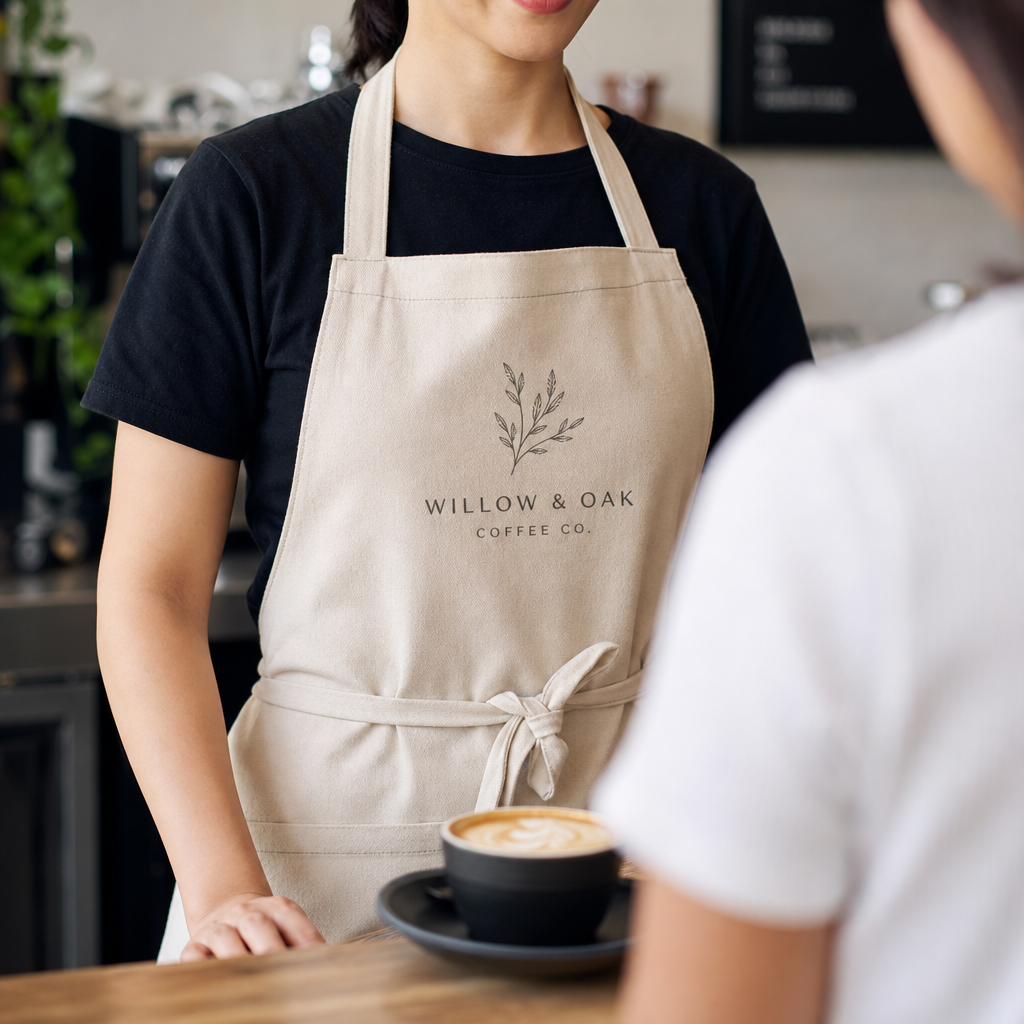
Pro tip: If you run multiple locations, order a small batch of aprons with location-specific details, such as a branch name or postcode, beneath the main logo. It costs almost nothing extra on a per-unit basis and helps customers make social posts that tag the right venue.
Apron Styles Explained: Bib, Waist, and Cross-Back
Choosing the wrong style is the most expensive mistake a hospitality buyer makes, because it is only obvious once the aprons are in service. Each style suits a different role and environment.
Personalised Bib Aprons: The Front-of-House Default
Personalised bib aprons UK suppliers consider the bib format their highest-volume hospitality product for good reason. It covers from chest to knee, protects against front-of-house spills, and gives a substantial print area across the chest and bib panel. Standard bib aprons run to 80cm or more in length and fit over most uniforms without restriction.
A common mistake is ordering bib aprons with a single tie point at the back, which causes the apron to twist sideways during a long service shift. Look for aprons with a fixed neck loop and twin tie strings at the waist rather than a single cross-back cord.
Waist Aprons: Better for Bar and Counter Service
Waist aprons cover from hip to mid-thigh and are preferred by bartenders and baristas who need unrestricted upper-body movement. The print area is limited to a small chest pocket or lower panel, so designs need to be compact. If your brand identity relies on a detailed illustration, a bib format will serve you better.
Cross-Back Aprons: Premium Positioning
Cross-back, or H-back, aprons have grown in popularity in independent restaurants and specialty coffee shops because they photograph well and eliminate neck strain over long shifts. They command a higher unit cost, typically 30 to 50 percent more than a comparable bib apron, but the premium appearance justifies the investment for dine-in venues where staff appearance is part of the experience.
Print Methods Compared: DTF, Embroidery, and Screen Print
The print method you choose affects cost, durability, colour range, and minimum order quantity. Each has a legitimate use case, and none of them is universally best.
Direct to Film, the method used in-house by Psyque, transfers a full-colour printed film directly onto the fabric using a heat press. It requires no screens, no minimum colour count, and no setup fee per design. That makes it the most practical option for hospitality businesses ordering fewer than 50 units per design, and it handles photographic detail and gradients that screen printing simply cannot reproduce at small quantities.
"DTF printing has fundamentally changed the economics of small-batch branded workwear. A single-unit run is now as cost-effective per print as a run of 12 was five years ago." -- Industry commentary from the British Promotional Merchandise Association, 2023 market review.
Embroidery produces a raised, textured finish that reads as premium, particularly on thicker fabrics. It is excellent for small logo placement on a chest pocket but becomes impractical for large chest prints because the stitch count drives up cost rapidly. A 100mm embroidered logo on 20 aprons is affordable. A full chest design on 20 aprons in embroidery is not.
Screen printing remains the most cost-efficient method for large runs of simple designs, typically one to three colours. Setup costs are high, but unit cost drops sharply above 50 pieces. For a hospitality group ordering a single colourway design across 200 or more aprons, screen print can still win on price.
| Print Method | Best For | Key Limitation |
|---|---|---|
| DTF (Direct to Film) | Full-colour logos, small to medium runs (1 to 100 units), complex artwork | Slightly higher unit cost than screen print on very large orders |
| Embroidery | Small chest logo on premium aprons, formal dining venues | High stitch-count cost on large designs, not suitable for photographic prints |
| Screen Print | Large runs (100 or more units), simple 1-3 colour designs, low unit cost priority | High setup fees, poor value under 50 units, limited to solid colour artwork |
Pro tip: If your logo uses a gradient, a drop shadow, or more than three colours, do not request a screen print quote. You will either pay for colour separations that inflate the price or end up with a simplified version of your logo that damages brand recognition.
Fabric and Construction: What Actually Holds Up in a Working Kitchen
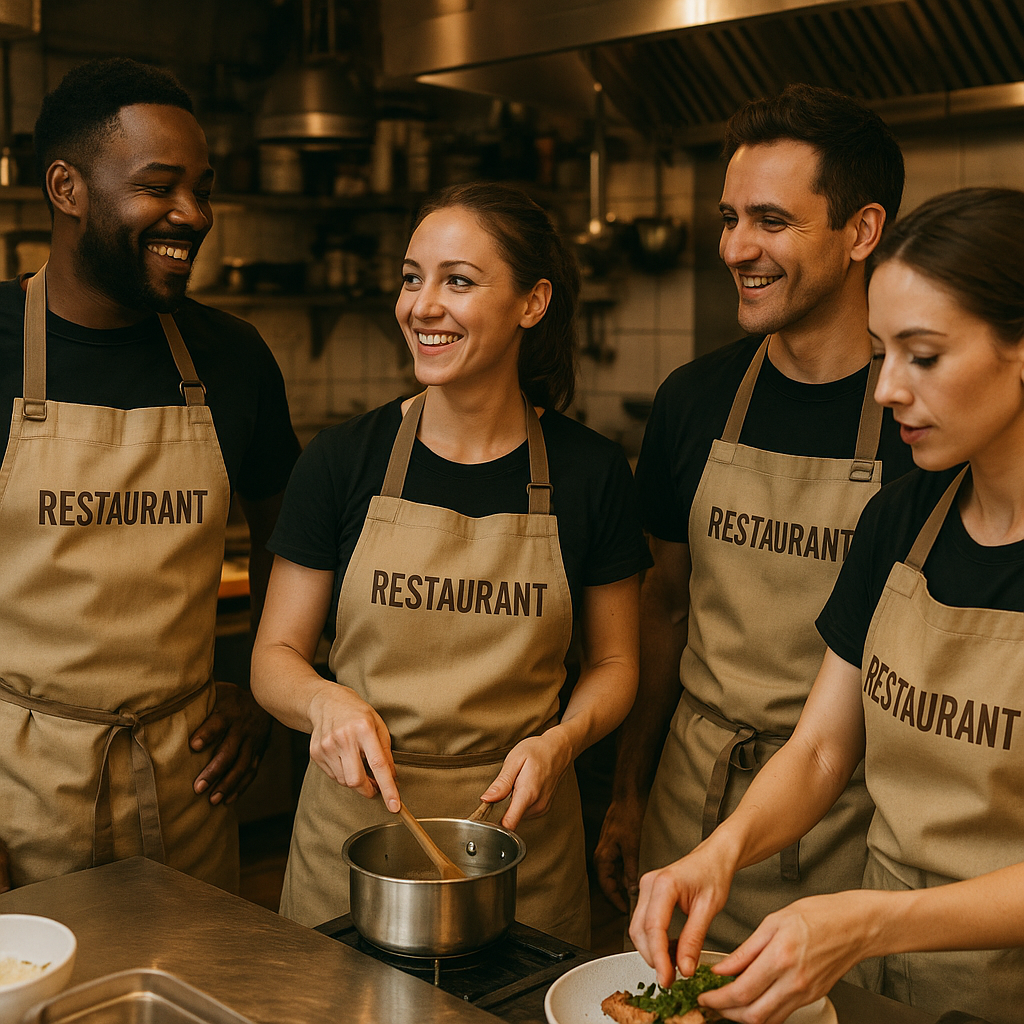
Fabric choice in a hospitality apron is not a lifestyle decision. It is a durability and safety decision. The wrong fabric in a kitchen environment creates laundry problems, print failures, and in some cases genuine hazards.
Poly-Cotton Blends: The Practical Choice
A 65 percent polyester, 35 percent cotton blend is the most common fabric in commercial hospitality aprons, and for good reason. The polyester content resists shrinkage and dries quickly after washing, while the cotton content allows DTF and screen prints to adhere cleanly. Poly-cotton aprons survive repeated commercial washing at 60C without significant colour loss in the fabric, though the print requires lower temperatures as noted below.
100 Percent Cotton: Better for Print, Harder to Maintain
Full cotton accepts ink more readily and often produces richer print depth, but it shrinks after washing, fades faster under commercial laundry chemicals, and takes longer to dry. For cafes with low laundry turnover, cotton can work. For a pub kitchen washing six aprons daily, it creates logistical problems within weeks.
Waxed Canvas and Denim: Niche, Not General Purpose
Waxed canvas and denim aprons photograph beautifully and are increasingly popular in independent coffee shops and craft cocktail bars. They are not suitable for printed branding in most cases. The surface texture makes heat-press adhesion unreliable, and the premium unit cost makes reprinting expensive. Embroidery is the only print method that works consistently on these materials.
Design Brief Essentials: What to Send Your Printer
A poorly prepared design brief is the single most common cause of delayed orders, reprints, and disappointed customers. This is not a subjective problem. It has a checklist solution.
Send your printer: a vector logo file (PDF or AI preferred), your brand colour references in Pantone or CMYK values, a clear instruction on placement (chest centre, left breast, or full front), the size of the print in centimetres, and your expected wash-care requirements. If you do not have vector files, a PNG at 300 dpi at the actual print size is the minimum acceptable alternative.
What not to send: a logo grabbed from your website header, a screenshot of your Facebook page, a JPEG saved at 72 dpi, or a Word document with the logo embedded. Every one of those will produce a blurry or pixelated print, and the responsibility for that outcome lies with the buyer who supplied the file, not the printer who used it.
Placement decisions carry more weight than most buyers realise. A chest-centre print on a bib apron is visible in every face-on interaction with customers. A left-breast logo is subtle and professional, closer to corporate workwear convention. A large full-front panel print is bold and works well in open-kitchen environments where staff are seen from distance. None of these is wrong. All of them communicate something different about your brand.
Minimum Orders and Pricing: What to Expect in the UK Market
UK pricing for custom printed aprons varies significantly depending on the supplier model, the print method, and the base garment quality. Understanding the market structure saves money and prevents mismatched expectations.
DTF specialist printers like Psyque can produce single units with no minimum order requirement. Screen print suppliers typically require 25 to 50 units minimum per design before setup costs are absorbed into a reasonable unit price. Embroidery suppliers usually work from a 10-unit minimum.
A mid-quality poly-cotton bib apron with a single DTF chest print in the UK market currently sits between £8 and £18 per unit, depending on quantity and supplier. Cross-back and premium denim styles sit significantly higher. Budget below £6 per printed unit and you are accepting compromises on either fabric quality, print resolution, or both.
Shipping thresholds matter more than most buyers calculate at order time. A supplier offering free UK shipping on orders over £45, as Psyque does, effectively reduces unit cost on any order that crosses that threshold. On a 10-apron order at £10 per unit, saving £5 to £8 in shipping is a meaningful percentage reduction in total spend.
A common mistake is ordering the minimum quantity to test quality, then placing a rush reorder when the initial stock runs out. Always order 10 to 15 percent above your immediate need. Hospitality environments are hard on aprons, and running a venue with insufficient workwear mid-week is a management problem that a modest buffer completely eliminates.
Ordering Checklist for Hospitality Buyers
Use this checklist before placing any order for branded aprons in a hospitality context. Each item corresponds to a decision point that, if skipped, typically costs more to fix after production than it would have cost to address beforehand.
- Confirm apron style matches the role: bib for front-of-house, waist for bar, cross-back for premium dine-in.
- Verify fabric composition and wash tolerance against your laundry process.
- Supply artwork as a vector file or 300 dpi PNG at actual print dimensions.
- Confirm Pantone or CMYK colour references for all brand colours in the design.
- Specify exact print placement and dimensions in centimetres.
- Request a digital mock-up or physical sample before approving bulk production.
- Calculate total order value including VAT and shipping against the free shipping threshold.
- Order 10 to 15 percent above immediate need to cover replacements.
- Confirm expected dispatch time against your go-live date, allowing buffer for any amendments.
- Check whether the supplier offers neck label replacement or custom labelling as an add-on.
Psyque's in-house DTF printing and heat-press setup means turnaround times are not dependent on outsourced production, which is a practical advantage for hospitality buyers working to a venue opening date or seasonal relaunch. Explore the full range of branded workwear options at Psyque to find apron styles that suit your team's roles, and check their custom printing capabilities if you are also sourcing printed t-shirts or staff shirts alongside aprons.
Frequently Asked Questions
What is the minimum order quantity for custom printed aprons in the UK?
It depends entirely on the print method and supplier. DTF print specialists, including Psyque, can produce a single apron with no minimum order. Screen print suppliers typically require 25 to 50 units before setup costs are absorbed. If you need fewer than 20 aprons, DTF is almost always the most cost-effective route.
How long do DTF printed logos last on hospitality aprons?
In practice, a properly applied DTF transfer on a poly-cotton apron lasts 50 or more washes when cared for correctly. That means washing inside out at 40C or below, avoiding tumble drying at high heat, and not using bleach-based detergents. Commercial laundry chemicals are harsher than domestic products, so brief your laundry supplier on appropriate wash settings when you receive the aprons.
What file format should I supply for my logo?
A vector file in PDF or AI format is ideal. If you do not have vector artwork, supply a PNG file at 300 dpi at the actual intended print size. A logo that is 150mm wide on the apron needs to be supplied at 300 dpi at 150mm, not scaled up from a small web image. Any reputable printer will tell you if your supplied file is unsuitable before printing, not after.
Can personalised bib aprons be ordered in multiple sizes?
Most hospitality aprons are one-size or come in two lengths (standard and long) rather than conventional clothing sizes. The adjustable neck loop and waist ties accommodate a wide range of body types. If you have staff members who require a significantly longer or shorter apron, discuss this with your supplier before ordering, as some styles are available in junior or extended lengths.
Is embroidery or DTF printing better for branded aprons in hospitality?
For most hospitality applications, DTF printing is the stronger choice. It handles complex logos, multiple colours, and fine detail that embroidery cannot replicate cost-effectively. Embroidery makes sense if your brand identity relies on a textured, premium look and the design is simple, typically a small crest or wordmark under 80mm. For a cafe or restaurant logo with any gradient, shadow, or photographic element, DTF is the correct method.
How do I match my brand colours accurately on printed aprons?
Supply your brand colours as Pantone references or CMYK values, not as RGB or hex codes. Hex and RGB values are screen-colour standards that do not translate directly to physical ink mixing. If your brand guidelines only include a hex code, a good printer can convert it, but supply the hex alongside a note that it is screen-only. Request a physical sample print before approving bulk production whenever colour accuracy is critical.
Do suppliers like Psyque print on aprons I supply myself?
Some DTF print specialists will apply transfers to customer-supplied garments, often called print-on-demand on customer stock. Contact Psyque directly to confirm whether this is available for aprons, as policies vary. Buying the base apron through your printer is generally simpler because it guarantees fabric compatibility and keeps a single point of accountability for the finished product.
If you have ordered custom printed aprons for a hospitality business, share what worked well and what you would do differently. Practical experience from people running real venues is the most useful kind of information in this buying decision.
We would love your feedback and any insights you would share with others. What perspective would you add?
References
- Statista: Consumer research and market data on hospitality industry trends and staff presentation
- Forbes: Business branding and visual identity resources for small and independent businesses
- UK Food Standards Agency: Guidance on appropriate workwear and hygiene standards in food service environments
- NI Business Info (UK Government business resource): Guidance on workwear procurement and supplier management for small businesses
- British Promotional Merchandise Association: Industry standards and market data for branded merchandise and printed workwear in the UK