

Custom Printed Softshell Jackets for Outdoor Workers UK
If your outdoor workers are heading out in unbranded fleeces or mismatched hi-vis layers, you are leaving a serious impression gap. A custom printed softshell jacket UK solves two problems at once: it keeps workers comfortable in variable British weather, and it puts your brand front and centre on every site visit, delivery, or client interaction. The UK outdoor workwear market is growing, and businesses that invest in proper branded softshell jacket workwear consistently report stronger team cohesion and more professional client perception than those using generic kit.
Table of Contents
- Quick Takeaways
- Why Softshell Jackets Dominate Outdoor Worker Uniforms
- DTF Printing vs Embroidery vs Screen Print on Softshell
- What to Look for in a Branded Softshell Jacket for Workwear
- Ordering Custom Printed Softshell Jackets for Your Team
- Common Mistakes Businesses Make with Outdoor Worker Uniforms
- Frequently Asked Questions
- References
Quick Takeaways
| Key Insight | Explanation |
|---|---|
| DTF printing holds better on softshell fabric than screen print | Direct to Film transfers bond with the outer shell's woven surface without cracking at flex points, making them ideal for jackets that see heavy daily use. |
| Chest left placement is the highest-visibility position for logos | On a softshell jacket, the chest left print sits at eye level during handshakes and client conversations, making it the most effective branding location. |
| 300gsm+ fabric weight is the minimum for professional outdoor workwear | Lighter softshell fabrics look and feel budget. Heavier fabrics drape better, last longer in rough conditions, and accept prints with more consistent colour output. |
| Wind and water resistance are non-negotiable for UK outdoor workers | The UK's unpredictable weather means a softshell jacket that is not at least DWR-coated will be abandoned for waterproofs, defeating the uniform purpose entirely. |
| Full-back prints dramatically increase brand visibility on job sites | Workers moving away from clients or the public display large back prints constantly. This turns every worker into a mobile billboard without any extra marketing spend. |
| Minimum order quantities matter when budgeting team uniforms | Suppliers like Psyque accommodate smaller runs, which matters for growing businesses that cannot yet commit to large volume orders but still need professional branded kit. |
| Consistent branding across jackets, polos, and hoodies multiplies perceived professionalism | A coordinated uniform range sends a stronger signal than mixing printed and unprinted garments. Clients and customers notice uniformity even if they do not consciously register it. |
Why Softshell Jackets Dominate Outdoor Worker Uniforms
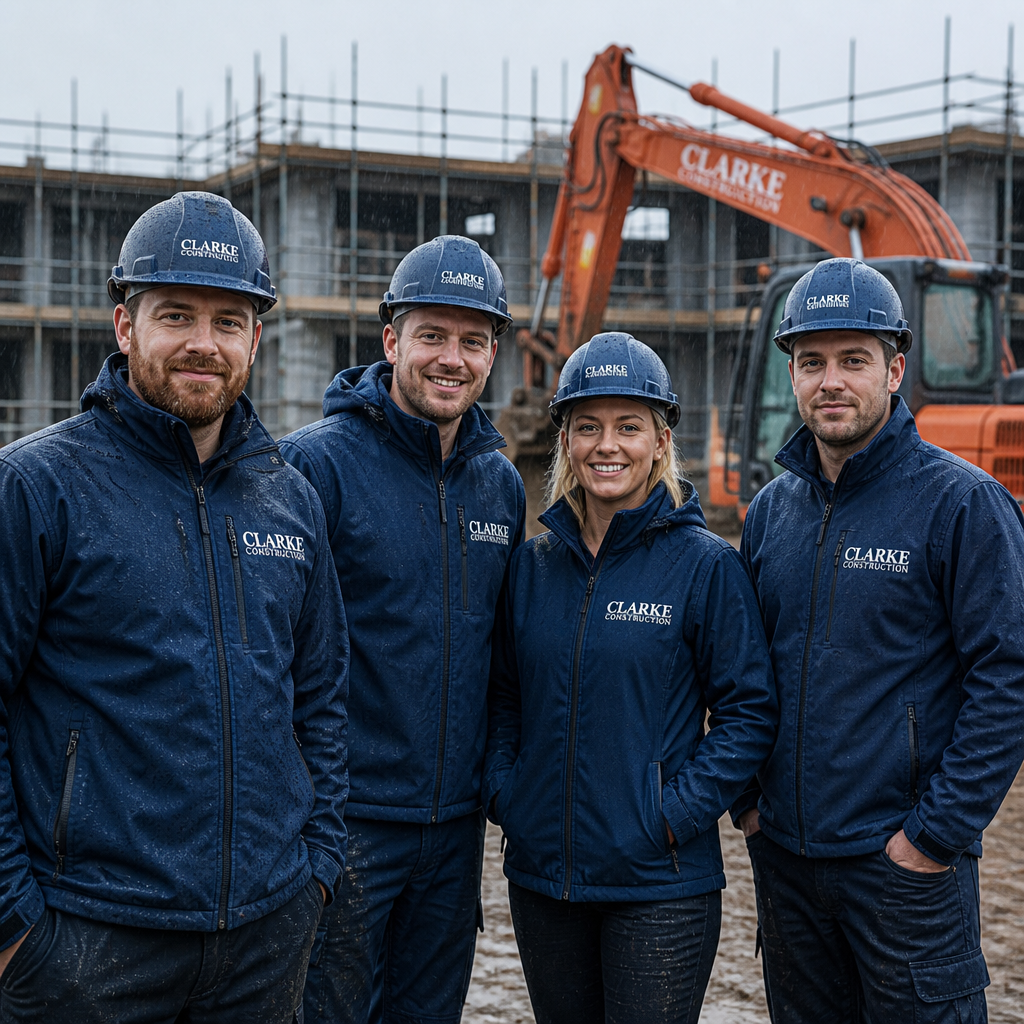
The softshell jacket has become the default outer layer for outdoor worker uniforms in the UK, and the reasons are practical rather than fashionable. A well-constructed softshell offers a balance of wind resistance, stretch, and breathability that no standard fleece or padded gilet can match across a full working day.
In practice, outdoor workers who are active throughout the day, such as landscapers, construction supervisors, delivery drivers, and event staff, need a layer that moves with them and manages moisture without trapping heat. Softshell fabric achieves this by combining a stretch woven outer with a bonded fleece inner, making it significantly more functional than alternatives at a comparable price point.
For an outdoor worker uniform UK context, the softshell jacket also has a visual professionalism advantage. It sits closer to a corporate aesthetic than a hi-vis anorak or a puffer jacket. This matters when workers are client-facing, whether on a landscaping project, at an outdoor event, or during a site inspection. The jacket signals competence rather than just practicality.
"Workwear that functions well and looks professional simultaneously is not a luxury. It is a competitive baseline for any business operating in public-facing environments." - British Safety Industry Federation, Workwear Standards Guidance
The other factor that makes softshell the smart choice for printing is surface compatibility. The outer face of a softshell jacket is typically a tightly woven polyester blend, which accepts DTF heat transfers extremely well. This gives businesses the ability to apply detailed, full-colour logos without the limitations that embroidery imposes on complex graphics.
Why Fleeces and Hoodies Fall Short for Site Work
Fleeces lack any wind or water resistance, making them uncomfortable and impractical the moment conditions turn. Hoodies work well for indoor casual wear but their knit construction does not provide the structured professional appearance that an outdoor worker uniform requires. A softshell jacket addresses all of these gaps in a single garment.
Pro tip: If your team works across seasons, choose a softshell with a removable or thicker inner layer so the same branded jacket works from March through November without needing a separate winter replacement garment.
DTF Printing vs Embroidery vs Screen Print on Softshell
This is where most businesses make an expensive mistake. The decoration method matters as much as the garment itself, and on softshell fabric specifically, not all methods perform equally.
DTF (Direct to Film) Printing
DTF printing applies a full-colour design via a heat-pressed film transfer. The result is a smooth, durable print that flexes with the fabric and does not crack under the physical stress of outdoor work. Psyque specialises in DTF printing precisely because it handles complex multi-colour logos without colour limitations and works on the mixed fabric compositions common in premium softshell jackets.
The durability of a DTF print on a quality softshell is excellent. In practice, well-applied DTF transfers withstand repeated industrial washing and daily physical wear without peeling at edges, provided the heat-press temperature and pressure are correctly calibrated for the specific fabric. This is not something every print supplier gets right, which is why in-house printing capability matters.
Embroidery on Softshell
Embroidery looks sharp on a small chest logo in one or two colours. But it adds weight to the fabric, can distort the outer shell surface, and creates backstitch holes that compromise the DWR coating and, in some cases, the wind-resistant properties of the jacket. For detailed brand graphics or anything beyond a simple text logo, embroidery is the wrong choice on softshell.
Screen Printing on Softshell
Screen printing is not well-suited to softshell jackets. The process requires a flat, porous surface to hold ink properly. The smooth, slightly water-resistant outer face of a softshell causes adhesion problems, and the thick ink layers can crack when the fabric flexes. Screen print is better reserved for heavyweight cotton t-shirts, not technical outerwear.
| Decoration Method | Suitability for Softshell Jackets | Best Use Case |
|---|---|---|
| DTF (Direct to Film) Printing | Excellent. Flexible, full-colour, durable on woven outer shells. Does not compromise fabric performance. | Complex multi-colour logos, large chest or back prints, detailed brand graphics on outdoor workwear. |
| Embroidery | Moderate. Good for small, simple logos. Adds weight and can distort or compromise the shell surface. | One or two colour chest badge logos where a raised texture is preferred over flat print. |
| Screen Printing | Poor. Ink adhesion is unreliable on smooth DWR-coated outer shells. High crack risk under flex stress. | Not recommended for softshell. Better suited to cotton or cotton-blend flat knit garments. |
Pro tip: Always request a test print on the specific softshell fabric before placing a large uniform order. Fabric compositions vary between jacket models and what works on one 96% polyester softshell may behave differently on a stretch woven nylon-blend version.
What to Look for in a Branded Softshell Jacket for Workwear
Not every softshell jacket sold as workwear-ready actually performs under real outdoor working conditions. Businesses choosing jackets for a full team need to assess several specific factors before committing to an order.
Fabric Weight and Construction
For genuine outdoor worker use, aim for a jacket with a 300gsm or higher fabric weight. This is the point at which the garment feels substantial rather than promotional. Lighter softshells are fine for casual branded wear but will not hold up on construction sites, event setups, or outdoor logistics operations.
Look for a bonded three-layer or two-layer construction where the outer shell, insulating layer, and inner lining are laminated together. This prevents the inner lining from bunching or shifting during active wear, which both looks unprofessional and reduces thermal efficiency.
DWR Coating and Wind Resistance
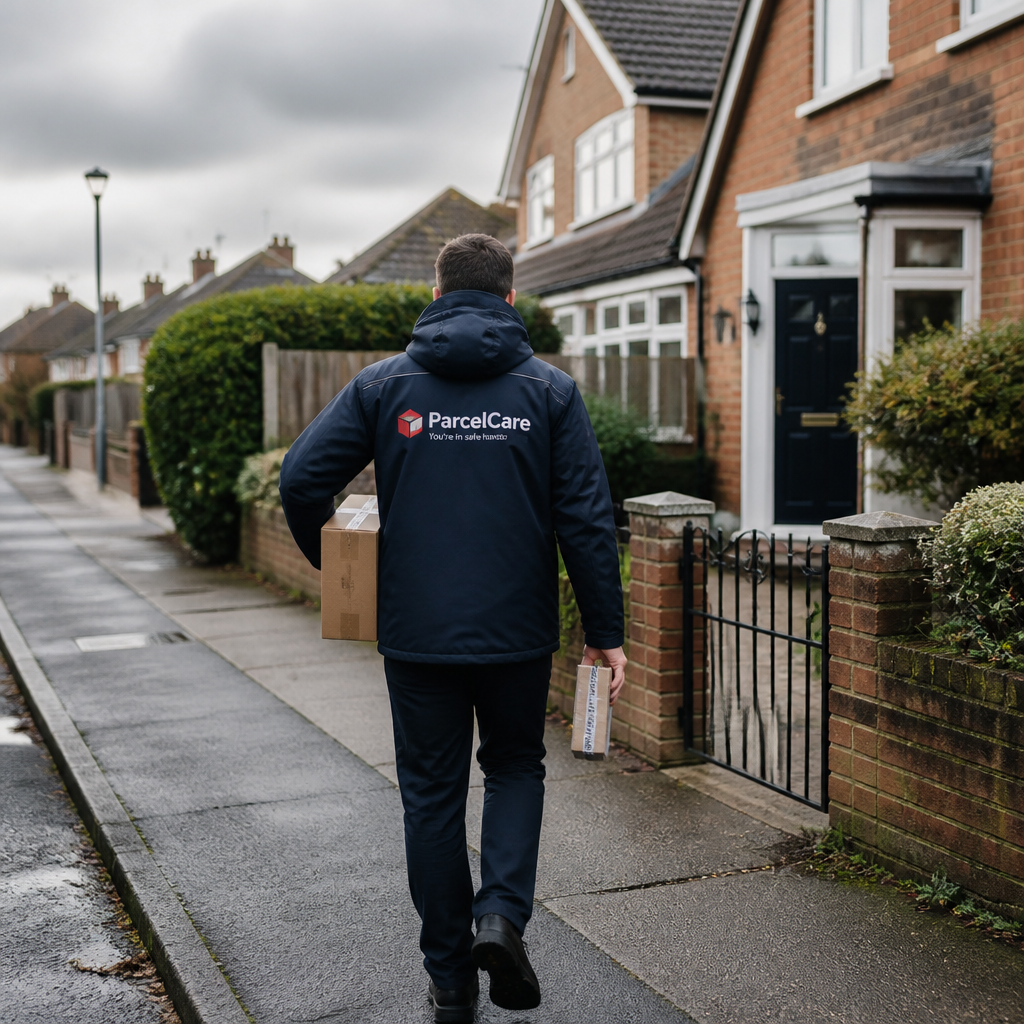
DWR (Durable Water Repellent) coating is the outer treatment that causes water to bead and roll off rather than soak in. For a UK outdoor worker uniform, this is not optional. British weather involves enough light rain, morning dew, and general damp that a jacket without DWR treatment will feel wet within an hour of outdoor exposure.
Wind resistance is equally important. A softshell with at least 40 CFM (cubic feet per minute) wind resistance rating will block enough wind to keep workers warm without needing an additional layer underneath. This matters for workers on exposed sites or working alongside vehicles where wind chill is a factor.
Practical Features for Working Environments
Zip pockets are essential, not a nice-to-have. Workers carrying phones, keys, or small tools on outdoor jobs will use unzipped pockets and lose items. Thumb loops on cuffs prevent sleeves riding up. A chin guard on the zip prevents face chafing on longer outdoor shifts. These details separate genuinely functional workwear from garments that are simply priced and sold as workwear.
Ordering Custom Printed Softshell Jackets for Your Team
The ordering process for a team uniform run has more variables than a single garment order, and getting these right upfront prevents delays and reprinting costs.
Sizing Across a Team
The most consistent error in bulk workwear orders is using standard UK clothing sizes without accounting for working fit. Outdoor workers who are bending, climbing, or carrying equipment need a jacket with additional sleeve length and chest allowance. If your supplier uses fitted sizing, size up by one across the board for active outdoor roles. Request a sample size in the most common size your team wears before ordering the full run.
Logo File Preparation for DTF Printing
For DTF printing, submit your logo as a vector file (AI, EPS, or PDF) at the actual print size. A common mistake is submitting a small PNG file and requesting a large chest or back print. Low-resolution artwork produces blurry prints, and no printing process can recover detail that was never in the original file. If your logo only exists in low resolution, a supplier like Psyque can sometimes assist with artwork preparation, but this adds lead time.
The data consistently shows that businesses with professionally prepared artwork files see faster turnaround times and fewer reprints than those who submit files that require correction. This is not a minor point when you are equipping an entire team on a deadline.
Print Placement Decisions for Maximum Brand Impact
For branded softshell jacket workwear, the most effective configuration is a chest left logo for close-range identification combined with a full back print for distance visibility. The chest left placement works at conversational range during client interactions. The full back print works from 5 to 20 metres, which covers the typical distance at which other workers and the public will observe your team on a site.
Sleeve prints are a secondary option rather than a primary branding position. They add brand presence without increasing cost significantly, but they should support the chest and back placements rather than replace them.
Common Mistakes Businesses Make with Outdoor Worker Uniforms
Having seen how this plays out across different business types and order sizes, the same errors appear repeatedly. These are worth addressing directly because they are all preventable.
The first mistake is buying the cheapest softshell available and expecting it to perform like a premium garment. A jacket at the very bottom of the price range will typically use a lighter fabric, a thinner DWR coating, and cheaper zips. These garments look fine on day one. By month three of daily outdoor use, they are faded, the zips are failing, and the print is peeling at stress points. The cost of replacing the uniform run cancels out any initial saving.
The second mistake is ordering all jackets in a single size to simplify the process. Outdoor workers who are given garments that do not fit will not wear them consistently. A jacket that is too tight across the shoulders restricts movement. A jacket that is too long in the body bunches when workers sit in vehicles. Neither outcome serves the business.
A common mistake that businesses make when switching to branded workwear is treating the jacket as a standalone item rather than part of a coordinated uniform. A custom printed softshell jacket worn over an unbranded polo or a different brand's t-shirt undermines the professional image the jacket is meant to create. The jacket should be part of a complete uniform system that includes branded base layers, such as custom t-shirts or polos, so the branding is consistent regardless of whether the jacket is on or off.
According to Statista's UK apparel market research, the branded workwear segment has grown consistently because businesses are recognising that uniform presentation directly affects customer perception of service quality. This is not limited to large companies. Small and medium-sized businesses that invest in consistent branded workwear report improved client confidence and easier staff identification on shared work sites.
The final common mistake is leaving artwork decisions too late. Businesses that brief their print supplier one week before a job start date inevitably end up with rushed results or delays. Allow at least two weeks from finalised artwork sign-off to dispatch for a team uniform run, and build in time for a proof review before the full order is produced.
We'd love to hear about your experience with branded workwear for your outdoor team. Have you found a particular print placement or jacket specification that worked especially well for your business?
Frequently Asked Questions
What is the best printing method for a custom printed softshell jacket in the UK?
DTF (Direct to Film) printing is the best method for custom printed softshell jackets in the UK. It produces full-colour, detailed prints that flex with the fabric and withstand the daily physical demands of outdoor work. Embroidery is acceptable for small, simple logos but is not recommended for complex or large designs. Screen printing is not suitable for softshell fabrics.
How long does a DTF print last on a branded softshell jacket used for outdoor work?
A properly applied DTF print on a quality softshell jacket will typically last 50 or more washes without significant fading or peeling, provided the garment is washed at or below 40 degrees Celsius and not tumble dried on high heat. In outdoor working conditions involving daily wear, this translates to two or more years of consistent use before any visible print degradation.
What is the minimum order quantity for custom printed softshell jackets for a small team?
This varies by supplier. Psyque caters to smaller businesses and can accommodate lower minimum order quantities than large-scale workwear suppliers, which makes branded softshell jackets accessible for teams of five to twenty rather than only viable for enterprises ordering hundreds of units at once. Always confirm minimum quantities and any per-unit pricing adjustments before placing an order.
Can I order custom printed softshell jackets alongside other branded workwear items for a coordinated uniform?
Yes, and this is the recommended approach. Ordering a coordinated uniform that includes custom printed softshell jackets, polos, hoodies, and t-shirts from the same supplier ensures consistent colour matching and print quality across all garments. Psyque offers a range of custom printed garments including workwear bundles, which simplifies the process of building a complete branded outdoor worker uniform.
What file format should I submit for my logo when ordering branded softshell jacket workwear?
Submit your logo as a vector file in AI, EPS, or PDF format. These formats are resolution-independent, meaning the design will print sharply at any size from a small chest logo to a large full-back print. Avoid submitting JPEG or PNG files from websites, as these are typically too low in resolution for high-quality garment printing and will produce blurry results on the finished jacket.
Are custom printed softshell jackets suitable for year-round outdoor worker uniforms in the UK?
A mid-weight softshell jacket (300gsm to 380gsm) is suitable for UK conditions from approximately March through November. For the winter months, particularly December through February in Scotland and Northern England, workers will typically need an additional insulating layer underneath or a heavier insulated softshell. Many businesses choose to invest in a summer and a winter uniform configuration, with the branded softshell serving as the three-season outer layer.
References
- Statista UK apparel and workwear market data and industry statistics
- UK Health and Safety Executive guidance on personal protective equipment and workwear standards
- Forbes business coverage on branded merchandise and employee identity in the workplace
- British Safety Industry Federation standards and recommendations for outdoor workwear and PPE
- Business of Fashion industry reporting on technical outerwear trends and branded workwear growth