

DTF Printing vs Heat Transfer Vinyl: Which Is Better?
If you have ever ordered custom printed clothing and wondered why one batch looks razor-sharp for years while another starts peeling after six washes, the answer almost always comes down to the printing method used. The debate around DTF printing vs heat transfer vinyl is not academic. It has real consequences for how your branded workwear holds up on a job site, how your event merchandise looks after repeated washing, and how much you pay per unit when ordering in bulk. This article breaks down exactly what each method does, where each one wins, and which one is the smarter choice for UK businesses ordering custom apparel.
Table of Contents
- Quick Takeaways
- What Is DTF Printing?
- What Is Heat Transfer Vinyl?
- Key Differences Explained
- DTF vs HTV: Full Comparison Table
- Which Is Better for UK Businesses?
- When to Choose DTF Printing
- When to Choose Heat Transfer Vinyl
- Cost Breakdown: DTF vs HTV UK
- Frequently Asked Questions
- References
Quick Takeaways
| Key Insight | Explanation |
|---|---|
| DTF handles full-colour complexity better | DTF printing transfers a full-colour ink film directly onto fabric, making photographic gradients and multi-colour logos straightforward to reproduce without layering. |
| HTV works best for simple, bold designs | Heat transfer vinyl is cut from single-colour sheets and layered manually, so designs with more than three or four colours become time-consuming and expensive. |
| DTF outlasts HTV in wash tests | In practice, DTF prints consistently survive 50+ washes without significant cracking, while standard HTV edges can begin lifting after 20 to 30 wash cycles depending on application pressure and fabric stretch. |
| HTV suits very small runs more cheaply | For one-off or two-off personalised items with a single-colour text or logo, HTV has a lower setup cost than DTF, which requires film printing and powder curing. |
| DTF works on almost any fabric | Unlike screen printing, DTF requires no fabric pre-treatment for most materials and bonds well to cotton, polyester, blends, and even nylon, making it ideal for mixed workwear orders. |
| HTV struggles on textured and stretchy fabrics | Vinyl sheets do not flex with the fabric the same way DTF adhesive does. On athletic wear, fleece, or ribbed material, HTV is more likely to crack or peel prematurely. |
| DTF is the better choice for branded bulk orders | For businesses ordering 10 or more units with a detailed logo, DTF delivers better consistency, lower per-unit cost at scale, and a more professional finish across the run. |
What Is DTF Printing?
DTF stands for Direct to Film. The process involves printing a design onto a special release film using water-based inks, applying a hot-melt adhesive powder to the wet ink, curing it with heat, and then heat-pressing the finished transfer onto a garment. The result is a full-colour print that bonds directly into the fabric fibres rather than sitting on top of them like a thick vinyl sheet.
At Psyque, DTF printing is done entirely in-house, which matters because it removes the quality inconsistencies that come from outsourcing transfers. Every print is checked before it leaves the facility, and the heat-press settings are calibrated for the specific fabric being used, whether that is a 100% cotton t-shirt or a polyester-blend workwear polo.
Pro tip: When briefing a DTF printer, always supply your logo in vector format (AI, EPS, or high-resolution SVG). Rasterised logos below 300 DPI will appear soft at standard print sizes, particularly on larger chest or back prints.
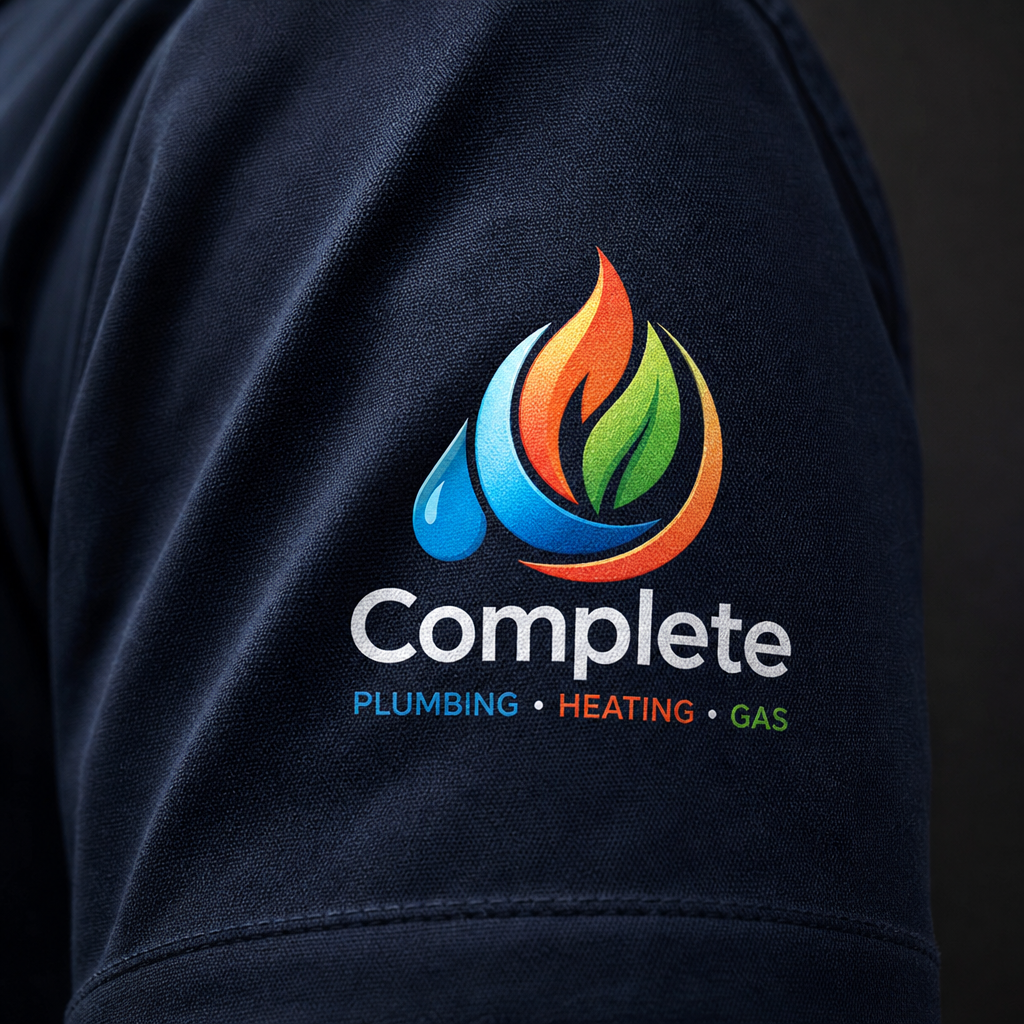
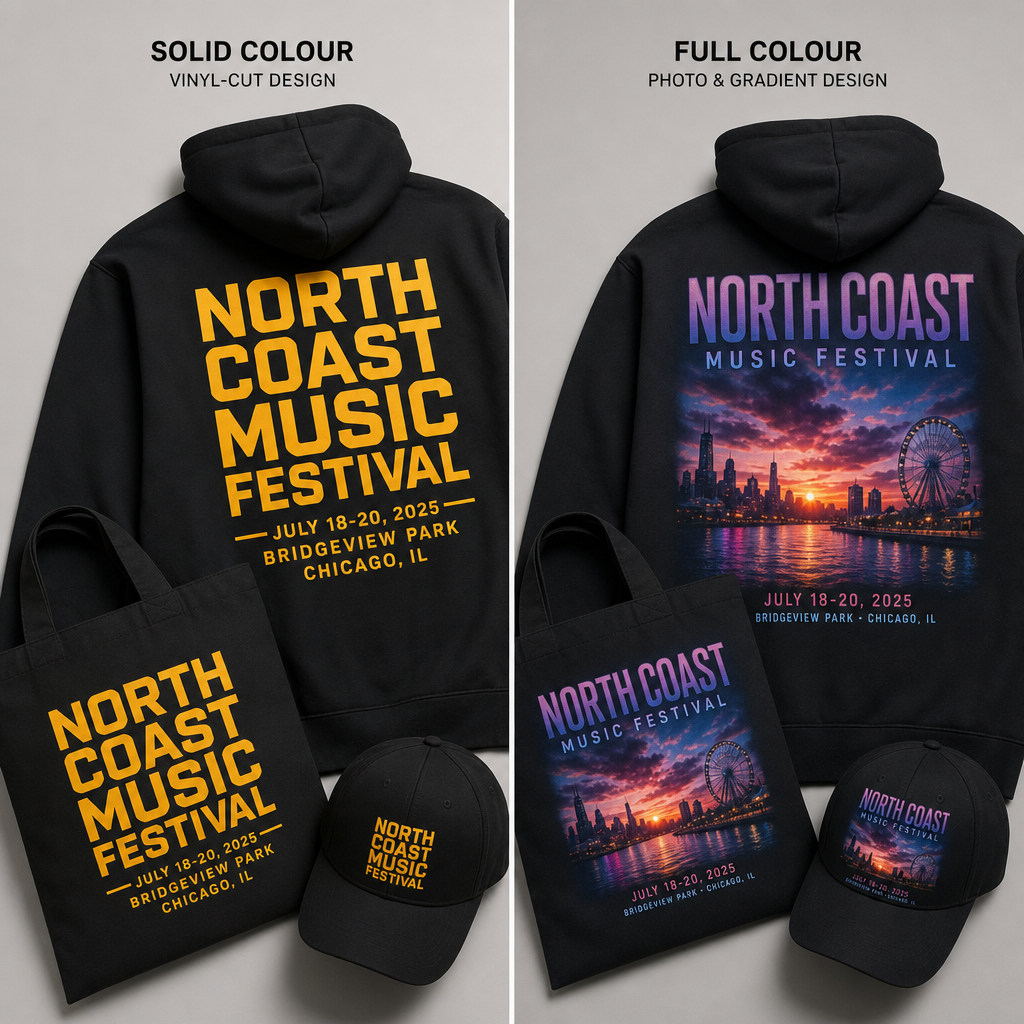
The key technical advantage of DTF over older transfer methods is the adhesive powder layer. It creates a flexible bond that moves with the garment, which is why DTF prints do not crack across seams or on chest areas that see repeated movement. A common mistake buyers make is assuming all iron-on or heat-press transfers are the same. They are not. DTF is a fundamentally different process from HTV, and the difference shows after the first dozen washes.
What Is Heat Transfer Vinyl?
Heat transfer vinyl, often called HTV or iron-on vinyl, is a coloured polyurethane or PVC film with a heat-activated adhesive backing. A design is cut from the vinyl sheet using a computer-controlled cutter, the excess material is weeded away by hand, and the remaining graphic is pressed onto the garment using heat and pressure.
HTV has been a staple of small-scale custom apparel for decades because the equipment is relatively affordable and the process is straightforward for simple designs. A single-colour text name on a sports shirt, a small logo on a cap, or a number on a football jersey are all well-suited to HTV because the design has clean edges and no colour blending required.
The limitation surfaces immediately when a design includes gradients, more than four distinct colours, or fine photographic detail. Each colour in an HTV design requires a separate cut sheet, which must be layered and pressed individually. A five-colour logo that takes seconds to set up for DTF printing can take 15 to 20 minutes of manual weeding and layering in HTV, and the alignment risk increases with each additional colour.
Key Differences Explained
Colour Range and Design Complexity
DTF printing reproduces the full CMYK colour spectrum in a single pass. There is no per-colour cost increase. A design with 12 colours costs the same per unit to print as a two-colour design. HTV operates on an entirely different logic: every colour is a separate physical sheet, so complexity adds direct labour and material cost.
In practice, this means that branded workwear orders with detailed company logos, photographic prints, or multi-colour graphics should default to DTF. Forcing a complex design into HTV is a false economy. The time cost and layering errors eat into any perceived saving on setup.
Wash Durability and Fabric Flexibility
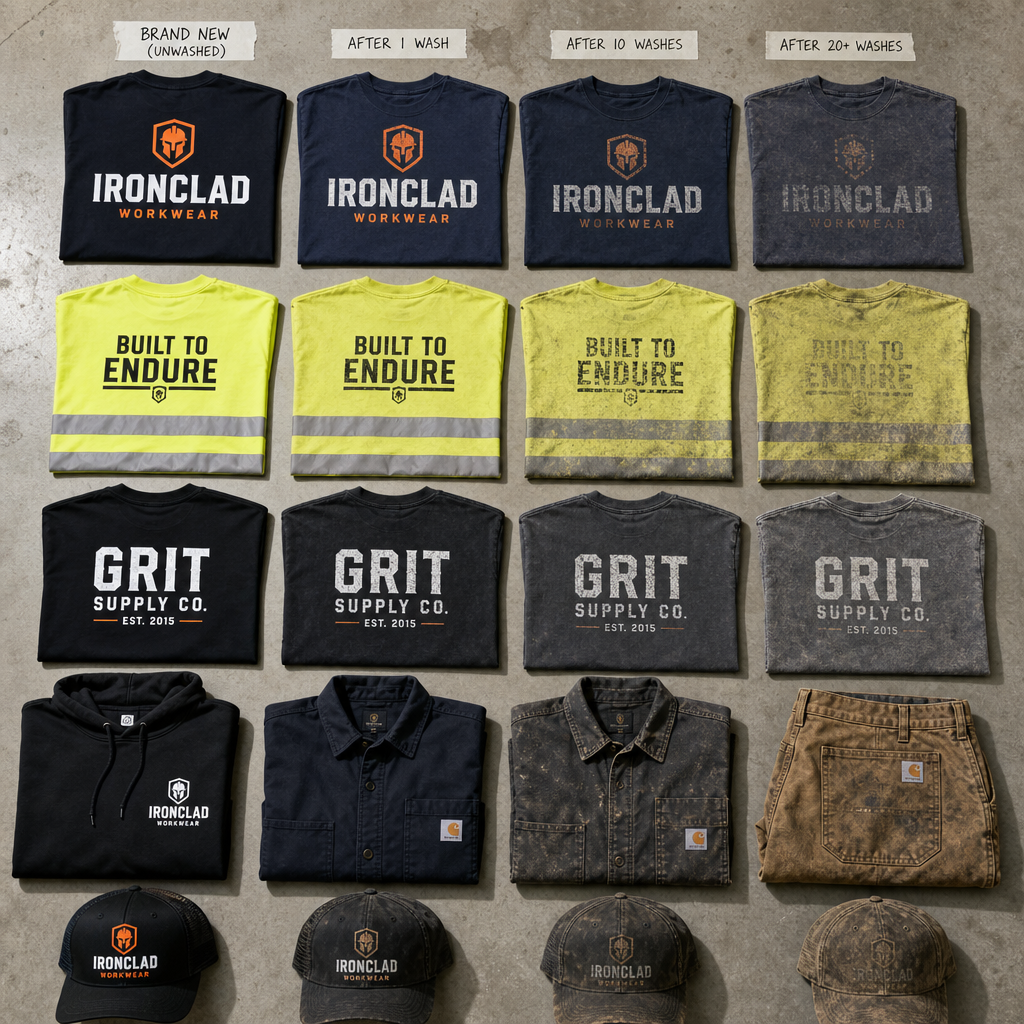
Durability data consistently favours DTF for garments that see regular commercial laundering. The adhesive used in DTF transfers stretches and recovers with the fabric. Standard HTV adhesive is more rigid, and repeated washing, particularly at 40°C or above, causes the edges to lift and the surface to crack.
For workwear that goes through industrial laundering or regular domestic washing at higher temperatures, this difference is not marginal. A Psyque DTF-printed hoodie washed weekly at 40°C will look presentable after a year of use. The same garment with a multi-layer HTV application is likely showing visible wear at the edges within three to four months.
Fabric Compatibility
DTF bonds effectively to cotton, polyester, cotton-polyester blends, linen, denim, and most synthetic performance fabrics. HTV performs best on smooth, flat, tightly woven materials. On fleece, French terry, ribbed knits, or heavily textured surfaces, vinyl adhesion is unreliable because the surface area contact is reduced.
For businesses ordering mixed workwear bundles that include both polo shirts and fleece hoodies, DTF is the only method that delivers consistent results across all garments without adjusting the print process per item.
DTF vs HTV: Full Comparison Table
The table below compares DTF printing and heat transfer vinyl across the factors that matter most for UK business and event apparel orders.
| Factor | DTF Printing | Heat Transfer Vinyl (HTV) |
|---|---|---|
| Colour complexity | Unlimited colours in one pass, full CMYK spectrum | Each colour requires a separate sheet and layering step |
| Wash durability | 50+ washes with minimal degradation on properly cured prints | Edges can lift after 20 to 30 washes, especially at 40°C+ |
| Fabric compatibility | Cotton, polyester, blends, nylon, fleece, denim | Best on smooth, flat, woven fabrics. Poor on textured or stretchy materials |
| Minimum order quantity | Works from single units; cost-per-unit drops meaningfully at 10+ | Cost-effective at one to five units for simple single-colour designs |
| Photographic or gradient prints | Reproduces gradients and photos accurately | Not suitable. Solid colour vinyl cannot reproduce gradients |
| Feel on garment | Soft, flexible film that blends into the fabric surface | Noticeable vinyl texture, thicker feel especially with multiple layers |
| Production speed at scale | Fast. Same setup time regardless of colour count | Slows significantly with colour count. Multi-colour designs are labour-intensive |
| Best use case | Branded workwear, event merchandise, multi-colour logos, bulk orders | Single-colour text or numbers, simple logos, one-off personalisation |
Which Is Better for UK Businesses?
For the majority of small businesses and event organisers buying custom printed apparel in the UK, DTF printing is the better method. This is not a close call when the order involves more than five units, a multi-colour logo, or fabrics beyond a basic flat-weave cotton.
"The shift toward DTF in the custom apparel market reflects a genuine improvement in output quality and durability at comparable or lower prices than traditional vinyl application methods." Source: Impressions Magazine, trade publication covering decorated apparel and garment printing.
HTV still has a legitimate place for very specific use cases: a single personalised gift item, a sports team kit with player numbers applied individually, or a quick one-off prototype where speed of setup matters more than longevity. Outside those scenarios, HTV's limitations become obvious fast.
UK businesses comparing suppliers should also be aware that some providers still use older plastisol heat transfer methods and market them as DTF. Genuine DTF uses water-based pigment inks and an adhesive powder cure. If a supplier cannot confirm their process uses film-based transfer with cured powder adhesive, they are likely using a different and usually inferior method.
Pro tip: Ask your UK printing supplier whether they print DTF transfers in-house or outsource them. In-house printing means tighter quality control, faster turnaround, and direct accountability if a print fails. Outsourced transfers introduce a variable that sits outside the supplier's direct control.
When to Choose DTF Printing
Choose DTF when your design has more than two colours, when you are ordering branded workwear for staff across different garment types, or when the clothing will be washed regularly as part of a work uniform routine.
DTF is also the right call for event merchandise where visual impact matters. A tour hoodie, a charity run t-shirt, or a conference polo with a detailed sponsor logo will look sharper and last longer with DTF than with any vinyl-based method. The print sits flush with the fabric, so it reads as professional rather than homemade.
For bulk orders at Psyque, DTF printing is the standard method for all custom workwear bundles. The in-house process means consistent calibration across every unit in an order, which matters when 20 staff members need identical prints on their branded polo shirts.
When to Choose Heat Transfer Vinyl
HTV makes sense when the design is genuinely simple: one or two solid colours, clean geometric shapes, or block text. A sports team adding squad numbers to pre-existing kit is a good HTV use case. A personalised gift with a single name in a single colour is another.
The economics also shift for single-unit orders where no setup file needs preparing and the design is already optimised for vinyl cutting. In these cases, HTV can be faster and cheaper than running a DTF transfer for one item. But this window is narrow. As soon as colour count goes up or fabric type changes, the advantage disappears.
A common mistake businesses make is choosing HTV for branded merchandise because they have used it before for simple projects. When they then apply the same method to a detailed company logo with four colours and a gradient, they end up with a product that looks amateur compared to what their brand identity calls for. The print method has to match the design intent.
Cost Breakdown: DTF vs HTV UK
Pricing for both methods varies by supplier, but the general cost structure in the UK follows a consistent pattern. For HTV, the dominant cost driver is labour. Weeding, layering, and pressing multi-colour designs is time-intensive. A five-colour HTV design can take three to four times longer to apply than a single-colour equivalent.
For DTF, the cost driver is the transfer film itself and the heat-press time. Because the film is printed digitally, colour count does not change the cost per unit. What changes is quantity: DTF cost per unit drops as order size increases because the film preparation cost is spread across more garments.
At the 10-unit threshold, DTF is typically competitive with or cheaper than HTV for any design with more than two colours. At 25+ units, DTF is almost always the lower-cost option when total production time and material costs are factored in together. For UK businesses comparing quotes, the smartest approach is to request per-unit pricing at your actual order quantity and factor in the realistic lifespan of the print, not just the upfront cost.
Psyque offers free shipping on orders over £45, which for most small business workwear bundles means the delivery cost is removed from the comparison entirely. That shifts the total cost calculation clearly in favour of ordering the right quantity upfront rather than splitting small runs across multiple orders to save on per-unit print costs.
Frequently Asked Questions
Is DTF printing better than HTV for workwear?
Yes, for the vast majority of workwear applications DTF is better. It handles multi-colour logos without additional cost per colour, bonds effectively to a wider range of fabrics including fleece and blends, and holds up through repeated commercial and domestic washing better than standard HTV. If your staff uniforms need to look consistent and professional after months of regular use, DTF is the right choice.
How long does a DTF print last compared to HTV?
A properly applied DTF print on a quality garment will typically last 50 or more wash cycles with minimal visible degradation when washed at 40°C or below and turned inside out. HTV prints under the same conditions often begin showing edge lifting or surface cracking between 20 and 30 washes. The difference is most pronounced on garments that see weekly washing, such as staff uniforms or sports kit.
Can DTF printing be used on dark-coloured fabrics?
Yes. This is one of DTF's clear advantages over methods like screen printing, which often require a white underbase separately. DTF transfers include a white ink layer as part of the standard process, which means the colours in the design remain vibrant on navy, black, charcoal, or any other dark base fabric. No special setup or additional cost is required for dark garments.
What is the minimum order quantity for DTF printing in the UK?
Most UK DTF printers, including Psyque, can print from a single unit. There is no technical minimum because DTF is a digital process with no screen or plate setup. However, the cost per unit decreases meaningfully as quantity increases. For businesses, ordering 10 or more units at once typically gives the best value and ensures consistent print quality across the batch.
Does HTV feel different to wear compared to DTF?
Yes, and the difference is noticeable. HTV sits on top of the fabric as a distinct vinyl layer. On multi-colour designs with several stacked layers, it can feel stiff or plastic-like, particularly in warm conditions. DTF transfers, once heat-pressed correctly, have a much softer hand feel that integrates better with the fabric. For clothing that needs to be comfortable to wear all day, such as staff uniforms or event t-shirts, DTF is the more comfortable option.
Is DTF or HTV more suitable for polyester and synthetic fabrics?
DTF handles polyester and synthetic blends reliably. The adhesive bonds well even at the lower press temperatures needed for heat-sensitive synthetic fabrics. HTV can also work on polyester, but the risk of heat damage during pressing is higher, and the vinyl layer is less flexible than DTF on stretchy performance fabrics. For sportswear or moisture-wicking workwear, DTF is the safer and more durable choice.
Can I wash DTF and HTV printed garments in a machine?
Both can be machine-washed, but the care instructions matter. For DTF prints, washing at 40°C or below, turning the garment inside out, and avoiding tumble drying at high heat will significantly extend print life. For HTV, the same rules apply but with less margin for error. High-temperature washing accelerates edge lifting in HTV considerably more than in DTF. Always follow the garment care label and avoid harsh detergents directly on the print.
Have you ordered custom printed clothing using either DTF or HTV? Share your experience with print quality and durability in the comments below.
References
- Forbes Business Coverage: market trends in custom branded merchandise and promotional products for small businesses
- Statista: statistics and market data on the global custom apparel and decorated garment industry
- UK Health and Safety Executive: guidance on workwear standards and requirements for branded staff uniforms in UK workplaces
- Ahrefs Blog: search trend data and consumer behaviour research relevant to custom printing and branded merchandise searches
- HubSpot Marketing Statistics: data on branded merchandise effectiveness and consumer engagement with promotional products