
Order Custom Workwear for a New Business in 7 Days
Most new business owners underestimate how long branded workwear takes to organise, then panic when a launch date, site visit, or trade show appears on the calendar. The good news: if you know exactly what to order, how to brief a printer, and which pitfalls to avoid, you can go from zero branded clothing to a full kit ready to wear in under a week. This guide walks you through the complete process of how to order custom workwear for a new business in the UK, using realistic timelines, honest cost expectations, and the kind of detail that actually gets orders placed correctly the first time.
Table of Contents
- Why Branded Workwear Matters From Day One
- Quick Takeaways
- The 7-Day Timeline Broken Down
- What to Order First: Prioritising Your Workwear Bundle
- How to Prepare Your Artwork Before You Contact Any Printer
- Choosing the Right Printing Method for New Business Workwear
- Comparing the Main Approaches: A Practical Table
- Placing Your Order Correctly: What Printers Actually Need From You
- Common Mistakes New Businesses Make When Ordering Workwear
- Frequently Asked Questions
- References
Why Branded Workwear Matters From Day One
Branded clothing is not a nice-to-have for a new business. It is a first-impression tool that works every time someone on your team shows up at a job, meeting, or event. According to research cited by Forbes, consistent brand presentation across all touchpoints increases revenue by up to 23%. Your team's clothing is one of those touchpoints, and it starts communicating before anyone opens their mouth.
Small business owners frequently delay workwear because they assume it is expensive, slow, or complicated. In practice, a well-run DTF (Direct to Film) printer in the UK can turn around a full set of branded garments in as little as three to five working days once artwork is confirmed. The delay almost always sits with the customer, not the printer.
The businesses that look established from week one share one habit: they sorted their branded clothing before launch, not after.
Quick Takeaways
| Key Insight | Explanation |
|---|---|
| Artwork is the longest bottleneck | Most delays in custom workwear orders happen because the customer does not have print-ready artwork. Prepare a high-resolution vector file (AI, EPS, or PDF) before you even contact a printer. |
| DTF printing suits small batches perfectly | Unlike screen printing, DTF (Direct to Film) has no minimum run requirement that makes small orders uneconomical. A new business ordering 5 to 20 garments gets the same print quality as a 500-unit run. |
| Order a workwear bundle, not individual items | Suppliers like Psyque offer bundled workwear packages that combine t-shirts, polos, and hoodies at a lower combined cost than ordering each garment type separately. |
| Free shipping thresholds matter on small orders | Many UK printers offer free delivery above a spend threshold (for example, free shipping on orders over £45 at Psyque). Structuring your order to hit that threshold saves real money on tight launch budgets. |
| Confirm size splits before you order, not after | A common mistake is ordering equal quantities across sizes. In practice, most workwear orders skew toward medium and large for mixed adult teams. Get actual measurements from your team first. |
| Heat-press printing delivers durability on workwear | For garments that go through frequent industrial washing, heat-press applied DTF transfers outperform standard iron-on prints. Check that your supplier uses professional heat-press equipment, not consumer-grade tools. |
| Start with your highest-visibility garment | If budget is tight for launch week, prioritise the garment your team wears most visibly: usually a polo or t-shirt for customer-facing roles, or a hoodie for outdoor trades. |
The 7-Day Timeline Broken Down
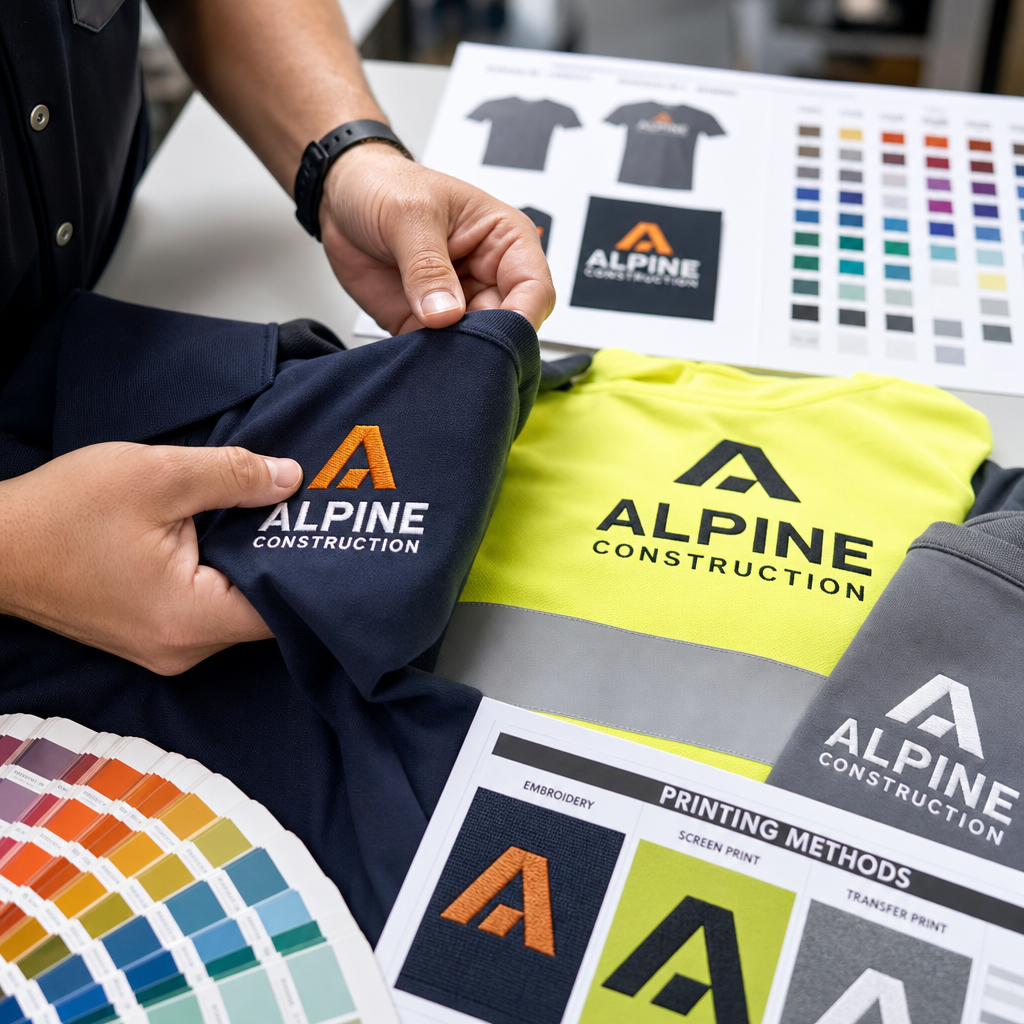
Seven days is achievable, but it requires front-loading your decisions. The biggest time-waster in any custom workwear order is going back and forth over artwork, garment colours, or sizes after the order is placed. Do that work before you contact anyone.
Day 1: Decisions and Artwork
On day one, decide on garment types, colours, and the exact logo or design you want printed. If you do not have a print-ready file, commission a designer today or use your printer's artwork service. Services like Psyque's in-house print team can help convert low-resolution logos into print-ready files, but this takes time if the artwork is complex.
Do not skip this step. Sending a JPEG screenshot of your logo from your website is not print-ready artwork. It will produce a blurry or pixellated print at any size larger than a business card.
Day 2: Get Sizes From Your Team and Place the Order
Message every person who needs a garment and ask for their size by midday. Do not guess. Once you have all sizes, place the order. If you are using Psyque, you can order directly through the website with your design uploaded, garment quantities specified, and payment completed in under 30 minutes.
Orders placed before the daily cutoff time with confirmed artwork typically enter production the same day or the following morning.
Days 3 and 4: Production
DTF printing production at a UK in-house facility typically runs two to three working days for orders under 50 garments. During this window, you do not need to do anything except confirm your delivery address is correct and that someone will be available to receive the parcel.
Days 5 to 7: Dispatch and Delivery
UK dispatch from a facility like Psyque's typically means next-day or two-day delivery via courier once the order is packed. Orders over £45 ship free. Orders placed early in the week with in-stock garments and confirmed artwork regularly arrive within five to seven calendar days of the initial order.
Pro tip: If your launch date is fixed, add one buffer day. Order on a Monday for a Friday delivery rather than assuming a Wednesday order arrives on Friday. Production queues fill up mid-week.
What to Order First: Prioritising Your Workwear Bundle
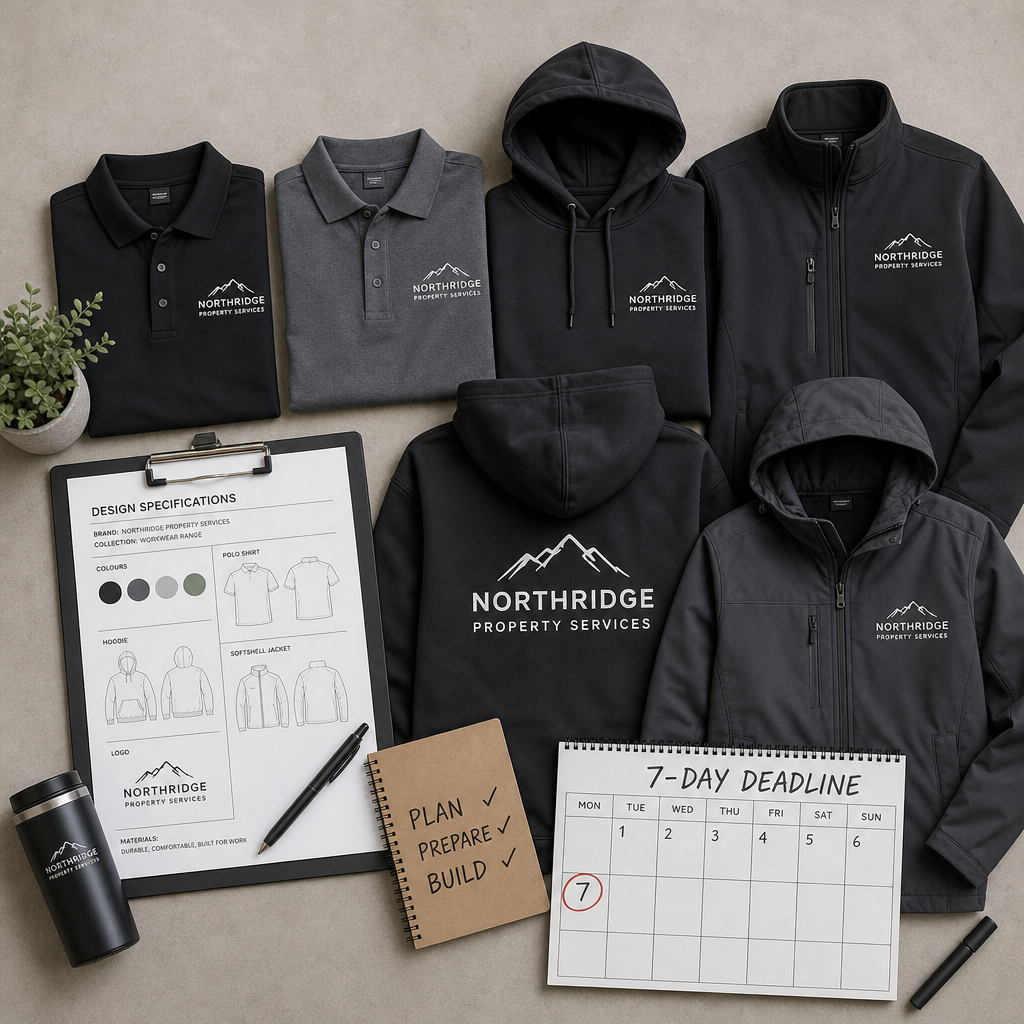
New business owners often try to order everything at once and end up with budget paralysis. A more practical approach is to identify the single garment your team will wear most visibly and start there.
For Customer-Facing Roles
Polo shirts are the strongest first order for retail, hospitality, trades, or any role where a professional appearance matters. They sit between formal and casual, survive repeated washing well, and look deliberate rather than thrown together. A printed chest logo or left-breast emblem on a quality polo communicates brand identity immediately.
T-shirts are the right choice if your team works in physical conditions where comfort matters more than formality: construction, warehousing, events, or food preparation. They cost less per unit, which matters when you are outfitting a team of ten or more on a new business budget.
For Outdoor or Cold-Weather Trades
A printed hoodie or sweatshirt serves a dual purpose: workwear in autumn and winter, and a walking advertisement when your team travels between sites. Psyque's printed hoodies use DTF transfers that hold colour and detail through repeated 40-degree machine washes, which is the standard wash cycle for most workwear.
Bundling to Save Money
The most cost-effective approach for a new business is a workwear bundle: a set quantity of t-shirts plus polos, or t-shirts plus hoodies, purchased together. Bundle pricing is typically 10 to 20 percent lower per unit than ordering garment types separately. If Psyque offers a bundle that fits your team size, use it. The saving on a 10 to 20 person team can easily cover the cost of a second design placement, such as adding a back print.
Pro tip: Order a small quantity of spare garments in your most common sizes (usually medium and large) to cover new starters or replacements without having to place an entirely new order with its associated setup time.
How to Prepare Your Artwork Before You Contact Any Printer
Artwork preparation is where most new businesses lose two to three days of their seven-day window. Understanding what printers actually need saves that time entirely.
What Print-Ready Means
A print-ready file is a vector-based document, typically an AI (Adobe Illustrator), EPS, or high-resolution PDF file. Vector files scale to any size without losing quality. A 300dpi PNG can work for simple designs, but only if the file dimensions are at least three times the intended print size.
A JPEG exported from a website, a Word document with your logo pasted in, or a screenshot from your phone are not print-ready. They will produce poor results regardless of how good your printer is.
Colour Specification
Specify your brand colours in Pantone (PMS) codes if you have them, or provide RGB and CMYK values. DTF printing reproduces full colour accurately, but if your brand has a specific navy blue or forest green, you need to communicate that precisely rather than leaving it to the printer's interpretation of your file.
Print Placement and Size
Decide where the print goes before you submit your artwork: left chest, full front, back neck, or full back. For most workwear, a left chest print at 10 to 12 centimetres wide is the standard professional placement. Full front prints work well for bold brand statements or event-specific clothing. Communicate this explicitly when you place your order.
Choosing the Right Printing Method for New Business Workwear
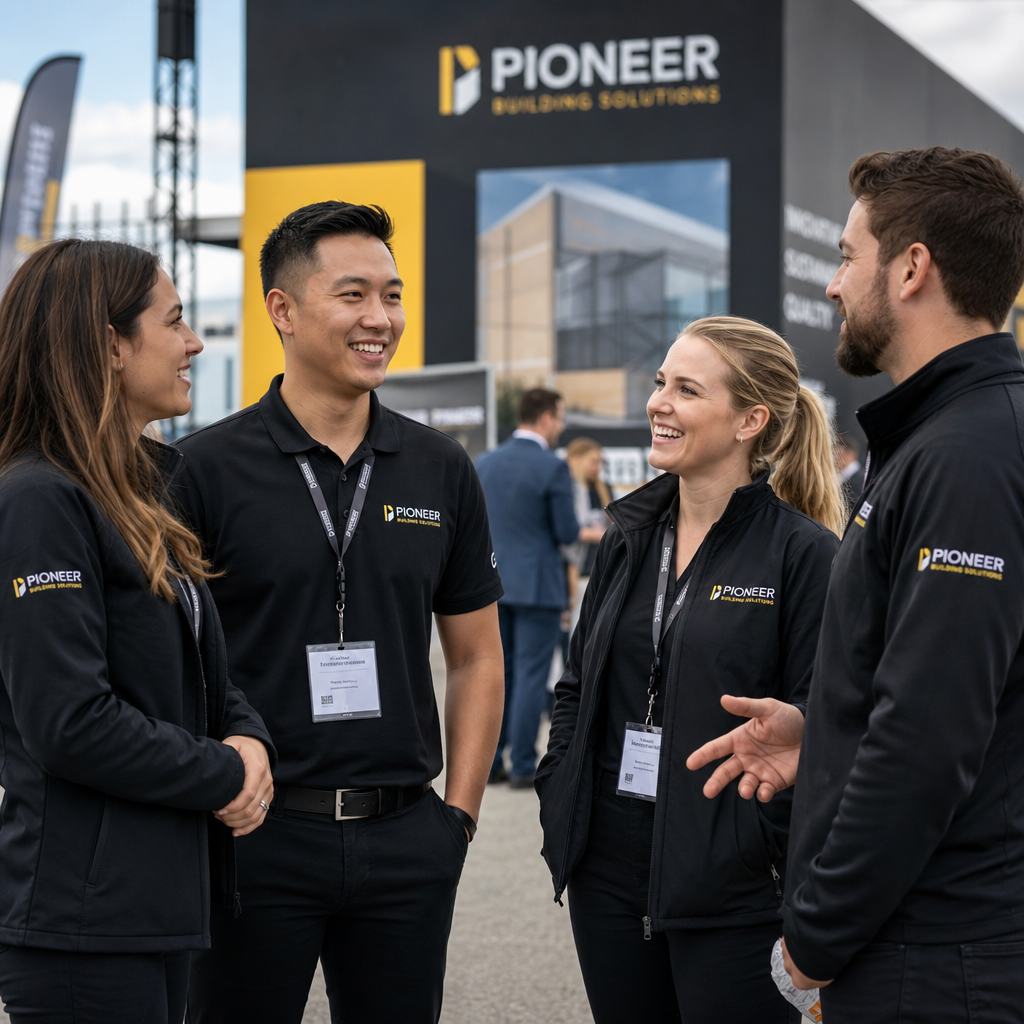
There are three printing methods you will encounter when shopping for custom workwear in the UK: screen printing, embroidery, and DTF (Direct to Film) printing. Each has genuine strengths, and choosing the wrong one for your use case wastes money.
Screen Printing
Screen printing produces vivid, durable prints and is cost-effective at high volumes, typically 50 units or more per design. It requires a separate screen for each colour, which creates a setup cost that makes small orders expensive per unit. For a new business ordering fewer than 30 garments, screen printing is rarely the right choice economically.
Embroidery
Embroidery is excellent for caps, polo shirts, and corporate jackets where a premium feel matters. It is not suitable for photographic designs, gradients, or complex multi-colour artwork. Setup involves digitising your design into a stitch file, which takes time and costs an additional fee. For simple text or logo workwear at low quantities, embroidery is a solid choice, but the lead time tends to be longer than DTF.
DTF (Direct to Film) Printing
DTF printing is the best all-round method for new businesses ordering small to medium quantities of branded workwear. It has no minimum order quantity, handles full-colour designs and photographic artwork equally well, applies to most fabric types, and produces prints that are wash-durable and flexible. Psyque's in-house DTF and heat-press capability means there is no outsourcing delay in the production chain, which is a direct contributor to their fast UK dispatch times.
"The shift to DTF printing has fundamentally changed what small-batch custom apparel looks like for small businesses. You no longer need to order 100 units to make the economics work." - Industry commentary from the British Promotional Merchandise Association, 2023.
Comparing the Main Approaches: A Practical Table
The table below compares the three main printing methods against the specific needs of a new UK business ordering workwear for the first time. All estimates reflect typical UK market pricing and lead times at the time of writing.
| Printing Method | Best For | Key Limitations for New Businesses |
|---|---|---|
| DTF (Direct to Film) | Small to medium batches (5 to 100 units), full-colour logos, fast turnaround, mixed garment types in one order | Not ideal for very large uniform contracts where per-unit screen printing cost becomes competitive above 500 units |
| Screen Printing | Large volume orders (50 plus units) with simple 1 to 3 colour designs, where per-unit cost reduction is the priority | High setup costs make small orders expensive; no good for photographic or gradient designs; longer setup lead time |
| Embroidery | Corporate polos, caps, and jackets where a premium tactile finish matters; simple text or small logo placement | Cannot reproduce complex or photographic designs; digitisation adds cost and time; not suitable for large print areas |
Placing Your Order Correctly: What Printers Actually Need From You
Placing a custom workwear order is not complicated, but it requires you to have specific information ready. Missing any of these details is what causes the back-and-forth that eats your seven-day window.
The Information a Printer Needs at Order Time
You need to provide: the garment type and colour for each item in the order, the size and quantity breakdown (for example, 3x S, 5x M, 7x L, 3x XL), your print-ready artwork file, the print placement for each garment type, and your delivery address. That is it. If you have all of this ready when you start the ordering process, placing an order through a service like Psyque's website takes less than 30 minutes.
What to Do If You Are Not Sure About Garment Colours
Order a sample garment in your shortlisted colour before committing your full order to it. Psyque and most UK workwear printers can supply blank or printed samples. This costs a small amount upfront but prevents a situation where you receive 20 navy polos that read as black on screen and are unsuitable for your brand.
Reviewing Your Order Confirmation
Read every line of your order confirmation before you close the tab. Check garment colour, size quantities, print placement, and delivery address. A common mistake is approving an order confirmation without checking the size split, only to discover on delivery that you have too many smalls and no larges. At that point, a reprinting and redelivery cycle adds five or more days to your timeline.
Common Mistakes New Businesses Make When Ordering Workwear
These are the errors that come up repeatedly when businesses order branded clothing for the first time. Avoiding them is the difference between a seven-day turnaround and a three-week ordeal.
Using Low-Resolution Artwork
Sending a logo pulled from your website or social media profile will almost always result in a blurry print. Website images are typically 72dpi and sized for screen display, not print. A left-chest logo printed from a 72dpi source looks acceptable on a mobile screen but soft and unprofessional on a physical garment. Always source your original design files from your designer.
Ordering Without Consulting Your Team on Sizes
Assuming sizes based on how people look is unreliable. A person who wears a large in one brand might wear an extra-large in another. The standard practice is to share the garment's size chart with each team member and ask them to confirm their size against actual measurements, not their usual size in other clothing.
Waiting Until You Need Them to Order Them
The businesses that run into problems are the ones that remember their workwear three days before a job starts, a trade show opens, or a new employee joins. Order workwear two to three weeks ahead of your actual need. Seven days is the achievable fast-track timeline. It is not a good margin to operate with repeatedly.
Choosing the Cheapest Printer Without Checking Print Quality
The market for custom clothing in the UK includes services that print on thin, low-quality garments with print methods that crack and fade after five washes. A common pattern with budget-focused competitors is outsourced fulfilment with longer delivery windows and no in-house quality control. Psyque's in-house DTF printing and heat-press production means the same team that prints your order also packs and dispatches it, which removes a common source of quality inconsistency.
Pro tip: Before placing a first order with any UK printer, ask specifically whether production is handled in-house or outsourced to a third-party fulfilment partner. In-house production consistently delivers more reliable timelines and quality control on custom workwear orders.
Frequently Asked Questions
How quickly can I get custom workwear for my new business in the UK?
With confirmed print-ready artwork and a completed order, a UK DTF printer with in-house production can typically dispatch your order within three to five working days. Total delivery time, including UK courier shipping, is usually five to seven calendar days from the moment the order is placed. Fast-track options exist but depend on the supplier's current production queue.
What is the minimum order quantity for custom branded workwear?
With DTF printing, there is no minimum order quantity that makes a small order uneconomical. You can order a single garment if needed. Screen printing, by contrast, becomes cost-effective only above 50 units because of setup costs. For new businesses ordering small quantities, DTF is almost always the right method.
How much does custom workwear cost for a new small business in the UK?
A basic printed t-shirt with a single colour logo through a UK DTF printer typically costs between £12 and £25 per unit depending on the garment quality and print size. Polo shirts run slightly higher, and hoodies higher again. Workwear bundles reduce the per-unit cost by 10 to 20 percent. Free shipping thresholds, such as the £45 minimum at Psyque, mean that orders for teams of three or more usually qualify for free delivery without any restructuring.
Do I need a professional designer to create my workwear artwork?
You need a print-ready file, which means a vector file or a high-resolution PNG at 300dpi or above. If you already have a professionally designed logo from your brand launch, you likely already have this file. If you only have a low-resolution version of your logo, contact your original designer for the source files before you place a workwear order. Some printers, including Psyque, offer an artwork preparation service if you do not have access to the original design files.
What garments should a new UK business order first?
Start with the garment your team wears most visibly in customer-facing situations. For most small businesses, that is either a polo shirt or a printed t-shirt. Order enough for your current team plus two spare units in medium and large. Once you have seen the quality in person and confirmed the fit works for your team, expanding to hoodies, sweatshirts, or additional garment types is straightforward.
Is DTF printing durable enough for workwear that gets washed frequently?
Yes. Professional DTF printing applied with a commercial heat-press produces transfers that are rated for 40 to 50 washes at 40 degrees before any visible fading occurs, and in practice many prints last significantly longer than that with standard care. The key variable is the quality of the heat-press equipment and the DTF film used. Consumer-grade heat-press equipment produces noticeably less durable results than professional in-house equipment.
Can I order different garment types in the same order and have the same logo printed on all of them?
Yes, and this is one of the practical advantages of DTF printing over screen printing. Because DTF does not require separate screens per design, the same artwork file can be applied to t-shirts, polos, and hoodies in the same production run without any additional setup cost per garment type. When placing your order, simply specify the print placement for each garment type, since the optimal placement size may differ slightly between a t-shirt chest and a hoodie chest.
Have you recently ordered custom workwear for a new business, and is there a step in the process that caught you off guard? Share your experience in the comments so other new business owners can learn from it.
References
- Forbes: Research and analysis on small business branding, brand consistency, and revenue impact for UK and international businesses
- Statista: UK custom apparel and promotional merchandise market data, including print method adoption and SME spending trends
- HubSpot: Marketing and brand identity statistics relevant to small business customer perception and visual branding effectiveness
- UK Government (GOV.UK): Official guidance on starting a business in the UK, including advice on operational costs and supplier sourcing for new businesses
- Federation of Small Businesses (FSB): Reports and resources on procurement, supplier relationships, and cost management for UK small businesses and sole traders