

Questions to Ask Your Custom Clothing Printer UK
Most businesses get burned by a custom clothing printer UK not because they picked the wrong print method, but because they never asked the right questions before placing an order. A low price on a comparison site means nothing if the print cracks after three washes, the garment sizes run small, or dispatch takes four weeks. Before you commit your budget and your brand's reputation to any supplier, there is a specific set of questions you need answered. This guide walks through every one of them, with direct advice on what good answers look like and what red flags sound like.
Table of Contents
- Quick Takeaways
- What Print Method Do They Use and Why Does It Matter?
- What Are the Minimum Order Quantities?
- What Garments Do They Print On and Where Do They Come From?
- What Are the Real Turnaround Times and Dispatch Conditions?
- What Artwork and File Requirements Do They Have?
- How Long Will the Print Actually Last?
- Is the Pricing Fully Transparent?
- Comparing Print Suppliers: A Direct Look at Key Differences
- Frequently Asked Questions
- References
Quick Takeaways
| Key Insight | Explanation |
|---|---|
| Print method defines durability | DTF printing bonds ink directly to the film then transfers it, producing prints that resist cracking and fading far better than standard heat transfer vinyl on poly-blend fabrics. |
| Low MOQs protect small budgets | Suppliers requiring 50 or 100 units as a minimum are not built for small businesses. Ask for single-unit or low-run pricing upfront before wasting time on a quote. |
| Garment brand matters as much as print quality | A great print on a low-GSM garment still looks cheap. Ask specifically which garment brands are available and whether premium options like Stanley/Stella or Gildan Heavy are stocked. |
| Dispatch time and shipping thresholds are negotiable | Some UK suppliers offer free shipping above a spend threshold. Psyque, for example, offers free UK dispatch on orders over £45, which directly affects cost planning for small runs. |
| Artwork setup fees can double a small order's cost | Always ask whether artwork setup, colour separation, or file conversion fees are included in the quoted price or charged separately. |
| Wash fastness test data should be available on request | Any reputable printer can quote you wash cycle test results. If they cannot, treat that as a warning sign about print longevity. |
| In-house printing reduces error risk | Suppliers who outsource printing to third parties introduce an extra layer of quality control risk and communication delay. Ask directly whether all print work is done in-house. |
What Print Method Do They Use and Why Does It Matter?
The print method a supplier uses is not a technical footnote. It determines how sharp your design looks, how long it lasts, and which garment types it works on. There are four methods you will encounter when choosing a print company UK: screen printing, Direct to Garment (DTG), heat transfer vinyl (HTV), and Direct to Film (DTF). Each has a specific use case and each has real limitations.
Screen printing is cost-effective at high volumes but becomes expensive fast on low-run orders because each colour requires a separate screen. DTG prints directly onto cotton fabric but struggles with synthetic blends and tends to fade faster than DTF. Heat transfer vinyl works well for simple one or two-colour designs but does not handle gradients or photographic detail.
Why DTF Has Become the Preferred Method for Small Runs
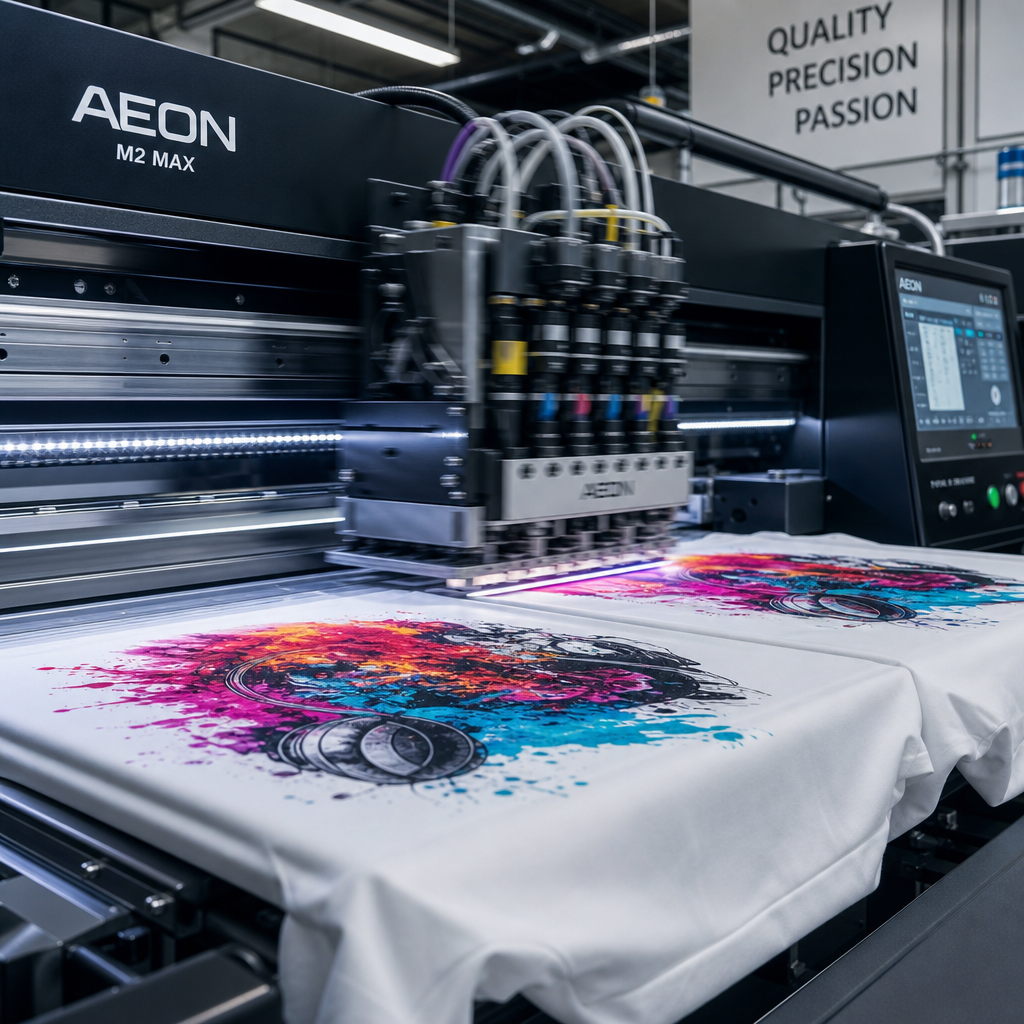
Direct to Film printing has changed what is possible for small and medium order sizes. The process involves printing a design onto a special film, applying a hot-melt adhesive powder, and then heat-pressing the transfer onto the garment. This means full-colour, photographic-quality prints on virtually any fabric, including polyester, cotton, nylon, and blends, without the colour limitations of screen printing or the fabric restrictions of DTG.
In practice, DTF produces a softer hand-feel than old-style plastisol transfers and resists cracking under repeated washing far better than vinyl. For a business ordering branded workwear or event merchandise in runs of 5 to 100 units, DTF is currently the most practical and cost-stable option available from a best custom clothing supplier UK.
Pro tip: Ask any supplier to show you a printed sample that has been through at least 20 wash cycles. Real DTF prints should show no cracking, minimal fading, and clean edges even at small text sizes after that number of washes.
What Are the Minimum Order Quantities?
This question eliminates unsuitable suppliers immediately. If you are a small business ordering 10 branded polo shirts or an event organiser needing 25 custom hoodies, a supplier demanding a minimum of 50 or 100 units wastes your time and over-extends your budget.
The best custom clothing supplier UK for small businesses and events is one that can print from a single unit without penalising you with per-unit setup costs that effectively make small runs unaffordable. Some suppliers advertise low minimums but then charge a £25 setup fee per design, which can push the real cost of a 10-unit order up by 30 to 40 percent.
The Questions to Ask About MOQs
Ask the following directly: What is the minimum number of units per design? Are there separate minimums per garment colour? Does the minimum change if I mix garment sizes within one design? Is there a setup charge on top of the per-unit price?
A supplier who cannot answer all four of those questions clearly is not operationally set up for small business or event orders. Push for a written quote that shows the full cost breakdown per unit at your specific order size, not just a starting-from price.
Pro tip: When comparing quotes from multiple suppliers, always compare total delivered cost including VAT, setup fees, and shipping. A headline price of £8 per shirt from one supplier can end up more expensive than £11 per shirt from another once all fees are added.
What Garments Do They Print On and Where Do They Come From?
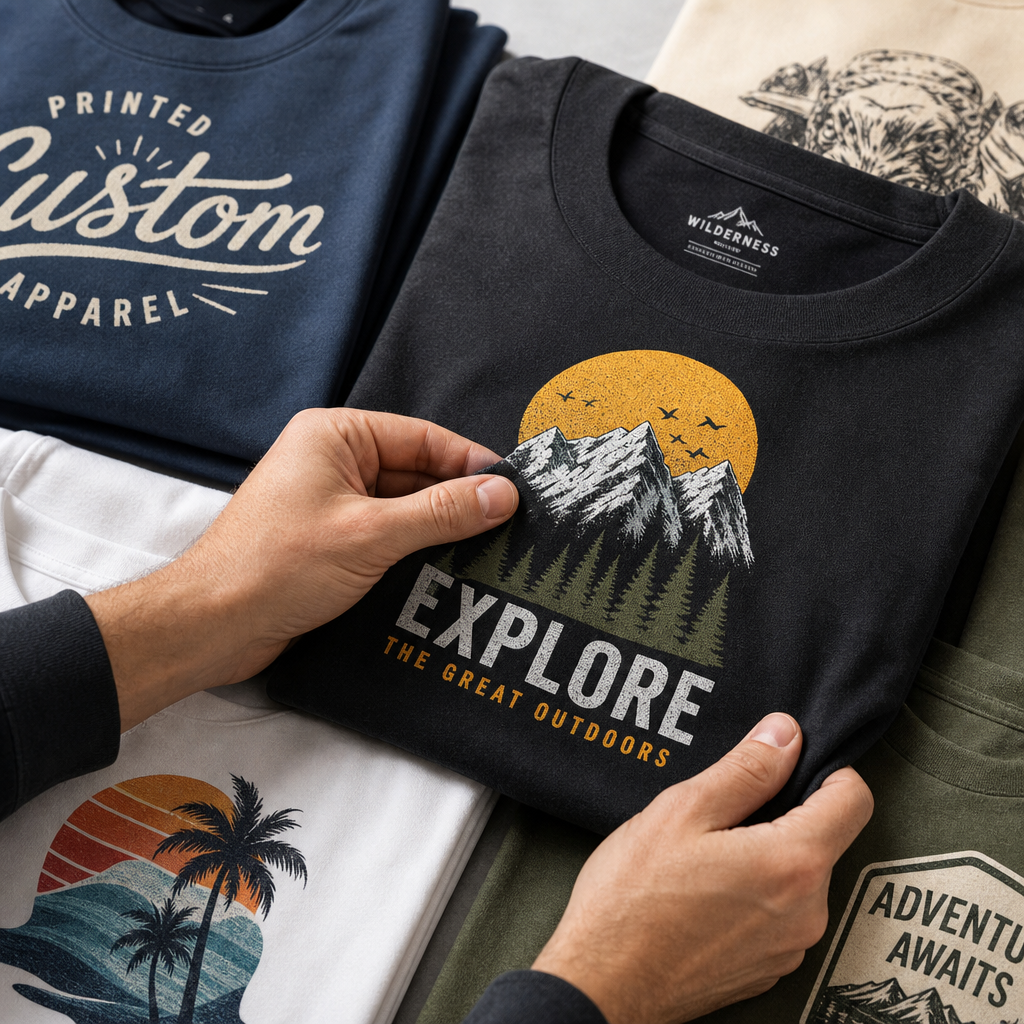
The garment is half the product. A sharp, durable print on a 150gsm single-jersey t-shirt still results in something that feels cheap and looks thin on the wearer. When you are ordering branded workwear or merchandise that represents your business, garment quality is not a detail to skip past.
Ask specifically which garment brands the supplier stocks. Established brands like Gildan, Fruit of the Loom, Stanley/Stella, or AWDis have consistent sizing, known fabric weights, and documented quality standards. Unbranded or white-label garments from unnamed sources offer no such assurance.
Fabric Weight as a Reliable Quality Indicator
Fabric weight in grams per square metre (GSM) is the most reliable quick indicator of garment quality. For a regular t-shirt, anything below 160gsm will feel thin and look semi-transparent. A solid workwear t-shirt should be at least 180 to 190gsm. Hoodies and sweatshirts intended for outdoor or workwear use should be 280gsm or above.
Ask the supplier for the GSM of each garment type before ordering. Any reputable printer will have this information immediately available. If they do not know, that tells you they are reselling garments without proper product knowledge.
Sizing Consistency Across Runs
For team orders or workwear bundles, sizing consistency matters across every unit. A size medium from one production run should match a size medium from the next. Ask whether the supplier uses the same garment brand and spec for repeat orders, or whether they substitute based on stock availability. Substitution without notice is a common complaint in custom clothing and one that causes real problems for uniform orders.
What Are the Real Turnaround Times and Dispatch Conditions?
Published turnaround times on supplier websites are almost always best-case figures under ideal conditions. A common mistake is to assume that a stated five-day turnaround means your order arrives within five days of payment. In practice, turnaround time usually refers to the production period only, not including artwork approval, order processing, or transit.
When you are planning for an event, a product launch, or a team kit deadline, the difference between five working days and eight working days is significant. Ask for the full timeline: from when artwork is approved to when the parcel leaves the facility, and then which courier service is used and what the typical transit time is to your location.
Free Shipping Thresholds and Their Impact on Order Planning
Shipping costs on custom apparel orders can be surprisingly high, particularly for bulk workwear. Some suppliers charge a flat shipping fee regardless of order size. Others, like Psyque, offer free UK dispatch on orders over £45, which makes a meaningful difference to the total cost of small business orders.
Ask whether there is a free shipping threshold, what courier is used, and whether tracked delivery is included as standard. For branded merchandise going to a corporate event or a team kit arriving before a match day, knowing exactly where the parcel is matters.
What Artwork and File Requirements Do They Have?
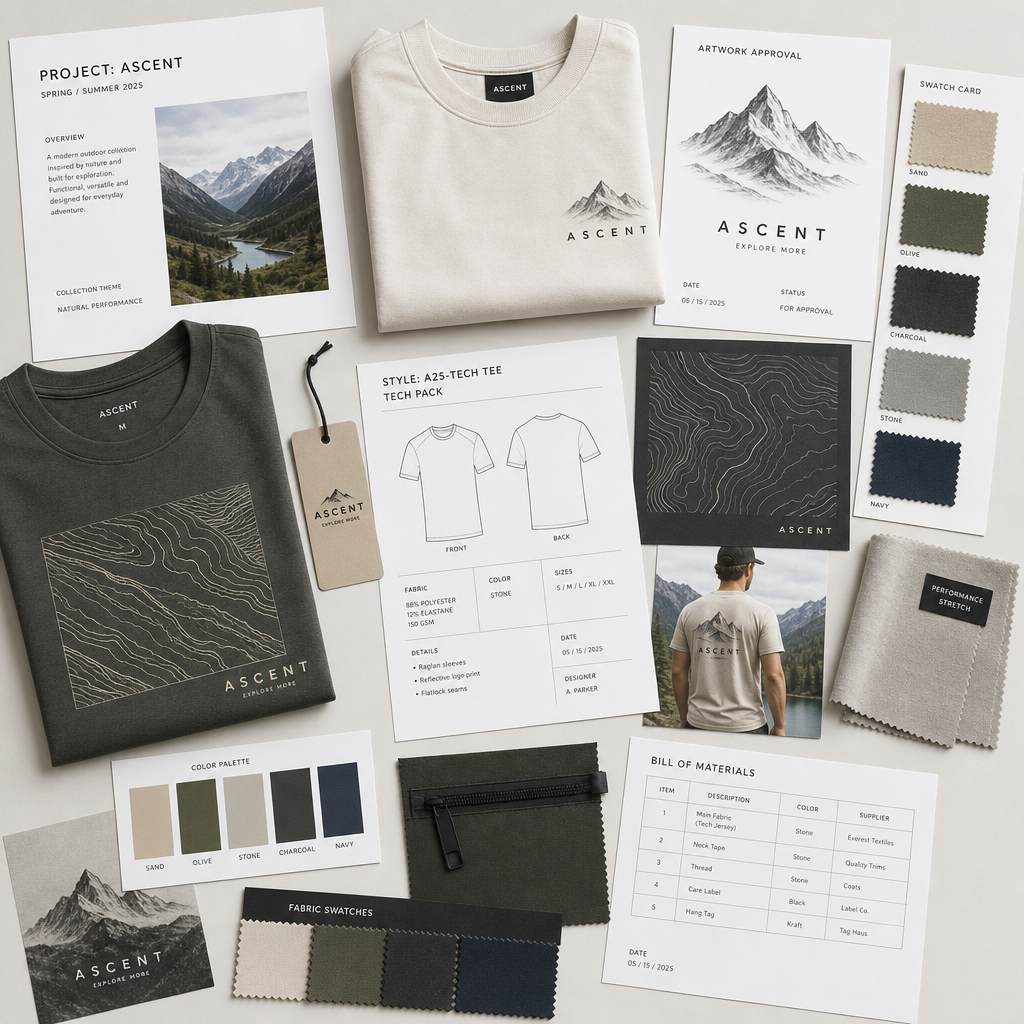
Artwork problems are the single most common source of delays and reprints in the custom clothing industry. Most buyers do not have a graphic designer on staff and submit artwork in formats that are not print-ready. A good supplier will tell you exactly what they need before you order, not after they receive your file.
The standard requirement for DTF printing is a PNG file with a transparent background, at 300 DPI minimum, at the intended print size. Ask whether the supplier accepts lower-resolution files and whether they offer any artwork correction or resize service, and if so, whether that carries an additional fee.
What to Ask About Design Assistance
Design support is a differentiator between suppliers. Some offer a basic placement and resize service at no extra cost. Others charge for any artwork work beyond receiving a ready-to-print file. For small business owners who do not have design resources, a supplier that offers at least basic design guidance is significantly more useful than one that rejects every file that is not pixel-perfect.
Ask specifically: Do you offer a design service? What file formats do you accept? Do you check artwork before printing and flag any issues? Will you send a digital proof before printing begins? The answer to that last question should always be yes for any order involving custom branding.
How Long Will the Print Actually Last?
Print durability is the measure that most suppliers avoid talking about in specific terms because it commits them to a standard. A reputable custom clothing printer UK will have concrete data on how their prints perform after repeated washing, not vague claims about high-quality results.
"Consumers expect branded apparel to maintain its appearance after regular use. A print that degrades after 10 washes reflects directly on the brand it represents, not just the printer." - British Promotional Merchandise Association, industry guidance on branded garment standards.
For workwear specifically, durability expectations are higher because garments are washed more frequently and often at higher temperatures. Ask the supplier what wash temperature their prints are rated to. DTF prints, when applied correctly, typically withstand washing at 40 degrees Celsius with no significant degradation for 50 or more wash cycles.
Asking for Physical Samples
Any supplier worth ordering from will provide a sample or a wash test sample on request. If they resist or charge a significant fee for a sample before a bulk order, that is a sign their confidence in their product is limited. For orders of branded workwear bundles or event merchandise where quality must be consistent across every unit, a sample is not optional. It is due diligence.
Is the Pricing Fully Transparent?
The price you see on a custom clothing supplier's website is rarely the price you pay. Setup fees, artwork fees, additional colour charges, individual bagging fees, and VAT can add 20 to 40 percent to a quoted base price. When you are comparing multiple suppliers as part of choosing a print company UK, you must compare fully loaded costs, not headline unit prices.
Ask for a full written quote that itemises: base garment cost per unit, print cost per unit, any setup or origination fees, VAT, and shipping. If a supplier cannot provide this breakdown in writing before you commit, treat that as a red flag about their billing practices.
Volume Discounts and Repeat Order Pricing
For businesses planning ongoing workwear orders or regular merchandise runs, volume discount structures matter. Ask whether the supplier offers lower per-unit pricing at higher volumes, and whether repeat customers receive preferential pricing or retained artwork files so you are not paying setup fees again on the same design. A supplier who values long-term business relationships will have a clear answer to both questions.
Comparing Print Suppliers: A Direct Look at Key Differences
Not all custom clothing suppliers are built for the same customer. The table below compares the key factors that matter for small business and event orders, to give you a practical framework when evaluating any supplier against your specific needs.
| Factor | In-House DTF Specialist (e.g. Psyque) | Generic Print-on-Demand Platform | Traditional Screen Printer |
|---|---|---|---|
| Minimum order quantity | 1 unit or very low MOQ | 1 unit but limited garment choice | Typically 25 to 50 units minimum |
| Print method | DTF with in-house heat press | DTG or DTF via fulfilment network | Screen printing, possible DTG option |
| Garment range | Branded garments, workwear bundles, hoodies, polos, sweatshirts | Limited to platform catalogue | Wide range but costs rise with colours |
| Turnaround time | Fast UK dispatch, typically 3 to 5 working days | Varies widely by fulfilment centre location | 5 to 14 days depending on volume and colour count |
| Pricing transparency | Itemised pricing, free shipping over £45 | Base price plus platform margin, shipping added at checkout | Quote-based, setup fees apply per screen per colour |
| Best for | Small businesses, workwear, events, branded merchandise | Drop-shipping, one-off personal items | High volume, limited colour corporate uniform orders |
The table makes clear that the right supplier depends on your order size, your timeline, and your budget structure. For most small business owners and event organisers ordering between 5 and 200 units of custom printed apparel, an in-house DTF specialist offers the best combination of print quality, flexibility, and cost control.
Frequently Asked Questions
What is the most important question to ask a custom clothing printer before ordering?
The single most important question is whether all printing is done in-house. Suppliers who outsource to third-party printers have less control over quality, turnaround time, and problem resolution. An in-house operation can catch errors before dispatch and turn around reprint requests far faster than a supplier who depends on an external fulfilment partner.
How do I know if a UK custom clothing supplier is using quality garments?
Ask for the brand name and GSM of the specific garment before ordering. Reputable suppliers stock named brands with consistent specifications. If a supplier cannot tell you the fabric weight or garment brand, that is a clear indication they are using unspecified stock that may vary between orders.
Is DTF printing better than screen printing for small business orders?
For orders under approximately 50 units with full-colour or detailed designs, DTF printing is the better choice. It requires no screen setup costs, handles gradients and photographic detail without restrictions, and works on a wider range of fabric types. Screen printing becomes more cost-effective at high volumes with limited colour counts, typically above 100 units per design with fewer than four colours.
What artwork format should I send to a custom clothing printer?
The safest format for any DTF printer is a PNG file with a transparent background, saved at 300 DPI at the actual print size. Vector files in AI or EPS format are also widely accepted and preferable for logo-based designs because they scale without quality loss. Always ask the specific supplier for their file requirements before preparing artwork, as specifications vary.
How can I compare the true cost between custom clothing suppliers in the UK?
Request a fully itemised written quote from each supplier that includes the base garment cost, print cost per unit, setup or origination fees, VAT, and shipping. Then calculate total delivered cost divided by the number of units. Never compare headline unit prices without accounting for all additional charges. Free shipping thresholds, such as the £45 threshold offered by Psyque, can make a meaningful difference to total cost on small orders.
What should I check regarding print durability before placing a workwear order?
Ask for wash cycle test data and, where possible, request a physical sample that has already been through multiple washes. A print rated to 40 degrees Celsius wash cycles with no cracking or significant fading after 50 washes is the minimum acceptable standard for workwear. DTF prints, when applied with correct pressure, temperature, and dwell time, consistently meet this standard when the supplier has properly calibrated equipment.
If you have recently gone through the process of choosing a custom clothing printer UK for your business or event, share what questions made the biggest difference in your decision. Your experience could help other buyers avoid the same pitfalls.
References
- Statista: global and UK apparel market data and consumer spending statistics on branded merchandise
- Forbes: business advice and sourcing strategies for small business owners managing branded merchandise and workwear budgets
- UK Government: guidance on consumer rights, product standards, and trading regulations relevant to custom clothing and promotional goods
- HubSpot: marketing and brand identity research including the role of branded apparel in small business customer perception
- McKinsey and Company: fashion and apparel industry research on supply chain quality, sourcing standards, and garment durability expectations