

What Is DTF Printing? Direct to Film Explained
Most people searching for custom printed clothing hit the same wall: they want bold, durable prints on virtually any fabric, but the traditional methods either cost too much for small runs, crack after a few washes, or simply cannot handle complex designs. DTF printing, short for Direct to Film printing, solves all three problems at once. Whether you are ordering branded workwear for your business, custom kits for a sports team, or merchandise for an event, understanding what DTF printing is and how it works will help you make smarter decisions about quality, cost, and turnaround. This guide covers every aspect of dtf transfers and direct to film printing, from the chemistry behind the process to what it means for your finished garment.
Table of Contents
- Quick Takeaways
- What Is DTF Printing and How Does It Work?
- DTF Printing vs Other Decoration Methods
- >What Makes DTF Transfers So Durable?
- Best Garments and Fabrics for DTF Printing
- DTF Printing for Businesses, Teams, and Events
- Common Mistakes When Ordering DTF Printed Apparel
- Frequently Asked Questions
- References
Quick Takeaways
| Key Insight | Explanation |
|---|---|
| DTF works on almost any fabric | Unlike screen printing, DTF transfers adhere to cotton, polyester, nylon, blends, and even leather without needing a white base garment. |
| No minimum order quantity is required | DTF printing is cost-effective for single items and bulk runs alike, making it ideal for small businesses and one-off event orders. |
| Full-colour prints with no colour limits | DTF handles photographic-quality artwork, gradients, and fine details that screen printing cannot reproduce affordably. |
| Wash durability is genuinely competitive | When applied correctly with a heat press at the right temperature, DTF prints routinely survive 50 or more wash cycles without significant cracking or fading. |
| Turnaround is faster than embroidery or screen printing | No screens to burn, no thread to load. In-house DTF setups like Psyque's can dispatch orders within days of artwork approval. |
| White ink is printed first, not last | DTF prints a white underbase layer directly onto the film before CMYK colours, which is why it prints vividly on dark fabrics without any pre-treatment of the garment. |
| Heat press application is critical to quality | The adhesive powder must be cured at the correct temperature and dwell time. Poor application is the number one cause of peeling, not the print itself. |
What Is DTF Printing and How Does It Work?
Direct to film printing is a garment decoration process where a design is printed onto a special PET film using water-based inks, coated with a thermoplastic adhesive powder, cured with heat, and then transferred to a fabric using a heat press. The result is a full-colour, flexible print that bonds directly to the fibres of the garment rather than sitting on top of them as a thick layer.
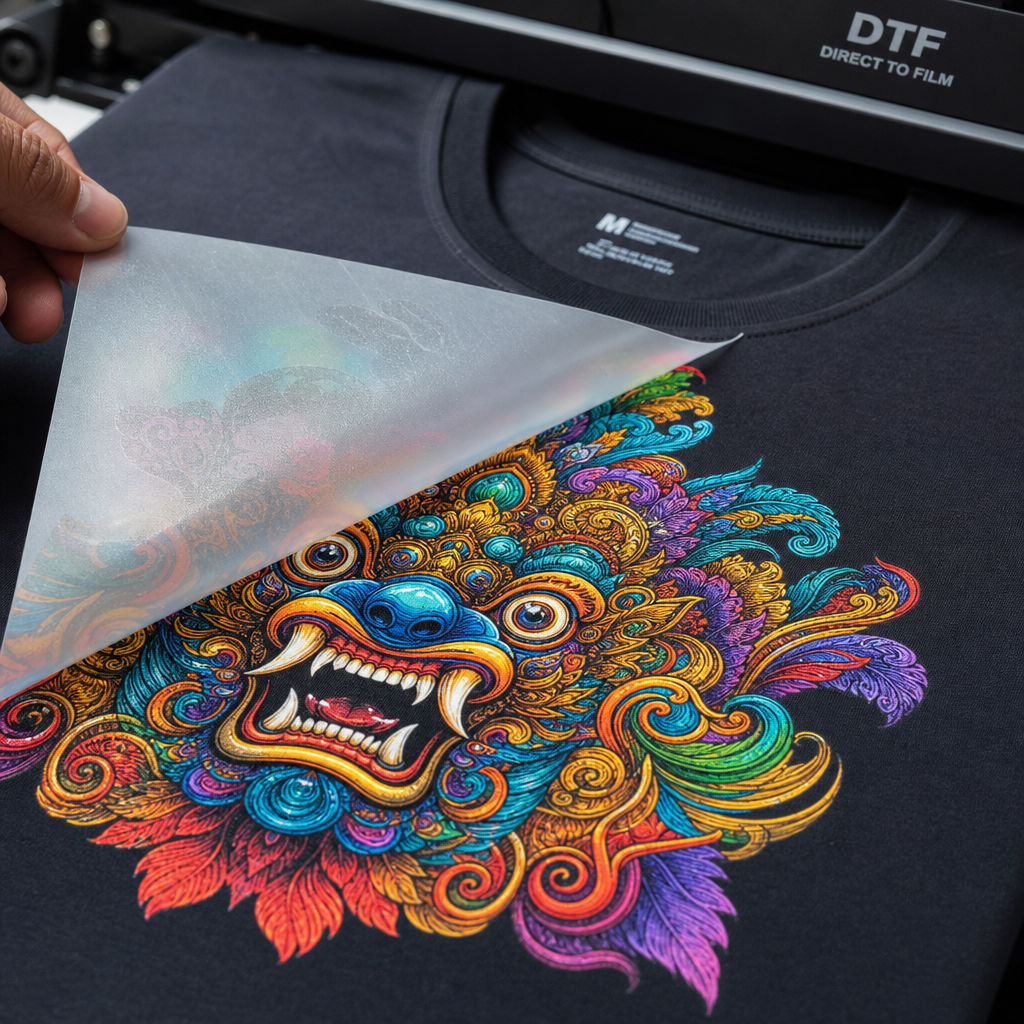
The process has six distinct stages. First, the design is printed onto the PET film in reverse using CMYK inks plus a white ink layer. Second, the wet ink is coated with a thermoplastic adhesive powder. Third, the film passes through a curing oven or heat tunnel that melts the powder into the ink, creating a solid, ready-to-transfer sheet. Fourth, the cured film is positioned on the garment. Fifth, a heat press applies precise pressure and temperature, typically around 160 to 170 degrees Celsius for 10 to 15 seconds, which bonds the adhesive to the fabric fibres. Sixth, the PET film is peeled away, leaving only the print on the garment.
In practice, the quality of the final print depends heavily on steps three and five. Undercured powder means the adhesive never fully activates. Incorrect heat press temperature or uneven pressure causes partial bonding, which shows up as peeling edges within the first few washes. At Psyque, both stages are controlled in-house, which is why the prints hold up the way they do.
Pro tip: Always ask your DTF printer whether they cure in-house or outsource the transfer production. Outsourced transfers that sit in transit for days before pressing can suffer moisture absorption in the adhesive layer, which weakens the bond before the garment is even made.
DTF Printing vs Other Decoration Methods
The honest answer is that no single decoration method wins in every category. But DTF printing is the strongest all-rounder for the types of orders most small businesses and event organisers actually place. Here is a direct comparison.
| Decoration Method | Best For | Key Limitation |
|---|---|---|
| DTF Printing (Direct to Film) | Full-colour designs, small and large runs, dark and light fabrics, fast turnaround | Slight texture feel on the print surface compared to screen printing on white fabric |
| Screen Printing | Large runs of one or two-colour designs on light fabrics, very low cost per unit at high volume | High setup cost per colour, poor for gradients or photos, minimum order quantities apply |
| Embroidery | Premium branding on polo shirts, caps, and jackets where a raised, tactile logo is the goal | Cannot reproduce fine detail or photographic images, slow production, higher cost per piece |
Screen printing has dominated workwear decoration for decades, but it struggles the moment a customer wants more than two or three colours, needs a small batch, or has a design with gradients. DTF printing explained simply is this: it removes almost every constraint that screen printing imposes.
How DTF Compares to DTG (Direct to Garment)
DTG printing prints directly onto the fabric surface using an inkjet-style printer, which sounds similar to DTF but behaves very differently in practice. DTG requires the garment to be pre-treated with a chemical solution before printing, which adds time and cost. It also struggles on synthetic fibres and dark polyester blends. DTF has no such restriction.
The data consistently shows that DTF transfers produce sharper edges and better vibrancy on dark fabrics than DTG, largely because the white underbase layer on the film is more controlled than a sprayed pre-treatment on a garment. For businesses ordering branded polo shirts, dark hoodies, or performance fabric workwear, DTF is the more reliable choice.
"The global custom t-shirt printing market is projected to reach USD 14.81 billion by 2032, with DTF printing identified as one of the key technology drivers behind that growth due to its versatility and low barrier to entry." - Grand View Research, Custom T-Shirt Printing Market Report
>What Makes DTF Transfers So Durable?
Durability in a garment print comes down to one question: how well does the ink bond to the fabric? With screen printing, the plastisol ink sits on top of the fibres and can crack when the fabric flexes. With DTF, the thermoplastic adhesive powder melts and physically wraps around individual fabric fibres under heat and pressure. The bond is mechanical, not just surface adhesion.
The type of adhesive powder matters. Hot peel powders are designed to release the film while still warm, giving a slightly softer hand feel. Cold peel powders require the print to cool before peeling, and they generally produce sharper edges for fine-detail artwork. Professional operations like Psyque select the appropriate powder type based on the garment and design specifications, not just one universal setting for everything.
Pro tip: When washing DTF printed garments, turn them inside out and use a cool to warm wash cycle. High-temperature tumble drying is the most common cause of print degradation, not the washing itself. Following this simple step routinely extends print life well beyond 50 washes.
The Role of the White Ink Layer
The white ink layer is not just a background. It acts as a barrier that prevents the dark colour of the garment from bleeding through and dulling the CMYK colours printed above it. The thickness and coverage of this white layer directly determines how vivid the final print looks on a navy hoodie versus a white t-shirt. This is a key reason why DTF consistently outperforms DTG on dark garments: the white layer is printed onto a flat, controlled film surface rather than an absorbent fabric surface.
Best Garments and Fabrics for DTF Printing
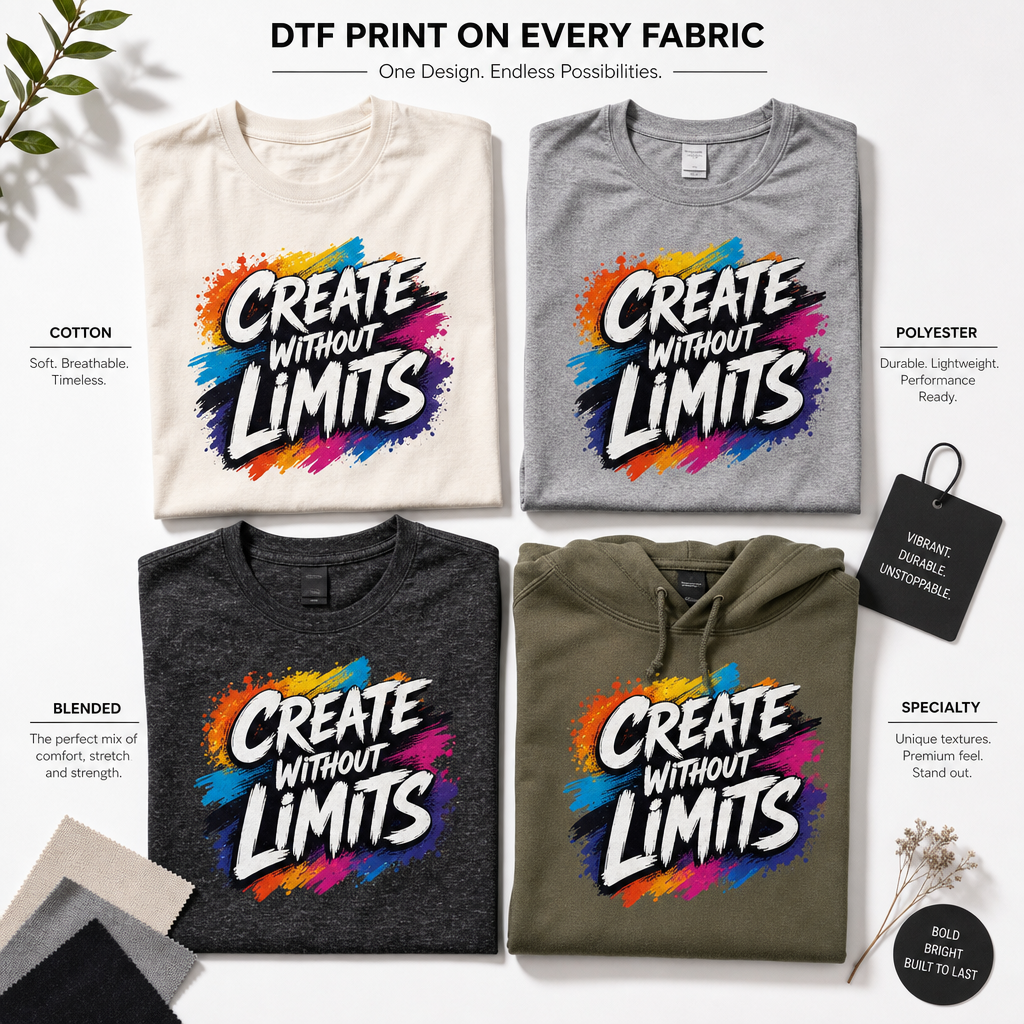
One of the most misunderstood aspects of dtf transfers is the question of fabric compatibility. The short answer is: DTF works on nearly everything. Cotton, polyester, nylon, canvas, leather, and any blend of these materials will all accept a DTF transfer provided the surface is smooth enough for the heat press to apply even pressure.
Cotton and cotton-rich blends produce the softest hand feel with DTF because the adhesive bonds deeply into the natural fibres. Polyester garments, including performance sportswear and sublimation blanks, are also excellent candidates. This is significant for businesses ordering team kits or branded sportswear, where moisture-wicking polyester fabrics are standard but have historically been difficult to print on with traditional methods.
Fabrics That Require Extra Care
Heat-sensitive materials, such as very thin nylon or technical fabrics with a low melting point, require a reduced temperature setting and shorter dwell time on the heat press. Waterproof coated fabrics can also be tricky because the coating resists adhesion. A common mistake is assuming that any smooth fabric will produce the same result without testing. Always request a press test on a new fabric type before committing to a large order.
Ribbed or heavily textured surfaces, such as thick waffle-knit fabrics, can cause uneven pressure during pressing, leading to spotty adhesion at the edges of the design. For heavily textured fabrics, placing a heat press pillow underneath the garment to equalise pressure is standard practice in professional setups.
DTF Printing for Businesses, Teams, and Events
For small business owners who need branded workwear, the economics of DTF make a compelling case. Screen printing only becomes cost-effective above a certain volume threshold, typically 24 to 50 pieces per design, because of the screen setup cost per colour. DTF has no such threshold. A business ordering five branded polo shirts and three hoodies with the same logo pays a fair per-unit price without being penalised for a small quantity.
Event organisers face a similar challenge. Festival merchandise, charity run t-shirts, and sports day kits often involve varied sizes ordered in small quantities per size. DTF handles size runs without reprinting, because the transfer film is produced digitally and each press is independent of the others. There is no reason to order more than you need just to hit a minimum.
Workwear Bundles and Branded Merchandise
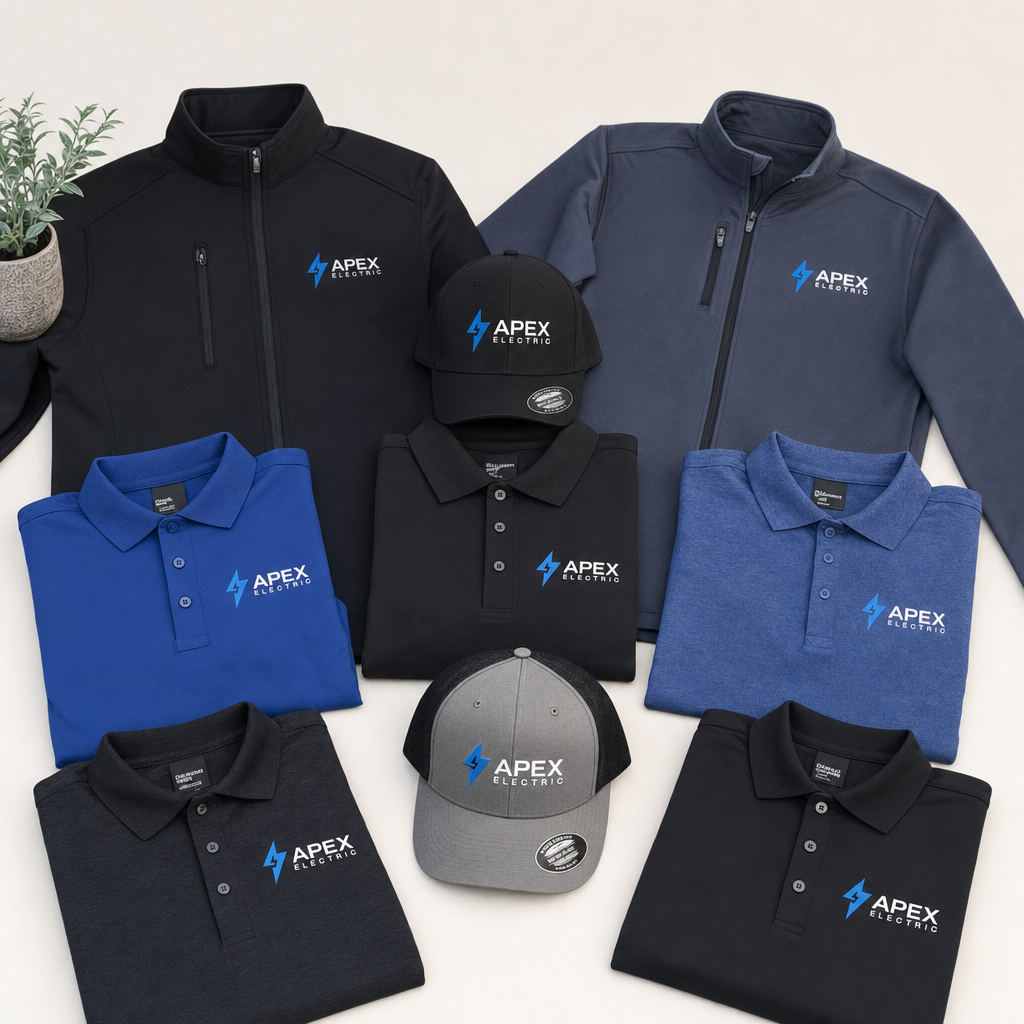
Branded workwear benefits from DTF for another reason: the ability to print across multiple garment types from a single artwork file. A business can order matching t-shirts, hoodies, and sweatshirts all bearing the same logo in the same colours without any adjustment for fabric type. Psyque's workwear bundles are built around exactly this flexibility, combining in-house DTF printing with heat-press application to maintain colour consistency across every item in a bundle.
For teams and sports clubs, DTF makes it practical to include player names and numbers alongside a club badge, all within a single print. There is no separate embroidery step for the badge and a separate vinyl cut for the name. One transfer covers everything, which reduces production time and eliminates registration errors between layers.
Common Mistakes When Ordering DTF Printed Apparel
A common mistake is submitting low-resolution artwork and expecting the printer to fix it. DTF printing is capable of reproducing fine detail at high resolution, but it cannot manufacture detail that was never in the original file. Submit artwork at a minimum of 300 DPI at the intended print size. Vector files in SVG or AI format are the safest option for logo-based designs.
Another frequent error is choosing a garment colour without considering how it interacts with the design. Very dark designs on very dark garments rely entirely on the white underbase for visibility. If the white ink layer is even slightly thin, the design will appear dull. When in doubt, choose a garment colour that provides natural contrast with the dominant colours in your design.
A third mistake is ignoring placement. Print placement affects both aesthetics and wash durability. Prints placed too close to seams or collar edges experience more flex stress during wear and washing, which accelerates edge lifting over time. Centre-chest placement 5 to 8 centimetres below the collar is the standard recommendation for a reason. It maximises the flat pressing area and minimises flex stress points.
Finally, never skip the sizing check. DTF transfers are produced at a fixed size. If you approve a print size of 25 centimetres wide on a medium t-shirt and then order the same transfer for a children's size, it will look disproportionately large. Confirm print dimensions against your garment sizes before artwork is finalised, not after.
Frequently Asked Questions
What is DTF printing in simple terms?
DTF printing, or Direct to Film printing, is a method of transferring a full-colour design onto fabric by printing it onto a special film, coating it with adhesive powder, curing it with heat, and then pressing it onto the garment using a heat press. The result is a vibrant, flexible print that bonds to the fabric fibres.
How long do DTF transfers last on clothing?
When applied correctly by a professional using the right temperature and pressure settings, DTF prints routinely last 50 or more wash cycles without cracking or significant fading. The main enemy of longevity is high-temperature tumble drying, not the washing process itself. Washing printed garments inside out at 30 to 40 degrees Celsius extends print life considerably.
Can DTF printing be used on dark-coloured garments?
Yes, and this is one of the primary advantages of DTF over methods like DTG. DTF prints a white underbase layer onto the film before the colour layers, which means the final transfer produces vivid, accurate colours on navy, black, burgundy, or any other dark garment without any pre-treatment of the fabric.
Is DTF printing suitable for small orders?
DTF printing is one of the most practical decoration methods for small orders precisely because there are no screen setup costs or embroidery digitising fees. A single custom t-shirt is as straightforward to produce as a batch of one hundred. This makes it the preferred choice for small businesses, event teams, and individuals who need quality prints without a large minimum quantity commitment.
What is the difference between DTF and heat transfer vinyl?
Heat transfer vinyl, or HTV, involves cutting a design from a coloured vinyl sheet and pressing it onto fabric. It works well for simple one-colour designs but becomes complicated and expensive for multi-colour or photographic artwork because each colour requires a separate cut. DTF prints the entire design, including all colours and gradients, as a single transfer, making it far more capable for complex artwork.
Does DTF printing work on polyester and synthetic fabrics?
Yes. DTF transfers bond effectively to polyester, nylon, and synthetic blends. This makes it a strong option for sportswear, performance workwear, and technical fabrics that cannot tolerate the high pre-treatment temperatures required for DTG printing. The adhesive powder cures at temperatures that most synthetic fabrics handle without damage, though very heat-sensitive technical fabrics should always be tested first.
Have you ordered DTF printed apparel before? Share your experience with print quality or durability in the comments, we read every response and use your feedback to improve our guides.
References
- Statista: Global custom apparel and printed clothing market size data and forecasts
- Forbes: Coverage of the custom merchandise and branded workwear industry for small businesses
- US Environmental Protection Agency: Guidance on water-based inks and textile printing environmental compliance
- ScienceDirect: Peer-reviewed research on thermoplastic adhesive bonding in textile applications
- Ahrefs Blog: Data on search demand and consumer intent patterns for custom printing queries