
What Is DTF Printing? The Complete UK Business Guide
If you have ever ordered custom printed workwear and received something that cracked, faded, or peeled after three washes, you already understand why printing technology matters. DTF printing is the method that has genuinely changed what small businesses, event organisers, and teams can expect from custom apparel. It delivers full-colour, photographic-quality prints on virtually any fabric, without the setup costs or order minimums that made traditional methods impractical for most buyers. This guide explains exactly what is DTF printing, how the process works, and why it has become the go-to choice for UK businesses ordering branded clothing in 2024.
Table of Contents
- Quick Takeaways
- What DTF Printing Actually Is
- How the DTF Process Works Step by Step
- DTF vs Other Printing Methods
- What DTF Printing Is Genuinely Good At
- What DTF Printing Does Not Do Well
- DTF Printing UK: What to Look for in a Supplier
- Cost and Order Quantities for UK Businesses
- Frequently Asked Questions
- References
Quick Takeaways
| Key Insight | Explanation |
|---|---|
| DTF works on almost any fabric | Unlike screen printing, DTF transfers adhere to cotton, polyester, nylon, and blended fabrics without pre-treatment. |
| No minimum order is required | DTF is economical at one unit or one hundred, making it ideal for small business runs and sample orders. |
| Full colour costs the same as one colour | Pricing is based on print size, not colour count, so photographic and multi-colour designs cost no more than simple logos. |
| Wash durability is high when applied correctly | Properly cured DTF transfers survive 40 to 50 washes without significant cracking when garments are washed inside-out at 30-40 degrees Celsius. |
| DTF is not the same as DTG | Direct to Film prints onto a transfer film first, then heat-presses onto the garment. Direct to Garment prints ink directly onto fabric, requiring pre-treatment on dark fabrics. |
| Setup cost is effectively zero | There are no screens, no films for screen exposure, and no per-design setup fees, which benefits businesses testing new designs. |
| White ink is included automatically | DTF prints a white ink underbase as part of the process, meaning vibrant colours show correctly on black and dark garments without extra charges. |
What DTF Printing Actually Is
Direct to Film printing is a garment decoration method where a design is printed in reverse onto a special PET film using water-based inks, including a white ink layer. A hot-melt adhesive powder is then applied to the wet ink, cured with heat, and the finished transfer is pressed onto a garment using a heat press at around 160 to 165 degrees Celsius for 10 to 15 seconds. The film is peeled away, leaving a soft, flexible, full-colour print bonded to the fabric.
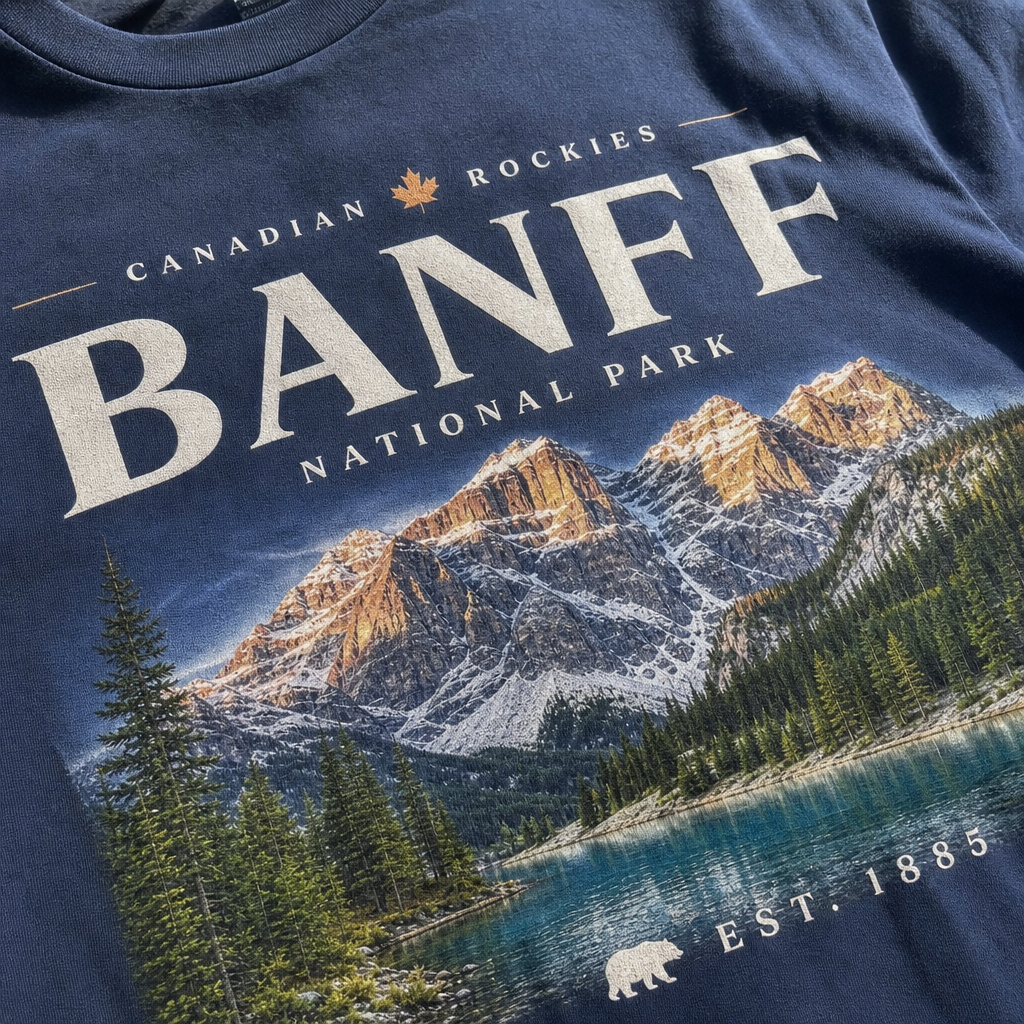
The name comes from the fact that printing happens onto a film, not directly onto the garment. This distinction matters practically because the film acts as a carrier, meaning the same transfer can be applied to a t-shirt, hoodie, polo shirt, bag, or even a hard hat. The garment itself never goes through the printer, which removes the fabric-type restrictions that affect other methods.
DTF printing emerged commercially around 2020 and has grown rapidly in the UK print trade. It sits between screen printing and direct-to-garment in terms of cost, volume suitability, and colour accuracy, but it outperforms both in flexibility across fabric types and in its ability to handle small, one-off orders without financial penalty.
How the DTF Process Works Step by Step
Understanding the process helps you judge whether a supplier is doing it properly. Shortcuts at any stage reduce wash durability and colour accuracy. Here is what the correct process looks like from design file to finished garment.
Stage 1: Design Preparation
The artwork is prepared in a RIP (Raster Image Processor) software, which separates the design into CMYK channels plus a white ink layer. The white layer is critical. Without it, colours printed on dark fabrics appear dull or invisible. Any supplier skipping a properly calibrated white underbase is cutting corners that will affect your finished product.
Stage 2: Printing onto PET Film
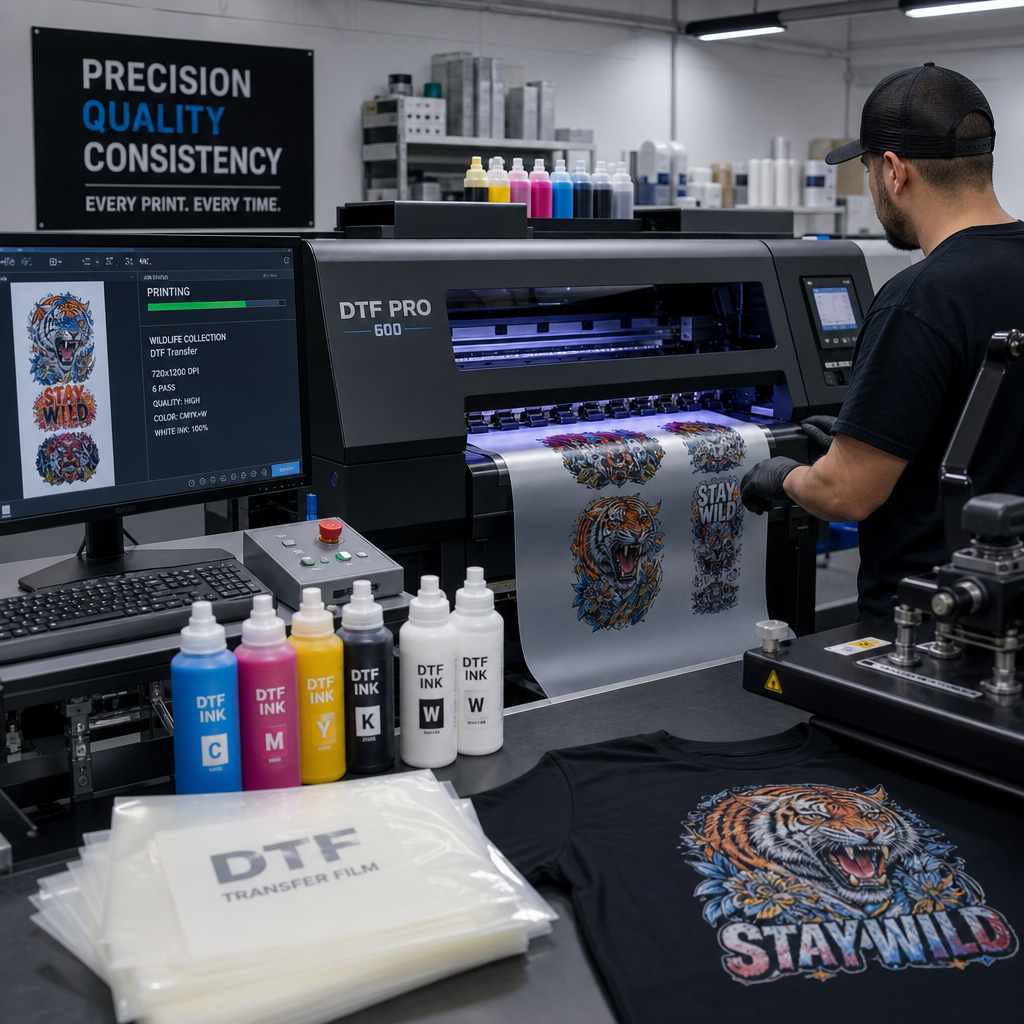
The RIP-processed file is sent to a modified inkjet printer loaded with DTF-specific inks. The design prints in reverse onto a clear or matte PET film. The colour layers print first, followed by the white underbase. The inks used are water-based and contain CMYK pigments plus white titanium dioxide for opacity.
Stage 3: Powder Application and Curing
While the ink is still wet, a hot-melt adhesive powder is applied evenly across the printed surface. Excess powder is shaken off, and the film passes through a curing oven or under a heat lamp at around 120 degrees Celsius. This melts and bonds the powder to the ink layer, creating a complete transfer ready for pressing.
Stage 4: Heat Press Application
The cured transfer is placed print-side down on the garment and pressed at 160 to 165 degrees Celsius for 10 to 15 seconds under firm, even pressure. The heat activates the adhesive, bonding the ink layer to the fabric fibres. After pressing, the film is peeled either hot or cold depending on the specific film type being used.
In practice, the peeling stage is where many cheap transfers fail. A high-quality DTF transfer releases cleanly, leaving a print with a slight texture and excellent colour saturation. A poorly made transfer leaves adhesive residue or pulls fibres from the garment.
Pro tip: Always ask your DTF supplier whether they use hot-peel or cold-peel film for your specific garment type. Hot-peel is faster for production runs but cold-peel generally gives a slightly softer hand feel on cotton garments.
DTF vs Other Printing Methods
One of the most common questions UK businesses ask before placing their first order is how DTF printing compares to the alternatives. The honest answer is that no single method is best for every situation, but for most small business and event orders in the UK, DTF wins on a combination of flexibility, cost at low volumes, and colour accuracy. The comparison below uses real, named methods rather than vague categories.
| Method | Best For | Key Limitations |
|---|---|---|
| DTF (Direct to Film) | Small runs (1-100 units), multi-colour or photographic designs, mixed fabric types, quick turnaround | Slight texture feel compared to screen print; not ideal for ultra-large batch orders where screen printing becomes cheaper per unit |
| Screen Printing | Large runs (500+ units), single or limited colour designs, promotional t-shirts where per-unit cost must be minimal | Setup costs of £20-£50 per colour per screen; minimum orders typically 24-50 units; colour changes require new screens |
| DTG (Direct to Garment) | Photographic prints on 100% cotton, single-unit orders, prints requiring extremely fine detail | Requires pre-treatment on dark garments; slower production; inconsistent results on polyester and synthetic blends; higher per-unit cost than DTF |
Screen printing remains the most cost-effective method at volumes above 500 units for a single design in two or three colours. Below that threshold, and especially for orders mixing different garment sizes or adding names and numbers, DTF delivers better value. DTG is technically capable of excellent results on 100% cotton but its inability to handle synthetic fabrics cleanly makes it less useful for workwear, which often uses polyester-cotton blends for durability and moisture management.
"The printed apparel market is expanding as demand for personalisation grows, with short-run digital printing methods capturing an increasing share of branded merchandise orders globally." - Smithers Pira, Global Apparel Decoration Market Report
Pro tip: If you are ordering branded workwear on polyester-rich performance fabric, DTF is the clear choice. Screen printing inks sit on top of polyester fibres and tend to crack faster, while DTG often produces faded results on anything that is not pure cotton.
What DTF Printing Is Genuinely Good At
DTF printing excels in specific situations that happen to match exactly what most UK small businesses and event organisers actually need. Knowing these strengths helps you decide when to use it and when a different method makes more sense.
Full-Colour Logos and Brand Artwork
If your logo contains gradients, multiple colours, or photographic elements, DTF reproduces them faithfully without any additional cost per colour. A five-colour logo costs the same to print as a single-colour one. This is a significant financial advantage compared to screen printing, where each additional colour adds screen setup costs and complexity.
Mixed Garment Orders
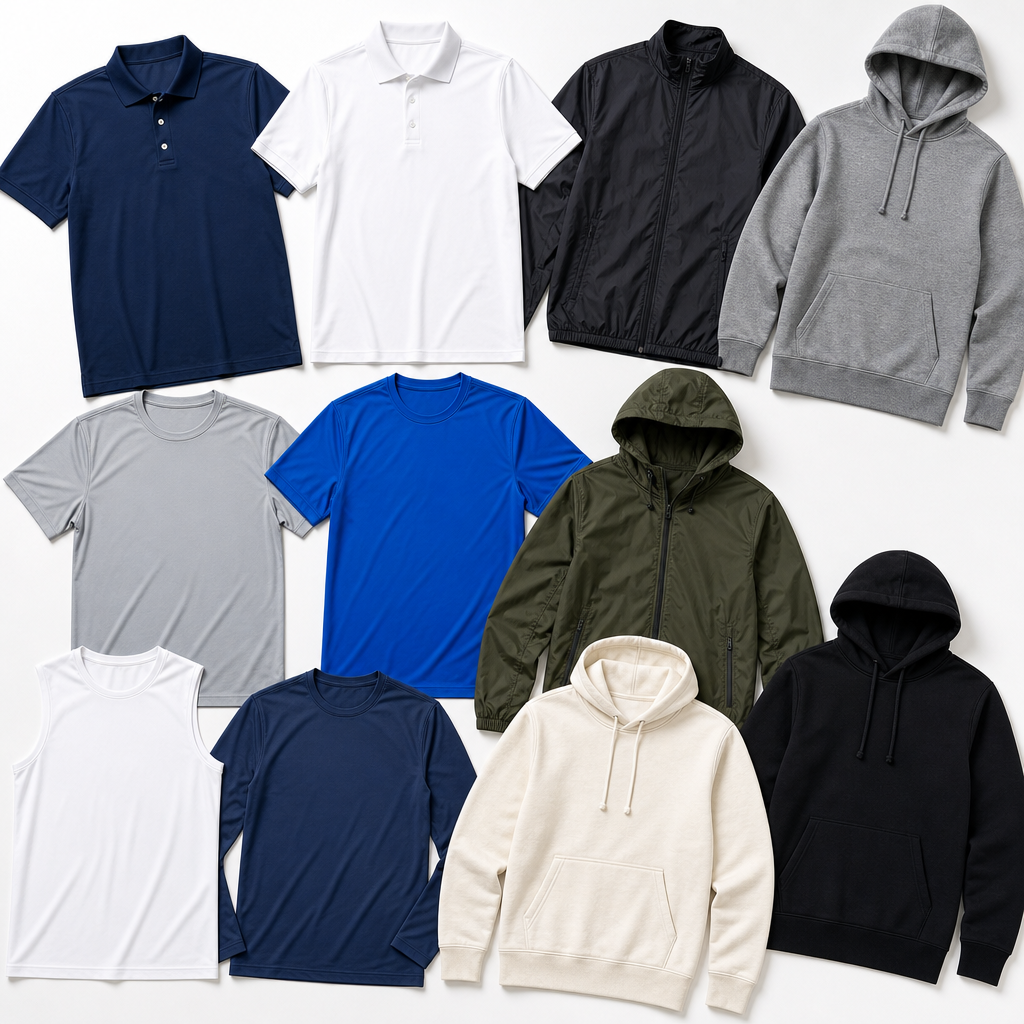
Businesses ordering a mix of t-shirts, hoodies, polos, and sweatshirts in one run benefit from DTF because the same transfer can be pressed onto all garment types regardless of fabric composition. You do not need to place separate orders or choose a garment range that suits a single printing method.
Small Runs Without Financial Penalty
A common mistake is assuming that ordering ten units of branded workwear must be expensive. With DTF, the per-unit cost at ten pieces is only marginally higher than at fifty pieces, because there are no screen setup fees or minimum order charges built into the process. For a new business testing a uniform design or an event organiser ordering for a committee of twelve, this removes a real barrier.
Dark and Coloured Garments
The automatic white underbase in the DTF process means that bright, accurate colours appear correctly on black, navy, charcoal, and any other dark garment. This is not a paid upgrade. It is built into the process. Businesses that previously had to avoid dark garments because of printing cost or quality restrictions now have a full palette of garment colours available.
What DTF Printing Does Not Do Well
Honest advice means covering the limitations, not just the strengths. DTF printing has genuine constraints that matter depending on your application.
The print feel is slightly raised and has a thin film-like texture compared to screen printing, which soaks ink directly into fabric fibres for a near-invisible hand feel. For most workwear and event apparel this difference is unnoticeable in daily use, but for premium fashion garments where texture is a selling point, it may be a consideration.
At very high volumes, such as 500 or more identical units, screen printing becomes cheaper per piece because the fixed setup cost is spread across a large run. DTF pricing scales proportionally, so it does not have the dramatic per-unit cost drop that screen printing achieves at scale. If you are ordering 1,000 identical promotional t-shirts in three colours, get a screen printing quote alongside a DTF quote and compare both.
DTF transfers also have a finite shelf life once printed. Unused transfers stored in poor conditions (high humidity or extreme temperatures) can degrade within a few months. This is only relevant if you are buying pre-printed transfers in bulk and storing them, rather than ordering finished garments directly from a supplier like Psyque, where printing and pressing happen together before dispatch.
DTF Printing UK: What to Look for in a Supplier
The growth of DTF printing UK suppliers has been fast, and quality varies significantly. A printer using entry-level equipment and cheap inks can quote you a competitive price while delivering transfers that fade within ten washes. Here is what to check before placing an order.
In-House Printing vs Outsourced Production
Suppliers who print and press garments in-house control every stage of quality. Suppliers who outsource printing to a third party have limited ability to catch problems before dispatch. Ask directly whether printing and pressing both happen on-site. Psyque operates its DTF printing and heat-press process in-house, which means quality checks happen at each stage rather than only at the packaging point.
Garment Quality
The garment itself matters as much as the print. A DTF transfer applied to a 180gsm ringspun cotton t-shirt will look and feel entirely different from the same transfer on a 130gsm budget blank. Ask for the specific garment brand and weight. Reputable UK suppliers print on branded garments from manufacturers like Stanley/Stella, Gildan, AWD, or Fruit of the Loom, and will name them without hesitation.
Artwork File Requirements
A good DTF supplier accepts vector files (AI, EPS, PDF) and high-resolution raster files (PNG at 300dpi minimum) and will tell you clearly if your artwork needs adjustments before printing. A supplier who accepts low-resolution JPEGs without comment and prints them anyway is prioritising order speed over your result.
For UK businesses comparing options, the key differentiators between suppliers often come down to garment quality, turnaround time, and whether shipping costs are absorbed into the order. Psyque offers free UK shipping on orders over £45, which matters for businesses managing tight event budgets or workwear costs.
Cost and Order Quantities for UK Businesses
Pricing for DTF printed garments in the UK depends on three main variables: the garment itself, the print size, and the quantity ordered. Understanding these variables prevents the common mistake of comparing quotes that are actually for different product specifications.
Print Size and Its Effect on Price
DTF is priced by film area used, not by colour count. A standard left chest logo (approximately 10cm x 10cm) costs less film area than a full back print (approximately 30cm x 40cm). Most UK suppliers charge separately for front and back prints. If your order includes both a front chest logo and a full back design, expect both to appear as line items on a quote.
What a Realistic Budget Looks Like
For a typical UK small business order of branded polo shirts with a single left chest logo and a back print, a realistic budget falls between £15 and £30 per garment at quantities of ten to twenty-five pieces. This includes a quality blank garment and in-house pressing. Event organisers ordering basic t-shirts in higher quantities (50 to 100 units) can expect lower per-unit costs, often in the £8 to £15 range depending on garment specification.
The data consistently shows that the biggest cost saving in custom apparel comes from consolidating your order. Ordering twenty units in one batch costs meaningfully less per unit than placing four orders of five units over the same period, even if the total volume is identical. Plan your garment needs in advance where possible.
Pro tip: When requesting quotes, always specify the exact garment colour alongside your design. A white t-shirt with a four-colour logo requires less ink than a black t-shirt with the same design, because the white underbase layer is thinner or omitted entirely on light garments. Some suppliers adjust pricing accordingly.
Frequently Asked Questions
What is DTF printing and how is it different from iron-on transfers?
DTF printing uses industrial-grade water-based inks and a heat-activated hot-melt adhesive powder applied under precise temperature and pressure, producing prints that bond at a molecular level with fabric fibres. Consumer iron-on transfers use a plastic vinyl carrier layer that sits entirely on top of the fabric, which is why they crack and peel quickly. DTF transfers are thinner, more flexible, and significantly more durable than iron-on products sold in craft stores.
How many washes will a DTF print last?
A properly applied DTF transfer on a quality garment should maintain good colour and adhesion for 40 to 50 washes when garments are washed inside-out at 30 to 40 degrees Celsius on a gentle cycle. Washing at higher temperatures, using tumble dryers on high heat, or ironing directly over the print will reduce longevity. In practice, most customers wearing DTF-printed workwear daily report the print outlasting the garment itself when basic care instructions are followed.
Can DTF printing go on polyester and synthetic fabrics?
Yes, and this is one of DTF's strongest advantages over DTG printing. DTF transfers bond effectively to polyester, nylon, polyester-cotton blends, and most synthetic fabrics without pre-treatment. This makes it the preferred method for sportswear, performance workwear, and moisture-wicking polos that use synthetic fabric compositions. Screen printing on polyester is possible but risks dye migration, where the dye in the garment bleeds into the ink layer and distorts colours over time.
Is there a minimum order quantity for DTF printed clothing in the UK?
No, not with suppliers who operate their own DTF setup. Because there are no screens or plates to set up, a single unit costs the same proportionally as a ten-unit order. In practice, most UK DTF suppliers apply a small handling minimum, often three to five units, but this is far below the twenty-four to fifty-unit minimums common in screen printing. Psyque's custom printed garment options are accessible to businesses ordering small quantities for teams, trials, or events.
What file format should I send for DTF printing?
Send a PNG file with a transparent background at 300dpi minimum, sized to your intended print dimensions. Vector files (AI, EPS, or PDF with embedded fonts) are the gold standard because they scale without quality loss. JPEG files are usable only if they are genuinely high resolution, but they do not support transparency, which means the supplier must manually remove the background before printing. A common mistake is sending a logo copied from a website, which is typically 72dpi and too low resolution for a quality print result.
Does DTF printing work on dark coloured garments?
Yes, and the white ink underbase built into the DTF process is the reason why. The printer automatically lays down a white layer beneath the colour design, which acts as a base that makes all colours appear vibrant and accurate regardless of the garment colour underneath. This is included in the standard print process and does not cost extra, unlike some DTG suppliers who charge a premium for dark garment printing.
How does direct to film printing compare to embroidery for workwear?
Embroidery produces a premium, textured finish that works well for simple logos on caps, polo shirts, and corporate jackets. It becomes expensive and impractical for large designs, gradients, or photographic artwork because each colour requires a separate thread and stitch count drives cost. DTF printing handles complex, multi-colour designs at lower cost and covers larger print areas without the thickness or weight that heavy embroidery adds to a garment. For branded workwear with detailed logos or full back prints, DTF is the more practical and cost-effective choice.
If you have experience ordering DTF printed clothing for your business or event, share what worked (or did not work) in the comments. It helps other UK business owners make better decisions before they place their first order.
References
- Forbes Business Coverage: Trends in custom merchandise and branded apparel for small businesses
- Statista: Global custom apparel and personalised clothing market size data and forecasts
- UK Government Business and Trade Resources: Guidance for small business procurement and branded merchandise
- Ahrefs Blog: Consumer search trend data relevant to custom printing and branded workwear queries
- HubSpot Marketing Statistics: Data on branded merchandise effectiveness in small business marketing