
What Are DTF Transfer Sheets A UK Guide
Think of a DTF transfer sheet as a sort of high-tech, ready-to-go sticker made specifically for fabric. At its heart, it's a special film carrying your vibrant, full-colour design, all set to be permanently heat-pressed onto just about any garment you can think of.
Understanding the Core Components
Unlike other methods that print directly onto the material, DTF technology prepares the design on a separate sheet first. This is what makes it so incredibly versatile and easy to apply. The whole thing works like a layered system, where each part has a very specific job to do to get that perfect, durable finish.
It all starts with the PET film. This isn't just any old piece of plastic; it's a specialised carrier sheet, cleverly engineered to hold the ink perfectly and then release it cleanly when heat is applied. Your design is printed onto this film using unique, water-based textile inks that are built to last.
The Magic Behind the Adhesion
So, what makes the design stick? That's where the final layer comes in: a fine, powdered adhesive. This powder is sprinkled over the wet ink and then cured with heat, creating a solid but flexible backing for your design.
When you bring the heat press down, this adhesive layer melts and bonds the ink directly into the fibres of the fabric. It’s this complete fusion that gives DTF prints their famously soft feel and makes them tough enough to handle stretching and countless washes.
To really get your head around the technology, it helps to understand what the name actually means. We break it all down in our guide on what DTF stands for. Knowing the basics really helps explain why this process has become such a game-changer for UK apparel businesses.
Quick Guide DTF Transfer Sheets at a Glance
To give you a quick snapshot, here’s a simple table breaking down the key features of DTF transfer sheets. It’s a handy reference for understanding what makes them tick.
| Attribute | Description |
|---|---|
| Carrier Material | A specialised PET (Polyethylene Terephthalate) film designed for clean release. |
| Ink Type | Vibrant, water-based textile pigment inks formulated for flexibility and durability. |
| Adhesive Layer | A fine thermoplastic polyurethane (TPU) hot-melt powder that bonds the design to fabric. |
| Application | Applied using a heat press, which activates the adhesive for permanent bonding. |
| Feel & Finish | Known for a soft, flexible feel that integrates well with the fabric. |
| Durability | Excellent resistance to washing, stretching, and fading. |
| Versatility | Compatible with a wide range of fabrics, including cotton, polyester, blends, and more. |
Hopefully, that little summary makes it clear just how these components work together to create such high-quality, reliable transfers for your projects.
How DTF Printing Works Step By Step
So, how does a digital idea actually end up as a vibrant design you can wear? Let's pull back the curtain on the DTF process. It’s a surprisingly slick journey from a specialised printer to the final heat press, turning digital art into durable, touchable apparel.
Everything kicks off by printing your design directly onto a special PET (polyethylene terephthalate) film. This isn't your average office paper; this film is engineered to hold onto the ink just long enough before releasing it perfectly. A dedicated printer, which you can read all about in our guide to choosing a DTF printing machine, lays down the vibrant, water-based textile inks.
Right after the ink is printed, while it’s still wet, a fine adhesive powder gets sprinkled over the entire surface. This is the clever bit—the powder only sticks to the wet ink, creating a precise adhesive layer just for your design. Any loose powder is then shaken off, leaving the transfer sheet clean and ready for the next stage.
Curing and Application
Next, the powdered sheet is sent through a curing process, usually involving a heat tunnel or a purpose-built oven. This step melts the powder, fusing it with the ink to create a smooth, solid adhesive backing. Once this is done, the DTF transfer sheet is complete, stable, and ready to be stored for later or applied straight away.
This diagram breaks down those initial steps, showing how the different components come together to form the transfer.
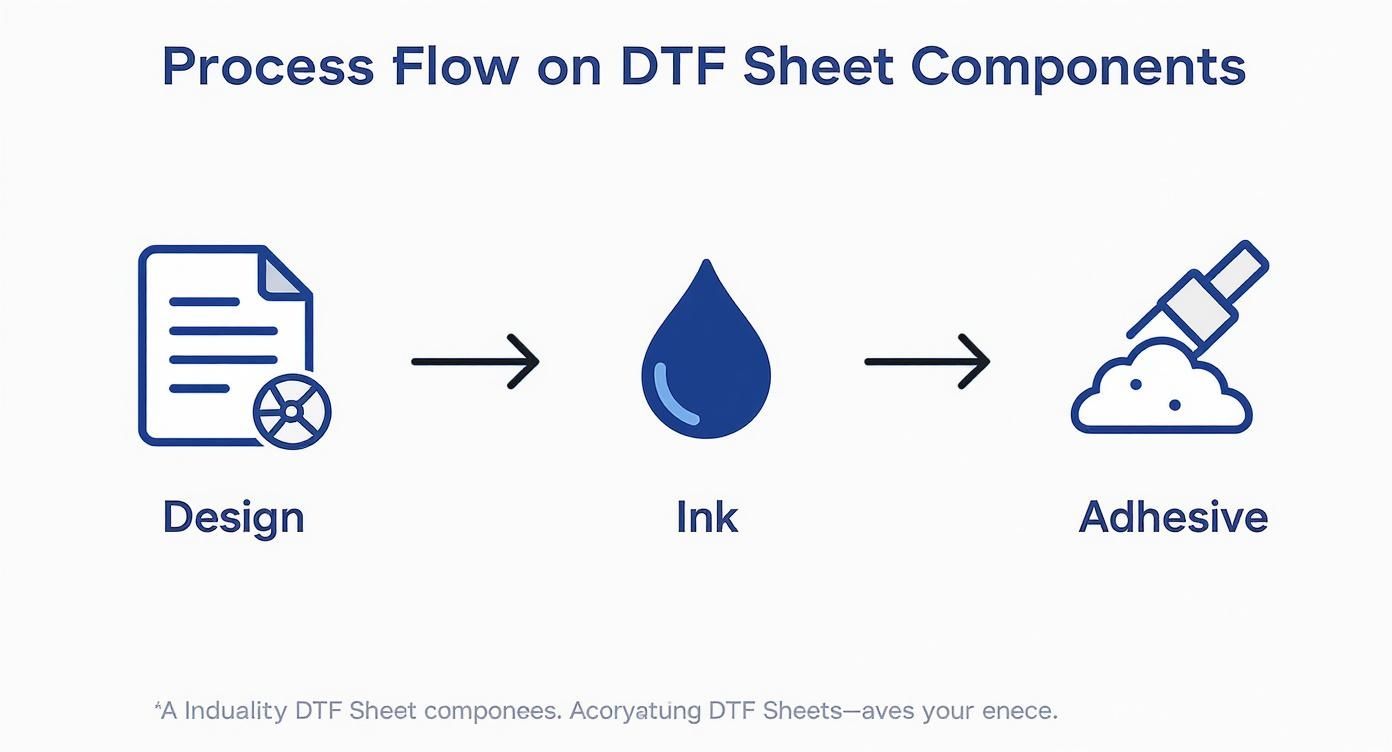
As you can see, each material builds on the last to create a transfer that’s perfectly prepped for pressing.
The real magic happens with the heat press. The finished transfer is positioned on the garment, and a combination of heat and firm pressure activates that adhesive layer. This permanently bonds the design right into the fabric's fibres. After a few seconds of cooling, the PET film is peeled away, leaving behind a crisp, colourful, and incredibly tough print that feels like it’s part of the material itself.
The Real-World Benefits of Using DTF Transfers
So, why are so many UK businesses making the switch to DTF? It really comes down to the practical, day-to-day advantages that you can see and feel. It all starts with incredible versatility.
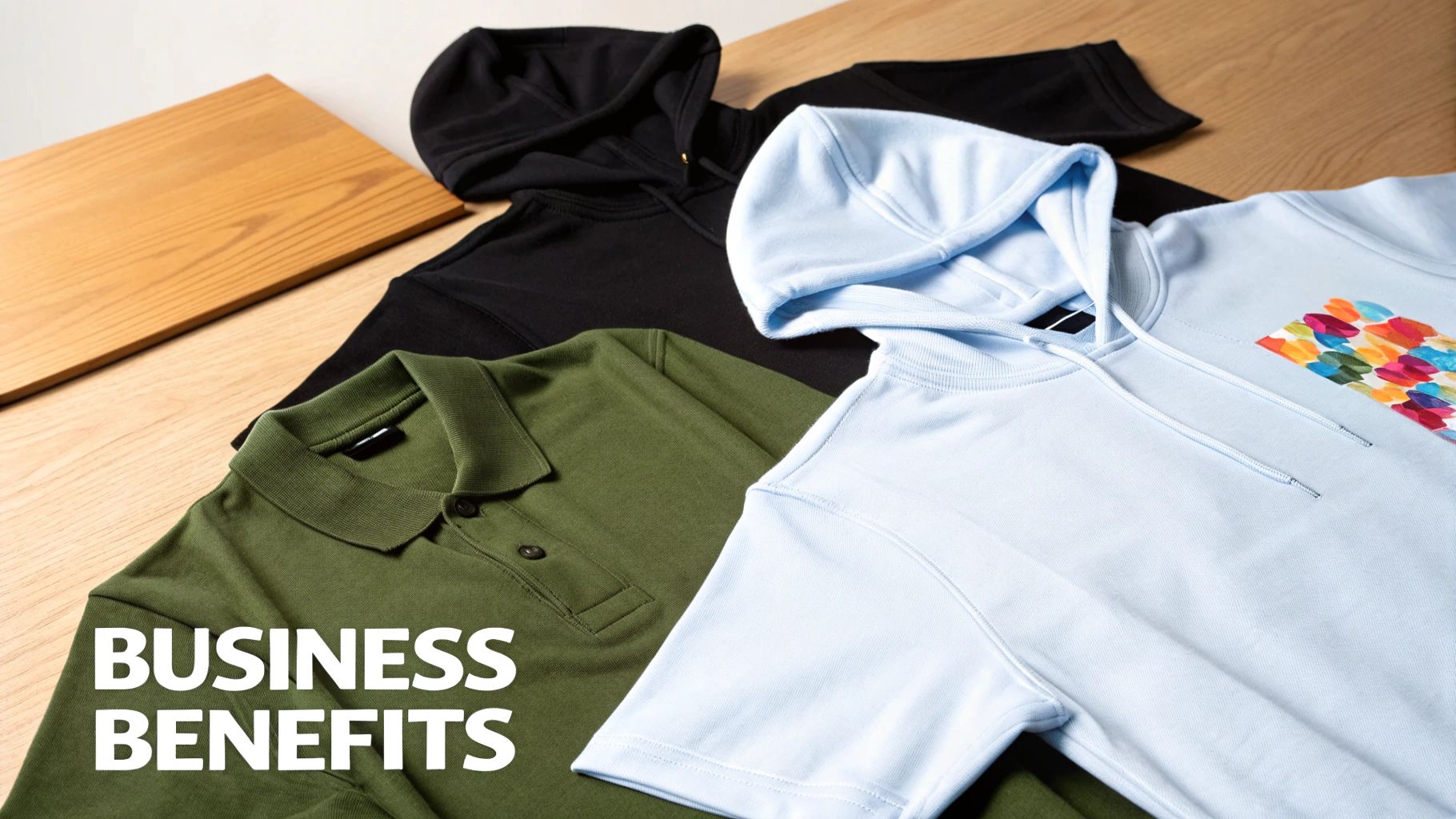
Just imagine being able to print stunning, full-colour designs not just on standard cotton tees, but also on tricky polyester sportswear, blended fabrics, and even unconventional materials like nylon or treated leather—all without a fuss.
This kind of flexibility throws the door wide open for your product range. We're talking branded hoodies, custom tote bags, caps, and performance wear. What are dtf transfer sheets if not the key to unlocking total creative freedom? It empowers you to say "yes" to almost any customer request.
Unlocking Profitability and Durability
Beyond the creative freedom, DTF is a true workhorse when it comes to durability and cost. The prints are ridiculously resilient, built to handle dozens of washes without cracking, fading, or peeling away. That means happier customers and a solid reputation for quality gear that actually lasts.
For small to medium-sized businesses, the financial side of things is a massive win. DTF does away with the steep setup costs and minimum order quantities that come with older methods. We actually break this down in our guide comparing DTF vs screen printing for graphic tees.
This low barrier to entry means startups can launch diverse collections and designers can experiment with different ideas without a huge financial gamble. It makes custom apparel more accessible than ever before.
And the numbers back it up. In the UK market, with a typical retail price of around £20 per shirt, businesses can see a gross profit of approximately £15.50 per unit. Even selling just 100 shirts a month could mean a gross profit of £1,550—a fantastic return for a pretty low initial outlay. Of course, great products need great presentation, which is where effective merchandising with quality clothing display racks to enhance your store comes in.
Why DTF Printing Is Gaining Momentum in the UK
It’s no secret that DTF printing is taking the UK by storm. But this isn't just about a flashy new piece of kit; it's a fundamental shift driven by what modern businesses and customers actually want. E-commerce brands, small businesses, and independent creators have all jumped on board for one simple reason: DTF offers incredible flexibility with a remarkably low barrier to entry.The technology is a perfect fit for today's fast-moving entrepreneurial spirit, where speed, agility, and customisation are king. Think about it: a startup can now launch an entire merchandise line without sinking thousands into bulky equipment or committing to a massive, risky print run. DTF makes on-demand production a reality, cutting down the risk and letting creativity run wild.
On top of that, customers are hungrier than ever for personalised gear. Whether it's a one-of-a-kind gift or branded workwear that really stands out, people want products that feel unique to them. DTF delivers this with a quality and speed that other methods just can't match.
Aligning with UK Market Trends
The UK's dynamic business environment and DTF transfer sheets are a match made in heaven. The technology is built for low-volume, high-margin production runs, which is absolutely ideal for testing out new designs or catering to niche markets without a huge financial gamble.
Digging into the market data for Direct-to-Film transfer sheets in the UK shows strong, steady growth. We see a pretty clear spike in demand during the summer months, especially in July and August. What’s really interesting, though, is that search trends reveal a clear preference for pre-printed transfers over raw materials like 'dtf printer sheets'. This tells us that many UK businesses would rather get a ready-to-press solution and get straight to creating. You can see a breakdown of these trends in Accio's business analysis.
This shift levels the playing field, empowering even the smallest ventures to go toe-to-toe with bigger companies. They can now offer unique, high-quality apparel that genuinely connects with specific audiences and builds lasting brand loyalty. If you're looking for local options, our guide to finding DTF printing near you is a great place to start. This accessibility is exactly why DTF is cementing its place as a cornerstone of the UK textile industry.
How to Choose the Right DTF Transfer Supplier
Knowing all about what are dtf transfer sheets is one thing, but finding a reliable partner to actually produce them for you? That’s the next critical step. The quality of your supplier directly impacts the quality of your final products, so this decision really sets the foundation for your brand's reputation. It’s about more than just finding the cheapest price; it's about securing a partnership that delivers consistency and reliability, order after order.
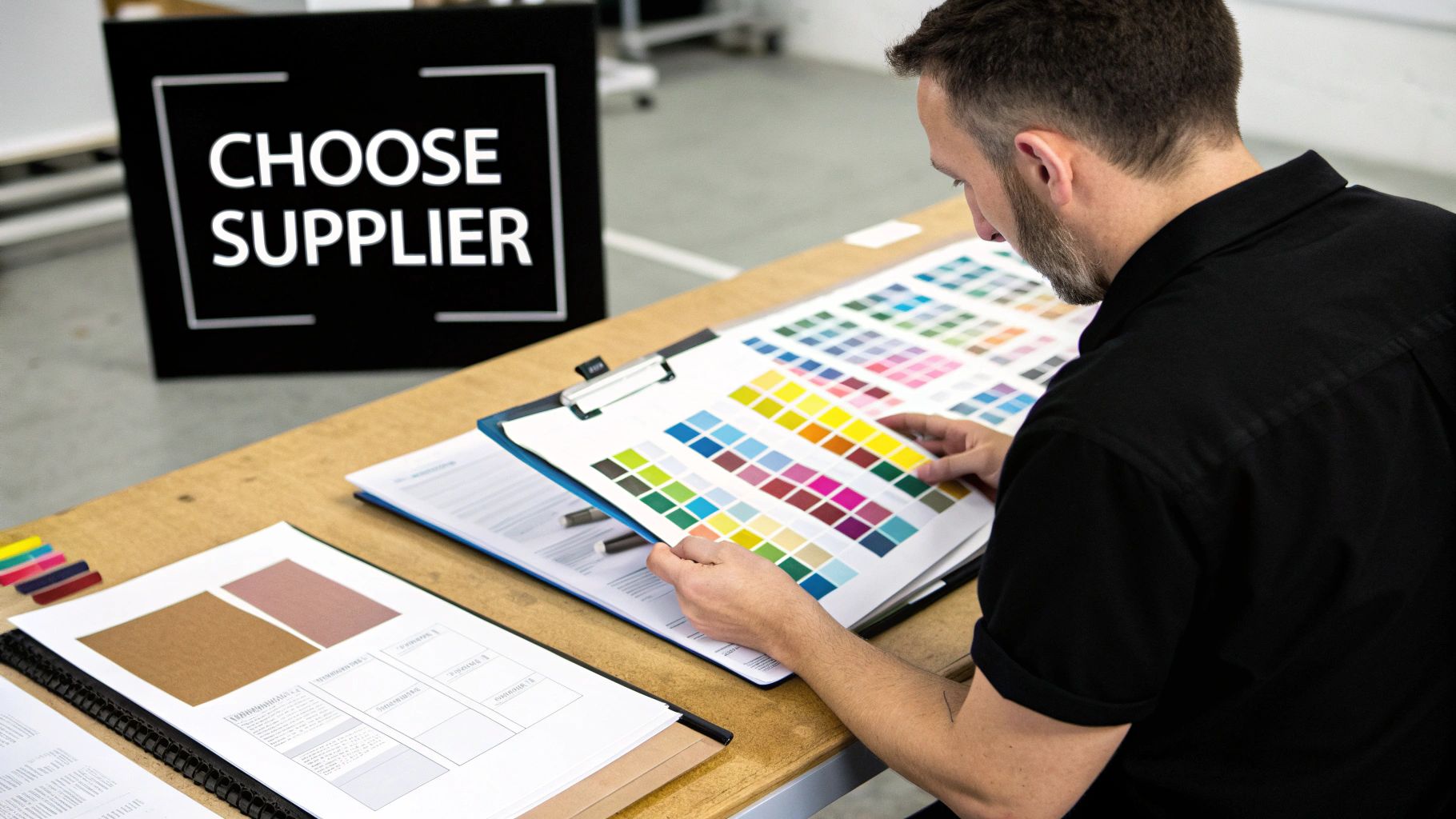
The very first thing to scrutinise is the print quality itself. Ask for samples—don’t be shy about it. A dependable supplier should be proud to show off their work.
When you get those samples, don't just look at them. Feel them. Check for vibrancy, sharpness, and how soft the print feels after it’s been applied. Better yet, press one onto a spare t-shirt and throw it in the wash. That’s the real test of its durability.
Key Factors For Vetting A Supplier
Beyond the print itself, a few operational factors separate the great suppliers from the merely mediocre ones. These are the things that ensure a smooth workflow and predictable results for your business. When you’re digging into potential suppliers, it can be helpful to lean on general advice from a comprehensive guide on selecting UK printing services to build a solid checklist.
Here are the critical questions you need to be asking:
- What’s your typical turnaround time? Can they keep up with your production deadlines, especially when things get busy?
- What inks and films do you use? Quality materials lead to better durability and a softer feel, so don't be afraid to ask about their specific gear.
- How do you handle colour matching? A good supplier will have a clear process for making sure your digital designs translate accurately into print.
- What’s your customer support like? If an order has an issue, you need a responsive and helpful team on your side to sort it out quickly.
Choosing a supplier is about building a long-term relationship. A partner who understands your business needs will be invested in your success, offering guidance and consistent quality that helps you grow.
Ultimately, finding the right supplier gives you the confidence to focus on what you do best—designing and selling—knowing the production side is in capable hands. For those ready to start exploring options, browsing our own range of high-quality DTF transfers for sale is a great place to see what professional-grade results should look like.
Got Questions About DTF Transfers? We’ve Got Answers.
Once you get the hang of the basics, a few practical questions always seem to pop up. It’s totally normal. Getting these sorted is the key to building confidence and making sure you’re delivering the kind of professional quality your customers will love.
Let's dive into some of the most common queries we hear.
A huge concern for anyone in the custom apparel game is durability. I mean, what good is a brilliant design if it doesn't last? So, how long can you really expect these prints to hold up?
How Long Do DTF Transfers Last On Clothing?
Honestly, a professionally applied DTF transfer is incredibly tough. More often than not, it will outlast the garment it’s printed on. They're built to withstand dozens and dozens of wash cycles—we're talking 50 or more—without cracking, peeling, or fading.
This impressive resilience comes down to the combination of flexible, water-based inks and a powerful adhesive that literally melts into the fabric’s fibres.
To get the best possible lifespan out of your prints, a few simple care instructions go a long way:
- Wash the garment inside-out on a cool cycle.
- Steer clear of harsh detergents or bleach.
- Tumble dry on low, or even better, hang it up to dry.
Follow these simple rules, and the print will keep its soft feel and bright colours for years.
Can I Use A Household Iron To Apply A DTF Transfer?
While it might seem like a tempting shortcut, using a regular household iron is a big no-no. An iron just can't provide the two things that are absolutely critical for a solid, permanent bond: consistent temperature and even pressure.
Trying to use an iron almost always results in a patchy application, poor adhesion, and a design that starts peeling or cracking after the very first wash. It's just not worth the risk.
A quality heat press is the only tool for the job. It guarantees a professional, durable finish by delivering uniform heat and pressure across the entire design. This is what properly cures the adhesive, fusing it deep into the fabric for a bond that’s built to last.
What Kind Of Fabrics Can I Use DTF Transfers On?
This is where DTF technology really pulls away from the pack. Its versatility is a massive advantage over other printing methods like DTG, which is pretty much limited to fabrics with a high cotton content.
DTF transfers can be applied to a huge range of materials, opening up a whole world of creative possibilities for your business. The list includes:
- 100% Cotton
- 100% Polyester
- Cotton/Polyester Blends
- Tri-Blends
- Nylon
- Treated Leather
- Canvas and Denim
This flexibility means you can confidently offer custom designs on everything from your standard tees and hoodies to performance sportswear, hats, tote bags, and even tough workwear.
Ready to see the quality and versatility of DTF for yourself? Psyque offers premium, ready-to-press transfers that bring your designs to life with vibrant colour and incredible durability. Explore our services and start your next project today.