
dtf transfer sheets near me: Find Trusted UK Suppliers & Fast Turnarounds
Let's be honest, waiting for a delivery to arrive is a drag. It’s a bottleneck that can grind your entire project to a halt. Searching for dtf transfer sheets near me isn’t just about convenience; it’s a strategic move for any UK-based creator. Think faster project turnarounds, zero shipping fees if you collect, and the chance to build a real relationship with the people who actually print your designs. It’s all about taking back control.
Why Going Local Is a Game Changer for DTF Transfers
For small businesses and solo creators, switching from huge, faceless online suppliers to a local print shop can make a world of difference. The benefits aren't just theoretical—they're practical, tangible advantages you'll feel straight away.
The most obvious win is speed. Instead of drumming your fingers for days waiting for a courier, you can often have your transfers in hand within 24-48 hours. This is an absolute lifesaver when you're up against a tight deadline or a client throws a last-minute request your way.
Connecting with a local printer also means you get far better quality control. When you can actually speak to the person running the machine, it's so much easier to sort out any issues, chat about colour profiles, and make sure the final print is exactly what you pictured. That kind of personalised support is something an automated online checkout just can't offer.
Faster Projects and Real Support
Picture this: a customer rings you up needing 50 custom shirts for an event this weekend. A local supplier can probably make that happen. A massive national company? They might still be processing your order by the time the event is over. That kind of agility is a massive competitive advantage.
And when things go wrong—a file isn’t quite right or a colour looks off—a quick phone call or a five-minute drive to the shop can solve it instantly. You're not stuck in a queue for a support ticket. This direct line of communication is priceless. You can learn more about finding the best DTF transfer sheets in the UK in our in-depth guide.
Being able to physically hold a sample or talk through a complex design in person removes all the guesswork. It eliminates the risk that comes with ordering from a supplier you've never met and builds a foundation of trust for consistent, quality results.
The Buzz in the Local Market
This shift towards local sourcing isn't just a hunch; the market growth backs it up. The UK's direct-to-film printing scene has exploded, driven by the huge demand for custom apparel and small-batch production runs.
In fact, Europe’s DTF market accounts for a massive 36% share of the entire global market, and the UK is a major player in that growth. This accessibility has slashed production lead times and inventory costs for countless UK businesses, big and small. You can find more data on the European DTF market here.
Your Playbook for Finding the Best Local DTF Printers
Finding a solid, local supplier for your DTF transfers takes a bit more effort than just a quick Google search. The goal isn’t just to find a printer; it’s to build a list of reliable partners you can count on. This means you’ll need to dig a little deeper than the first page of results.
Start by getting specific with your search terms. Instead of something generic, try geo-targeted phrases like "DTF transfers Manchester" or "gang sheet printing Birmingham". This simple tweak immediately cuts through the noise of national distributors, putting local specialists right at the top of your list. Understanding how small businesses market themselves, for instance by leveraging Google My Business, can give you a real edge in finding them.
Why go local in the first place? It really boils down to three key things.
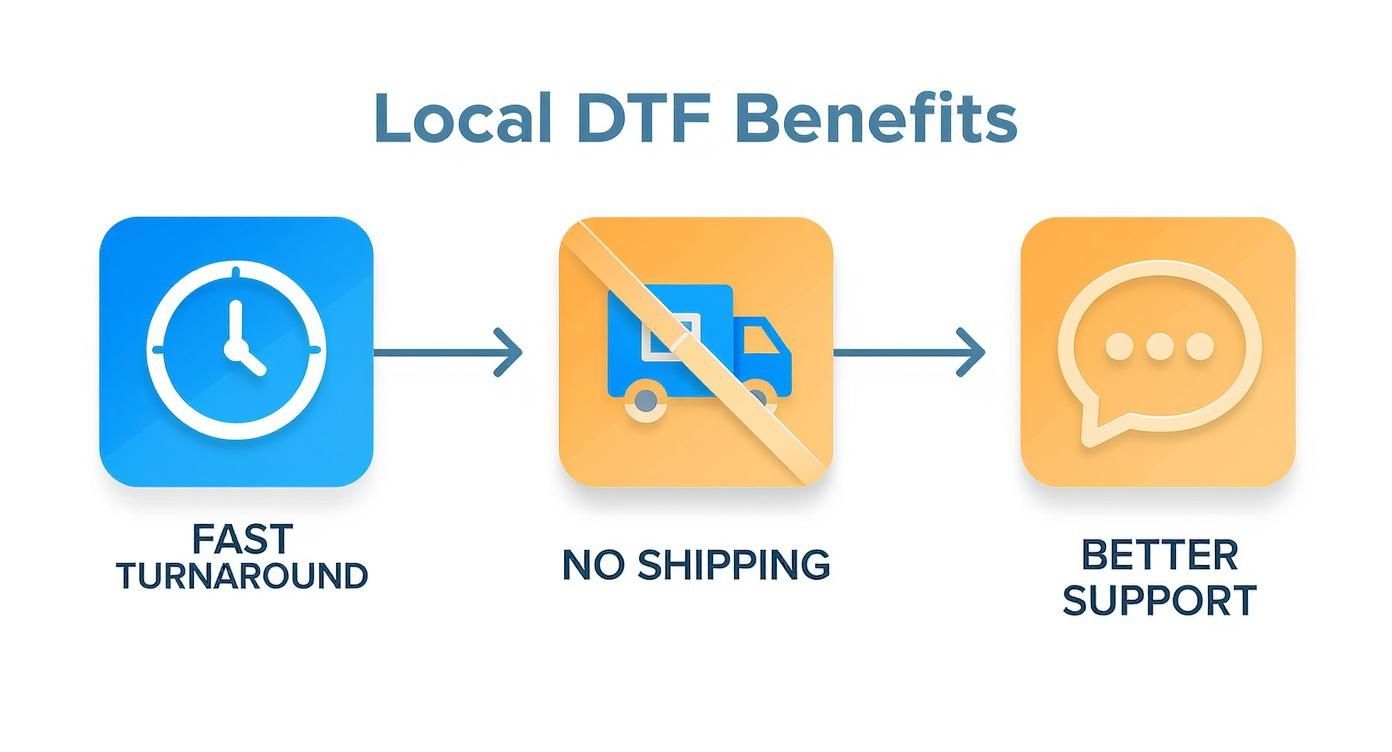
As you can see, speed, savings, and direct support are massive advantages. Being able to pop in, sort out an issue, or grab an order in a pinch can be a game-changer.
Digging Deeper with Social Media and Communities
Don't stop at Google. Some of the best print shops I've worked with barely have a website but are incredibly active on social media. They build their entire customer base through platforms like Instagram or in local Facebook business groups.
Try searching on these platforms using hashtags like #dtfprintinguk or look for business networking groups in your city. This is often where you'll find the hidden gems—printers who are all about quality and customer service, not massive marketing budgets.
A great local printer is more than just a supplier; they're a partner. They offer advice, help you troubleshoot tricky designs, and become a reliable part of your process. That kind of relationship is priceless for consistent growth.
This shift toward local sourcing is being driven by a huge market of small to medium-sized businesses (SMBs), which make up an estimated 70% of the entire DTF user base. In the UK, that’s thousands of independent brands and merchandise suppliers all looking for ways to make their operations smoother. This trend really highlights the need to find a dependable partner for your custom t-shirt printing needs near you.
To finish building your list of potential suppliers, make sure you also check out niche craft forums and local business directories before you start the vetting process.
How to Vet Local Suppliers and Avoid Poor Quality Prints
Finding a local printer is one thing, but figuring out if they’re any good is the real challenge. You need to separate the true professionals from the hobbyists running a printer out of their garage. Not all DTF prints are created equal, and one bad batch of transfers can ruin a whole run of garments, costing you time, money, and maybe even a client.
Think of this vetting process as your quality control safety net. It’s what ensures the final product is something you’re actually proud to sell or wear.
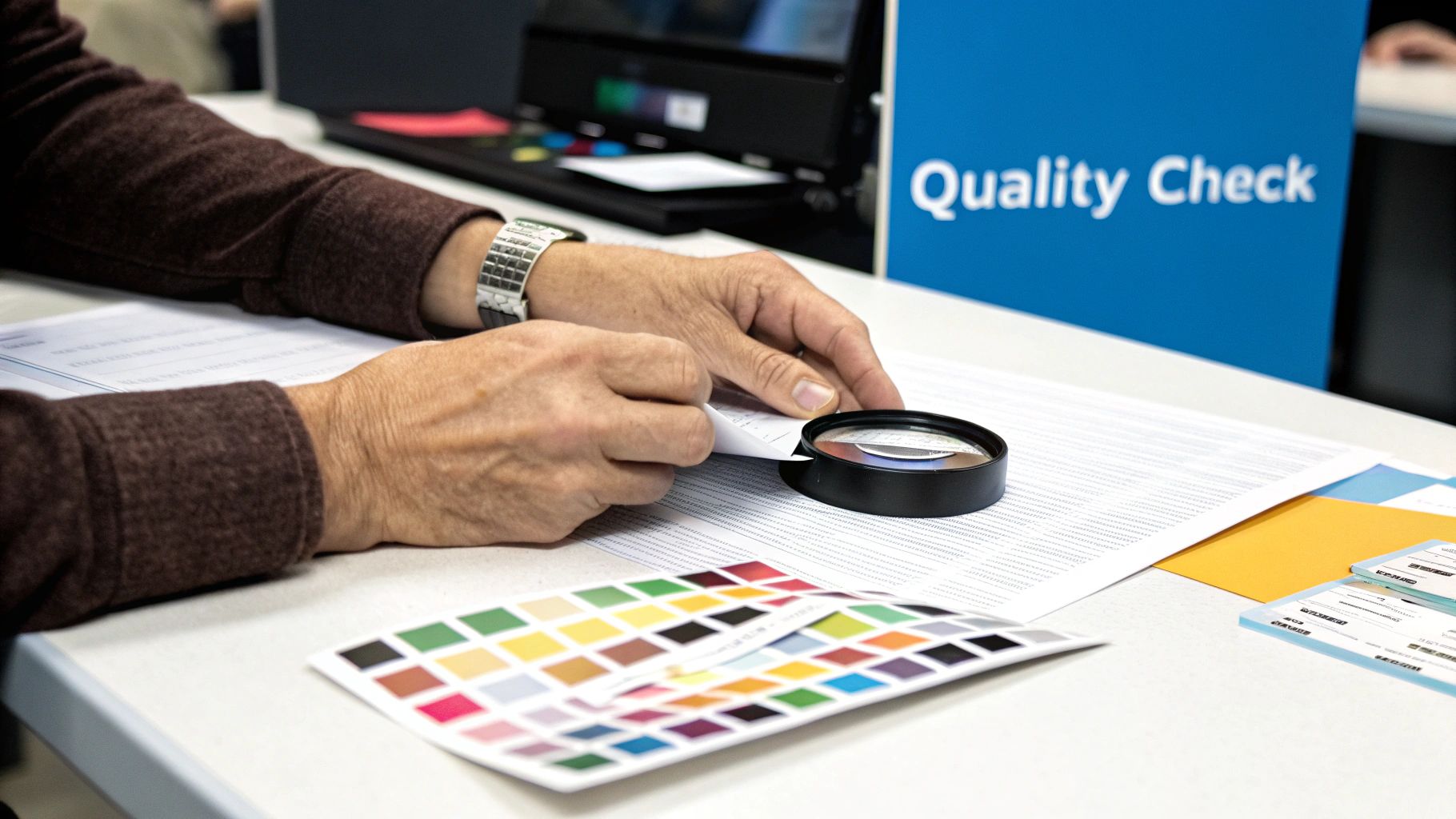
First up, do a bit of digital snooping. Any serious supplier will have a decent website or an active social media profile showing off their work. Don’t just glance at it—zoom in on the photos. Are the colours popping? Are the edges of the designs sharp and clean? If their own marketing photos look fuzzy or the prints look dull, that’s a massive red flag.
Next, see what other people are saying. Dig into their Google Reviews, check for recommendations on local Facebook business groups, and read any testimonials they’ve put on their site. You’re looking for patterns here. Do customers keep mentioning the amazing colour accuracy, the soft feel of the transfers, or how brilliant the customer service was? A string of happy customers is a pretty solid sign you’re onto a winner.
Put Their Prints to the Test
Reading reviews is a great start, but you can’t beat getting your hands on the real thing. Ordering a sample pack is a non-negotiable step. Seriously, don't skip this. This is your chance to see, feel, and test the quality of their DTF transfers before you even think about placing a proper order. Any decent supplier will be more than happy to send you samples, often for a small fee or sometimes even for free.
When the samples arrive, it's your turn to play quality inspector. Here’s exactly what you need to check:
- Feel and Texture: Press a sample onto a spare T-shirt or a scrap piece of fabric. How does it feel? A top-quality DTF transfer should feel soft and flexible, almost like it’s part of the material. If it feels thick, stiff, and plasticky, that’s not what you want.
- Colour Vibrancy: Pull up your original design file on a properly calibrated screen and hold the pressed transfer right next to it. How do the colours match up? Are the reds actually red, or are they leaning towards orange? Tiny variations are normal in printing, but it should be a very close match to what you sent them.
- Stretch and Durability: Give the fabric a gentle stretch right over the design. A good print will stretch right along with the material without cracking or peeling. Then, throw it in the wash. Follow the supplier’s care instructions and see how it holds up after a cycle or two.
A sample test is the single most effective way to prevent a disaster. It costs next to nothing in the grand scheme of things but can save you from wasting hundreds of pounds on a bulk order of unusable transfers that could trash your brand's reputation.
Taking the time to weigh up your options is more important than ever. The UK’s printing market is changing fast, and lots of traditional screen printers and embroiderers are now adding DTF to their services to keep up with demand. You can read more about the UK’s role in the growing direct-to-film market here.
Going through these checks helps you find a local partner you can really trust to deliver fantastic results every time. For a deeper dive, have a look at our article on what makes for the best DTF transfers.
Prepping Your Artwork for Flawless DTF Results
The quality of your finished garment is decided long before you ever power on your heat press; it begins with your digital file. Honestly, sending over poorly prepped artwork is one of the most common—and costly—mistakes I see. It leads to delays, back-and-forth emails, and ultimately, disappointing results.
Getting it right the first time is the secret to translating your vision perfectly from screen to fabric.
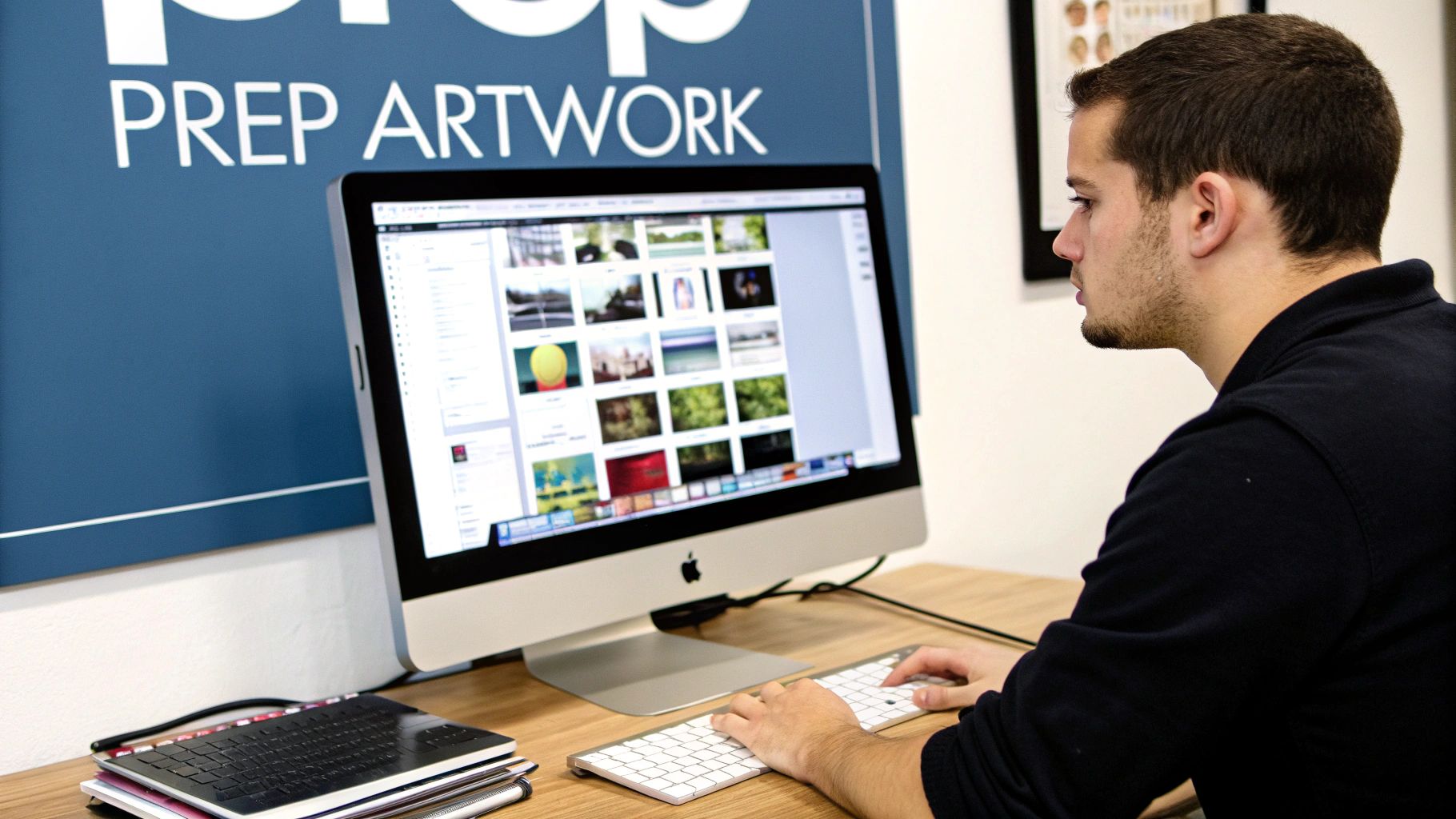
Before you even think about uploading your design, you have to check the resolution. Your artwork must be created at 300 DPI (dots per inch) at the final print size. If you grab a low-res image off a website (usually 72 DPI), it’s going to look pixelated and blurry when it’s printed. No amount of pressing magic can fix that.
Equally important is the file format. DTF printing needs a file with a transparent background so that only your design gets printed, not a solid white or coloured box around it. For this reason, you should always save and export your final artwork as a PNG file.
Fine-Tuning Your File for Printing
Beyond the basics of resolution and transparency, you need to confirm your colour profile. Most DTF printers operate using an RGB (Red, Green, Blue) colour profile, which is how colours are displayed on digital screens. If you submit a file in CMYK (a profile used for paper printing), you can get some really funky colour shifts.
A quick chat with your local supplier to confirm their preferred colour profile can save you a world of frustration. It’s a simple step that guarantees the vibrant colours you see on your monitor are what you get on your transfers.
Finally, think about efficiency. If you've got several smaller designs, arranging them onto a single large sheet—known as a gang sheet—is by far the most cost-effective approach. This technique maximises every square inch of the film, drastically reducing your cost per print. Properly ganging your artwork is a pro move that gets you the most value from your order when you're looking for dtf transfer sheets near me.
For more tips on creating stand-out products, our guide to making personalised t-shirt printing a success is a great resource.
Your Top Questions About Finding DTF Transfers in the UK
When you start digging into local suppliers and typing dtf transfer sheets near me into a search bar, you'll quickly find yourself with a few practical questions. It's totally normal. Knowing the answers is key to planning your projects properly, managing your budget, and ultimately, keeping your own customers happy.
Think of this as your go-to guide for those questions that pop up time and time again. We’ll cover everything from timing and costs to quality control, giving you the confidence you need to partner with a UK-based DTF supplier.
What's the Typical Turnaround Time?
This is where local suppliers really shine. For the most part, you can expect UK print shops to get your DTF transfer sheets ready in just 1-3 working days. A lot of them even offer same-day or next-day rush services if you’re in a tight spot, though you'll likely pay a bit extra for the privilege.
That’s a huge step up from the big, faceless online printers who might take several days just to get your order into production, let alone ship it. It’s always smart to double-check the current lead times with your chosen printer, as things can get a little hectic during busy periods like Christmas or the summer holidays.
Choosing a local printer isn't just about speed; it's about agility. It gives you the power to say "yes" to those last-minute, high-pressure jobs that larger, slower operations would have to turn away.
Can I Just Pop in and Collect My Transfers?
Yes, absolutely! This is one of the best perks of working with someone local, and it's a great way to cut down on costs. Pretty much any print shop with a physical storefront will let you swing by and collect your order yourself.
Doing this gets rid of shipping fees and completely sidesteps any potential courier delays or nightmares of your transfers arriving damaged. It's the perfect fix for urgent jobs or if you simply prefer that face-to-face interaction. Just give them a quick call or check their website first to make sure they have a customer collection point.
How Much Should I Expect to Pay?
The honest answer? It varies. Costs can fluctuate quite a bit based on where you are in the UK, the supplier you choose, and how much you're ordering.
As a rough guide, you can expect to pay somewhere between £10 and £20 per metre for a standard 60cm wide DTF gang sheet.
Most suppliers use a tiered pricing model, which is great news for you. The more you order, the cheaper the price per metre gets. To avoid any nasty surprises, always scout out a pricing page on their website or, even better, ask for a formal quote. Oh, and always clarify if VAT is included in the price they give you. If you want to buy DTF transfers and need a bit more detail, we've got a full guide on that too.
What If the Colours in My Print Are Off?
Colour accuracy is a totally valid concern for anyone in the print game. The single best thing you can do to avoid problems is to design your artwork using an RGB colour profile. This is the standard that most DTF printers are set up for.
Even with the best, most professionally calibrated equipment, you can sometimes get slight differences between what you see on a backlit screen and the final physical print. It happens. If you notice a major colour mismatch, get on the phone with your supplier straight away. Having that local point of contact makes sorting these things out infinitely faster and less stressful than dealing with a remote, anonymous customer service team.
Ready to bring your designs to life with vibrant, high-quality prints? Psyque offers premium DTF transfers with fast UK dispatch, perfect for your next project. Explore our collections and printing services at https://psyque.co.uk.