

Your Guide to Printed Heat Transfers for Custom Apparel
When you think of heat transfers, you might picture those stiff, plasticky iron-on patches from your childhood that would crack and peel after a single wash. It's time to set that memory aside. Modern printed heat transfers are a whole different beast—a professional-grade method for applying stunning, full-colour designs to fabrics that feel soft and are built to last.
Unlocking Creativity with Printed Heat Transfers
Today's printed heat transfers are a cornerstone of the custom garment industry. Forget the clunky DIY sheets; think of these as high-tech, flexible graphics engineered specifically for textiles. They act as the perfect bridge between a digital design on your screen and a wearable piece of art, opening up a world of possibilities for everyone from fashion start-ups to established brands.
This technology lets you apply incredibly detailed, multi-coloured graphics—we're talking photographic images and complex logos—to fabric without the expensive, time-consuming setup of traditional screen printing. This flexibility has been a massive driver of growth in the custom apparel world.
The Modern Appeal of Customisation
The desire for personalised clothing is absolutely booming right now. In the UK alone, the custom T-shirt printing market hit a value of USD 310.48 million in 2023. And it's not slowing down; projections show it climbing to USD 526.78 million by 2032, largely thanks to e-commerce and the endless need for unique promotional gear. This surge really shows how central printed transfers have become.
So, what makes them so popular? It boils down to a few key benefits:
- Vibrant, Full-Colour Designs: Unlike other methods that limit your colour palette, printed transfers can reproduce millions of colours with pinpoint accuracy.
- Fabric Versatility: They work beautifully on cotton, polyester, blends, and even tricky materials that other printing methods struggle with.
- Cost-Effective for Small Batches: Perfect for small runs or one-off items, they let you create without facing huge upfront costs.
By getting to grips with how these transfers work, you can start creating professional-quality garments that truly stand out. The process is straightforward, accessible, and delivers impressive results time and time again, making it a go-to choice for modern apparel decoration.
In this guide, we’ll walk you through everything you need to know, from how the transfers are made to getting that flawless application. If you want to jump ahead, you can learn more about how print heat transfers can elevate your projects.
How DTF Transfers Are Made Step by Step
Ever wondered how a digital design becomes a vibrant, durable print on a t-shirt? Understanding how Direct-to-Film (DTF) printed heat transfers are made shows just how straightforward high-quality custom apparel has become. It’s a brilliant mix of digital tech and textile science that turns a simple file into a ready-to-press graphic.
The whole thing kicks off with your digital design. This can be anything from a simple logo to a full-blown photograph. Just remember, the quality of your final print is only as good as the file you start with, so high-resolution artwork is key for getting those sharp, clean lines.
This visual breaks down the simple journey from a digital file to a finished piece of custom apparel.
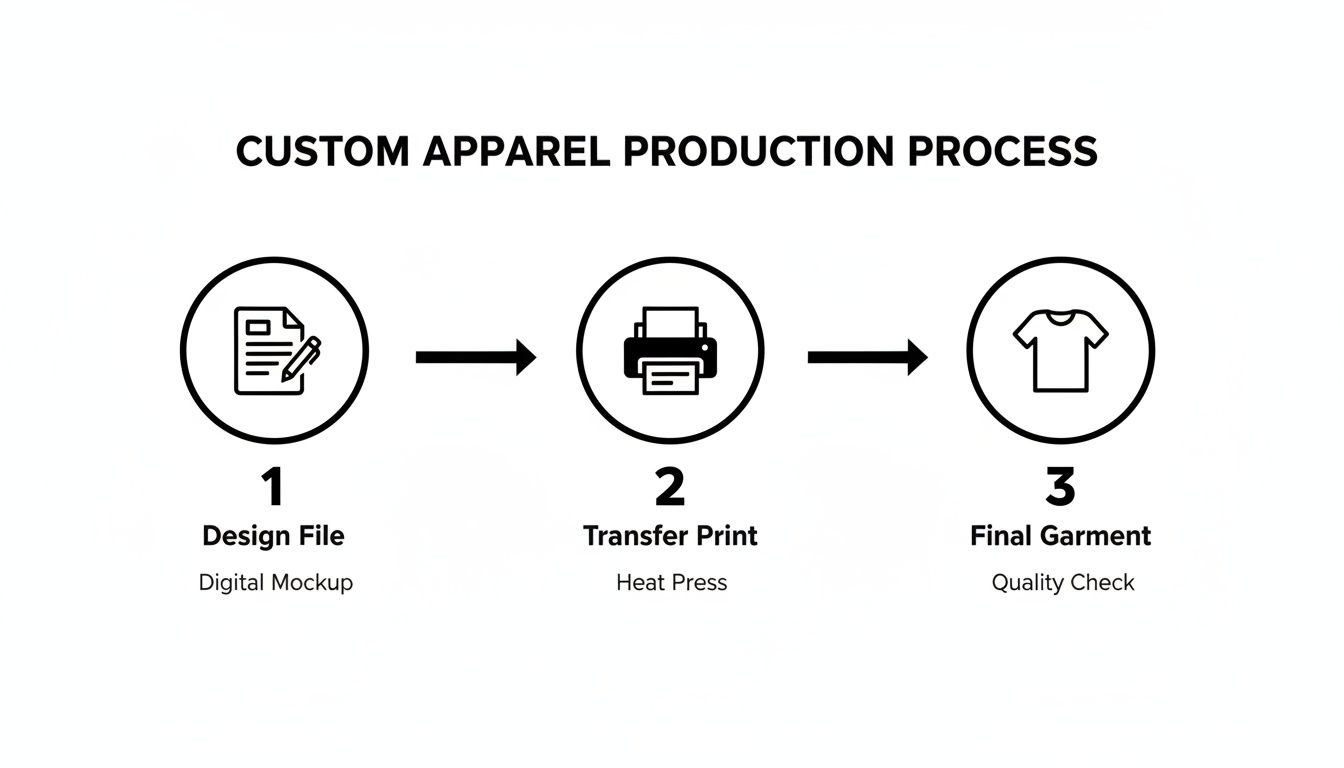
As you can see, the process is designed to be efficient, moving smoothly from the computer screen to the final, customised product.
The Specialised Printing Process
Once the design is ready, it's sent to a purpose-built DTF printer. This isn't your standard office machine; it’s loaded with special textile inks. First, it prints the full colour design (Cyan, Magenta, Yellow, and Black) onto a sheet of clear PET film.
But here’s where the magic really happens. Right after the colours go down, the printer lays down a layer of brilliant white ink over the entire design. This white base is the secret sauce that makes designs pop on any fabric, no matter how dark it is.
Think of it like using a primer before painting a dark wall. That opaque white layer ensures your colours stay true and vibrant, even on a black hoodie. It’s a game-changer that many other printing methods can’t match without extra, complicated steps.
Adding The Magic Powder
With the ink still wet on the film, it’s time for the adhesive powder. The printed sheet is coated in this fine, white granulate, which cleverly sticks only to the wet ink. The non-printed areas of the film stay completely clear.
This powder is a thermally activated adhesive. It might look like dust, but it’s the crucial ingredient that bonds your design to the fabric. Any excess powder is shaken off, which means you get clean edges and no messy residue on the finished garment.
This adhesive stage is what makes DTF transfers so reliable. The powder melts into a powerful glue during the final heat press application, creating a permanent bond that is both flexible and incredibly durable against washing and stretching.
To finish, the transfer is passed through a curing oven. A controlled heat melts the adhesive powder, fusing it with the ink and turning it into a smooth, rubbery layer. At this point, the printed heat transfer is complete, stable, and ready to go. It can be stored, shipped, or pressed onto a garment straight away.
The table below breaks down these key stages.
The DTF Printed Heat Transfer Process
| Stage | Action | Purpose |
|---|---|---|
| 1. Digital Printing | The design is printed in CMYK colours onto a clear PET film using a specialised DTF printer. | To accurately replicate the digital artwork onto the transfer medium. |
| 2. White Ink Base | A layer of white ink is printed directly over the coloured ink. | To create an opaque base that ensures colour vibrancy on any fabric colour. |
| 3. Adhesive Powder | The wet print is coated with a fine, thermally activated adhesive powder. | To create a bonding agent that will adhere the design to the garment. |
| 4. Curing | The transfer is passed through a heat tunnel to melt the powder and cure the ink. | To fuse the ink and adhesive into a single, stable, and ready-to-press layer. |
And that's it! The final result is a flexible, full-colour graphic on a clear film, perfectly prepared for the heat press. The journey from digital concept to a tangible, press-ready transfer is remarkably quick.
For a deeper dive into the specifics, check out our complete guide to understanding the ins and outs of DTF transfer printing and see how it stacks up against other methods.
Choosing the Right Fabrics for Your Transfers
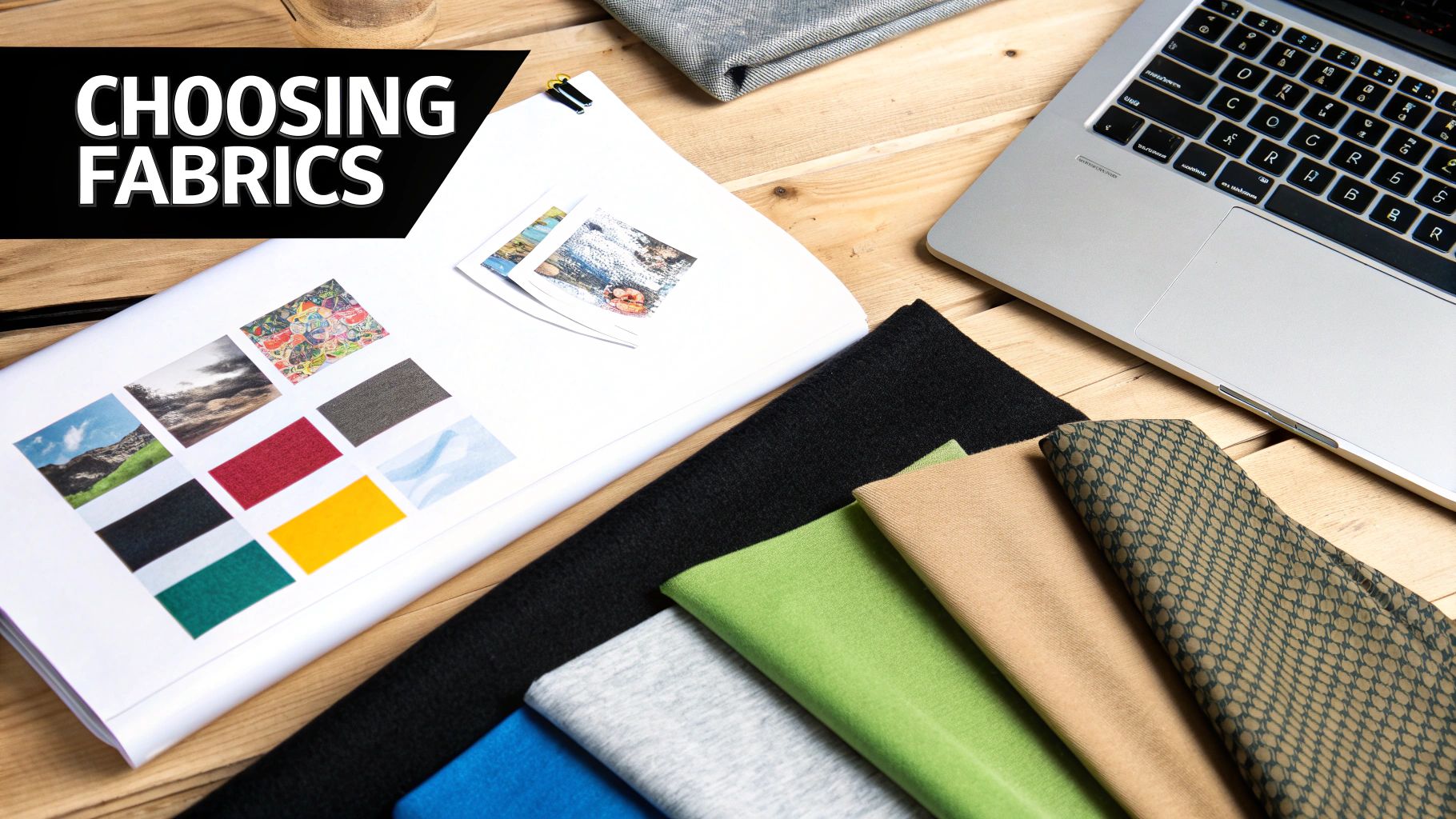
One of the best things about modern printed heat transfers is just how versatile they are. Gone are the days when you had to be super fussy about fabrics. Direct-to-Film (DTF) technology has thrown the doors wide open, letting you print on all sorts of materials that used to be a real headache. This freedom means you can think way beyond the basic t-shirt and get creative with a massive range of custom gear.
So, what's the secret? It’s all down to the adhesive powder used in the DTF process. This stuff isn't picky. It's cleverly engineered to bond with just about any fibre type you can think of, from natural cottons to slick synthetics. That means you can confidently press intricate, full-colour designs onto pretty much any garment you have in mind.
Core Fabrics for Flawless Results
While DTF is a fantastic all-rounder, some fabrics are just a perfect match. These core materials give the transfer’s adhesive an ideal surface to grab onto, leaving you with a print that’s vibrant, durable, and feels great to the touch.
- 100% Cotton: This is the undisputed champion. Cotton's natural fibres create a brilliant surface for the transfer to grip, which translates to amazing colour saturation and a soft feel. It’s the absolute go-to for classic tees and hoodies for a reason.
- Polyester: A total staple in sportswear and athleisure. DTF sticks beautifully to polyester, making it perfect for customising performance gear, team jerseys, and jackets without you having to worry about the design cracking or peeling under pressure.
- Poly-Cotton Blends: You get the best of both worlds here—the softness of cotton and the tough-as-nails durability of polyester. These blends are massively popular, and DTF transfers go on smoothly, keeping the fabric’s natural stretch and comfort intact.
These three fabrics pretty much cover most of what you’ll see in the custom apparel world. If you can get comfortable applying printed heat transfers to them, you’re off to a flying start. For anyone new to this, it's easy to get a feel for the different options, and you can learn more about the nuts and bolts of custom t-shirt printing to build your confidence.
The real beauty of DTF is how it performs so consistently across all these different materials. Thanks to that white ink underbase, your design will look just as bold on a black polyester jacket as it does on a crisp white cotton tee.
Venturing into Advanced Materials
Ready to move past the basics? This is where printed heat transfers really start to show off. The technology is robust enough to handle fabrics that often give other printing methods a complete nightmare.
With just a few tweaks to your heat press settings, you can get professional-looking results on some really exciting textiles.
- Canvas and Denim: These tough, textured fabrics are fantastic for tote bags, aprons, and jackets. A bit of extra pressure during application is all it takes to help the adhesive get a solid grip on that coarser weave.
- Fleece and Sweatshirt Material: For those cosy hoodies and jumpers, a slightly longer press time helps the transfer melt right into the fabric's soft, plush surface for a finish that’s built to last.
- Nylon and Lycra®/Spandex: Ah, the famously tricky ones! Modern transfers have excellent elasticity, letting them stretch with athletic fabrics without cracking. The key here is using a lower temperature to avoid damaging these heat-sensitive synthetics.
Here’s a great tip when you’re working with stretchy sportswear: give the garment a slight pre-stretch on your heat press platen before applying the transfer. This simple step helps the design move naturally with the fabric, which massively reduces the risk of it cracking when it's worn.
For textured surfaces like fleece, using a flexible finishing sheet can help push the design deeper into the fibres, giving it a much softer feel. This kind of adaptability means you can say "yes" to more creative projects and handle almost any client request that comes your way.
Mastering Your Heat Press for Perfect Application
This is the moment of truth—when your digital design becomes a real, wearable product. Getting a flawless finish with printed heat transfers isn't rocket science, but it does demand a bit of precision. Think of your heat press like a specialised oven and your transfer as the thing you’re baking. You need the perfect recipe of temperature, pressure, and time to cook the design to perfection.
Nailing this process turns a simple transfer into a durable, professional-quality print that feels soft to the touch and moves with the fabric. The best part? Once you get the hang of the core principles, you can churn out amazing results every single time. It's a skill that builds confidence and guarantees the quality of every item you create.
And it’s a great skill to have, especially here in the UK. The domestic textile printing industry, where printed heat transfers play a huge role, brought in a massive USD 1,056.8 million in revenue in 2024. That number is set to jump to USD 1,805.6 million by 2030, showing just how much demand there is for custom gear in areas like sportswear and promotional goods.
The Three Pillars of Heat Pressing
To get that perfect application, you need to get three things just right. If even one of them is off, you could end up with a print that peels, cracks, or just feels stiff and plasticky.
-
Temperature: This is probably the most important part. The heat is what activates the adhesive on the back of the transfer, letting it melt and bond with the fabric’s fibres. Too cool, and it won't stick properly. Too hot, and you risk scorching the garment or even damaging the ink itself.
-
Pressure: This is what pushes the melted adhesive deep into the fabric's weave, creating a bond that’s built to last. Uneven or weak pressure is one of the main reasons for peeling corners and transfers that just don't stick.
-
Time: This is simply how long you apply the heat and pressure. It needs to be long enough for the adhesive to fully cure, but not so long that you overheat the ink, which can make it look shiny or bleed at the edges.
It's a bit like baking a cake. You need the oven at the right temperature, for the right amount of time, with the cake tin sitting perfectly level. Mess up one of those things, and you won’t get the delicious result you were hoping for. The same logic applies to your printed heat transfers.
Your Step-by-Step Application Guide
Getting a professional finish is pretty straightforward once you have a solid routine. Here’s a simple guide to pressing your DTF transfers the right way.
1. The All-Important Pre-Press
This is the one step people are most tempted to skip, but trust me, it makes a huge difference. Put your garment on the press and press it for 5-10 seconds. This does two crucial things: it gets rid of any moisture hiding in the fibres and irons out every last wrinkle, giving you a perfectly flat, dry surface for the transfer.
2. Positioning Your Transfer
Lay the garment flat again and carefully place your transfer on it, design side up. A bit of heat-resistant tape can be a lifesaver here, holding the transfer steady so it doesn't shift when you close the press.
3. The Main Press
Cover the transfer with a Teflon sheet or a piece of parchment paper. This protects both your print and the heat platen on your press. Now, close the press using the right settings for your fabric.
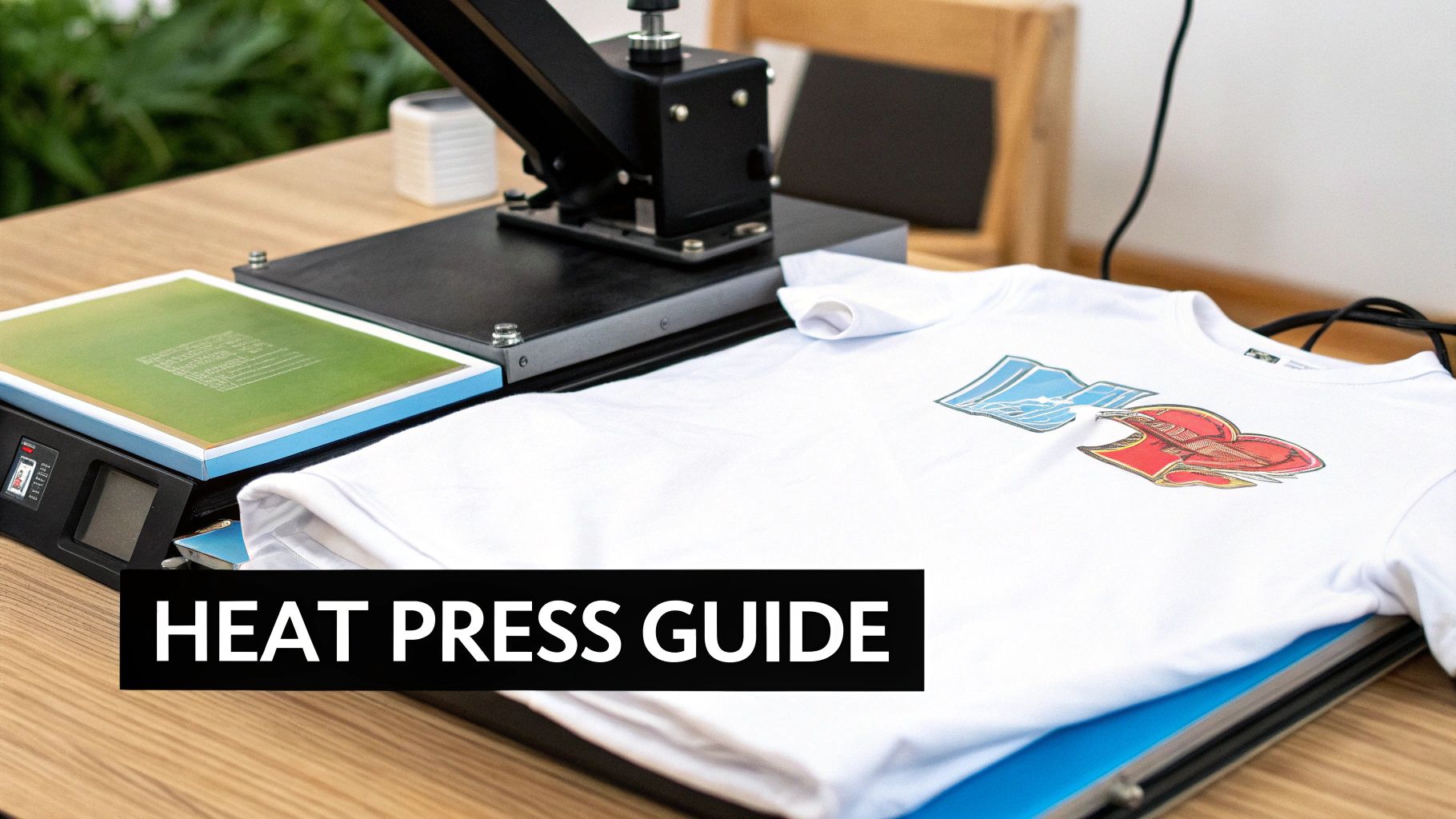
We've put together a quick-reference table below for the most common materials. For a deeper dive, our comprehensive heat press temperature guide has detailed settings for just about everything.
Recommended Heat Press Settings by Fabric Type
| Fabric Type | Temperature (°C) | Time (Seconds) | Pressure |
|---|---|---|---|
| 100% Cotton | 150-160 | 12-15 | Medium |
| Polyester Blends | 140-150 | 10-12 | Medium |
| 100% Polyester | 130-140 | 8-10 | Light-Medium |
| Softshell/Nylon | 130 | 10 | Light |
Always remember to do a test press if you're working with a new fabric or a new batch of transfers. It's the best way to be sure you've got it dialled in.
4. The Peel: Hot or Cold?
Once the timer goes off, open the press and carefully move the garment to a flat surface to cool. Now you need to know if you're working with a hot peel or cold peel transfer.
- Hot Peel: The film can be peeled off straight away, while everything is still hot.
- Cold Peel: You must wait for the transfer and garment to cool down completely to room temperature before peeling. If you try to peel a cold peel transfer while it's still warm, you'll pull the design right off with it.
Here at Psyque, all our transfers are cold peel because we believe it gives the cleanest, most durable finish.
When you're ready, peel the film back smoothly at a low, flat angle. If you notice any part of the design starting to lift, stop immediately. Just put it back on the press, cover it, and give it another 5-10 seconds to help the adhesive fully bond.
5. The Finishing Press (Optional but Recommended)
This last step is the secret to a super soft, matte finish that feels like part of the shirt. Place your parchment paper back over the design (after you've peeled the film off) and press it for another 5-7 seconds. This helps to really meld the ink into the fabric fibres, making it feel better and last even longer.
Making Sure Your Custom Designs Last
One of the first things people ask about printed heat transfers is a pretty simple one: how long will they actually last? It’s a fair question, especially if you’re picturing the stiff, cracking iron-ons from years ago. The good news is that modern DTF transfers are in a different league entirely. They’re built for serious durability, designed to feel great, and made to survive wash after wash.
When a quality DTF transfer is applied correctly, it’s not just sitting on top of the fabric. The specialised inks and adhesive create a strong yet flexible bond right down to the fibres of the garment. This is why the design feels so soft and can stretch with the material without cracking, making it ideal for everything from a classic cotton tee to polyester sportswear. With a bit of care, a good print will easily handle 50+ wash cycles before showing any real signs of fading.
But the real secret to a long life isn't just in the transfer itself—it's all about the aftercare. Giving clear, simple care instructions is the best way to protect your work and keep your custom apparel looking fantastic for as long as possible.
Simple Care for Maximum Durability
Think of these instructions as the owner's manual for a great-looking garment. Following these simple steps will help maintain the vibrancy and strength of the print, keeping it looking crisp and fresh. They’re easy enough for you to follow yourself or to pass straight on to your customers.
Here are the golden rules for washing and drying anything with a printed heat transfer:
- Turn It Inside Out: This is the single most important step. It protects the print from rubbing against other clothes and the inside of the washing machine, which is the main cause of wear.
- Wash Cool: Keep the temperature low, ideally at 30°C or cooler. Hot water can slowly weaken the adhesive over time.
- Go Gentle: A mild detergent and a gentle wash cycle are your best friends here. Steer clear of harsh chemicals, bleach, and fabric softeners, as they can break down the ink.
By following these washing tips, you drastically cut down on the stress placed on the design, and that's the key to making it last.
Drying and Ironing: The Best Approach
How you dry your custom gear is just as important as how you wash it. The intense heat from a tumble dryer can be a print’s worst enemy if you aren't careful.
The number one rule to remember is this: direct high heat is the fastest way to damage a heat transfer. This goes for both drying and ironing, so always handle your custom garments with a little extra care to ensure a long life.
For the best results, stick to these drying and finishing rules:
- Hang Dry If You Can: The kindest method by far is to let the garment air dry. Popping it on a line or a rack avoids any heat-related stress on the transfer.
- Tumble Dry on Low: If you have to use a tumble dryer, always choose a low heat or delicate setting. High heat can soften the adhesive, which could lead to peeling or cracking down the line.
- Never Iron the Print: If the garment needs a press, turn it inside out first. Never let a hot iron touch the printed design directly—it will melt the ink and ruin both the print and your iron.
Following these straightforward instructions ensures every piece you create or own keeps its professional quality, proving just how good modern printed heat transfers really are.
So, Why Choose Psyque for Your Transfers?
Knowing the theory behind printed heat transfers is one thing, but actually bringing your creative vision to life? That requires a partner you can really trust. This is where we come in. We've built Psyque from the ground up to be the go-to solution for anyone in the UK needing professional, reliable, and top-quality DTF transfers without any of the usual fuss.
We handle all the technical complexity so you can get back to what you do best: creating incredible designs. Our entire operation is geared towards helping you succeed, whether you’re launching a new clothing line, sorting out merch for an event, or creating custom workwear. In this game, timing is everything. A missed deadline can mean a lost opportunity, which is why a fast, dependable turnaround is at the very heart of what we do.
Speed and Simplicity, Hand in Hand
We get it. You need your printed heat transfers quickly and without a complicated ordering process. Our promise is simple: we dispatch all orders within 1–3 working days, making sure your project never loses momentum.
This speed doesn't come at the cost of simplicity. Our ordering process is designed to be straightforward for everyone, whether you’re a seasoned pro or just starting out. And because we're UK-based, our support team is right here to help. Got a print-ready file? Great. Just have the spark of an idea? We'll help you get it across the finish line, ensuring your final transfers are exactly what you imagined.
Choosing a supplier isn’t just about the product itself; it’s about knowing the service won't let you down. With Psyque, you get a partner dedicated to hitting your deadlines with premium quality transfers that are ready to press right out of the box.
A Real Commitment to Lasting Quality
Those vibrant colours and impressive durability we talked about earlier? They don't happen by accident. It all comes down to using the best materials. At Psyque, we are absolutely uncompromising on quality, using only premium inks and adhesives. This focus translates directly into transfers that not only look fantastic but also feel soft to the touch and hold up for dozens and dozens of washes.
This dedication ensures that every single transfer you receive from us delivers the professional finish your project deserves. You can see the quality for yourself and explore our full range by checking out our selection of custom Direct-to-Film transfers. It’s the perfect way to get started and experience the difference that premium materials truly make.
Ultimately, we're here to give you the tools you need to succeed. With fast UK shipping, dedicated support, and an unwavering focus on quality, Psyque is more than just a supplier—we're your partner in creation.
Still Got Questions?
Even after diving deep into the world of printed heat transfers, it's natural to have a few questions floating around. Let's clear up some of the most common ones we hear so you can get started with confidence.
Can I Just Use My Home Iron for These Transfers?
For results that look professional and actually last, a proper heat press is a must. Your home iron just can't deliver the consistent heat and even pressure needed to make the transfer bond permanently with the fabric. You'll likely end up with peeling designs after just one or two washes.
Think of a heat press as the difference between a fun craft project and a professional-grade garment that's ready to sell or wear with pride. It's the best investment you can make for quality.
Is There a Minimum Order for Custom Transfers?
Nope, not at all. One of the best things about modern DTF printing is its incredible flexibility. That’s why at Psyque, we can cater to absolutely everyone—from someone making a single, one-off T-shirt to a business needing a huge batch. You can order just one transfer or buy by the metre.
This makes it perfect for trying out a new design idea, creating a truly personal gift, or running an on-demand business without worrying about waste or leftover stock.
How Does DTF Stack Up Against Screen Printing?
Both methods are fantastic, but they shine in different situations. Screen printing is brilliant and cost-effective for big runs of simple designs with only a few colours. Its main drawback is the setup cost, which can be steep. DTF, on the other hand, is built for detailed, full-colour designs—think photographs or intricate gradients—with no extra charges for each new colour.
For small-to-medium batches and any kind of on-demand printing, DTF is the clear winner. It's also far more versatile, working beautifully on a huge range of fabrics like cotton, polyester, and blends.
It’s interesting to see how technology is helping people get their final look just right before committing to print. For instance, some forward-thinking brands are now using AI clothing try-on technology to visualise how different styles might fit. This all ties back to the same goal: achieving a perfect result, which starts with a high-quality transfer.
Ultimately, DTF gives you a straightforward path to creating vibrant, detailed custom clothing without the high costs or steep learning curve of other methods.
Ready to see your own designs come to life with professional quality and stunning colour? Explore our full range of custom DTF transfers at Psyque and discover how simple it is to create durable, eye-catching apparel. Head over to https://psyque.co.uk to get your next project started today