
A Complete Guide to DTF Printing
Step into the world of custom clothing, and you'll quickly hear people talking about DTF, or Direct-to-Film printing. It’s a method for creating a seriously high-quality, flexible, and durable graphic that can be heat-pressed onto almost any fabric you can think of. This technology is fast becoming the go-to choice for bringing complex, colourful designs to life.
So, What Exactly Is DTF Printing?
At its core, think of DTF as creating a professional-grade, fabric-ready sticker. Instead of printing directly onto a T-shirt, you first print your design onto a special sheet of film.
This printed film then gets a coating of adhesive powder, which is melted and cured with heat. What you’re left with is a ready-to-go transfer that can be pressed onto a hoodie, a hat, or even a pair of jeans. It’s a clever process that neatly sidesteps some of the biggest headaches in apparel customisation.
For example, getting bright, vibrant colours to show up on dark polyester garments used to be a real challenge. DTF printing handles this with ease, laying down a brilliant white ink base that makes every colour on top of it truly pop. You can learn more about what DTF stands for in our detailed guide on the full meaning of the term DTF.
Why Is DTF Getting So Popular?
The appeal of DTF comes down to its incredible versatility and the professional finish it delivers, making it a fantastic option for everyone from home-based creators to established UK businesses. It simply removes many of the barriers that other printing methods put up.
Here’s why it’s catching on:
- Fabric Freedom: It works beautifully on a huge range of materials, including cotton, polyester, leather, and blended fabrics that are often a nightmare to print on otherwise.
- No Weeding Needed: If you’ve ever worked with vinyl, you’ll love this. DTF handles intricate designs with fine lines and tiny text without any of that tedious weeding.
- Great for Small Batches: It's perfect for producing small runs or even one-off custom pieces without the hefty setup costs you’d face with screen printing.
This isn't just a niche trend. The explosion in e-commerce and the ever-growing demand for personalised clothing have fuelled the rapid expansion of DTF printing across the globe.
This technique empowers anyone to transfer complex, photo-realistic images onto textiles with stunning detail and a surprisingly soft feel. The final print is smooth and flexible, stretching with the fabric without cracking—a must-have for comfortable, long-lasting clothing.
Its growing adoption is a clear sign of its power. In fact, the UK market for DTF printing is on a steep upward curve, with revenues projected to climb from USD 192.2 million in 2025 to USD 249.0 million by 2030. You can explore more data on the direct-to-film printing market in the UK. This growth really underscores just how valuable the technique has become for businesses wanting both quality and efficiency.
How the DTF Printing Process Works
Getting your head around DTF printing is a lot simpler than it sounds. The best way to think about it is that you're creating a high-end, fabric-ready decal. Instead of printing ink straight onto a t-shirt, you first create a perfect, self-contained graphic on a special film. That graphic can then be applied to almost anything with a bit of heat and pressure. It’s this multi-step approach that makes DTF so reliable and incredibly versatile.
This simple overview breaks the process down into its three core phases.
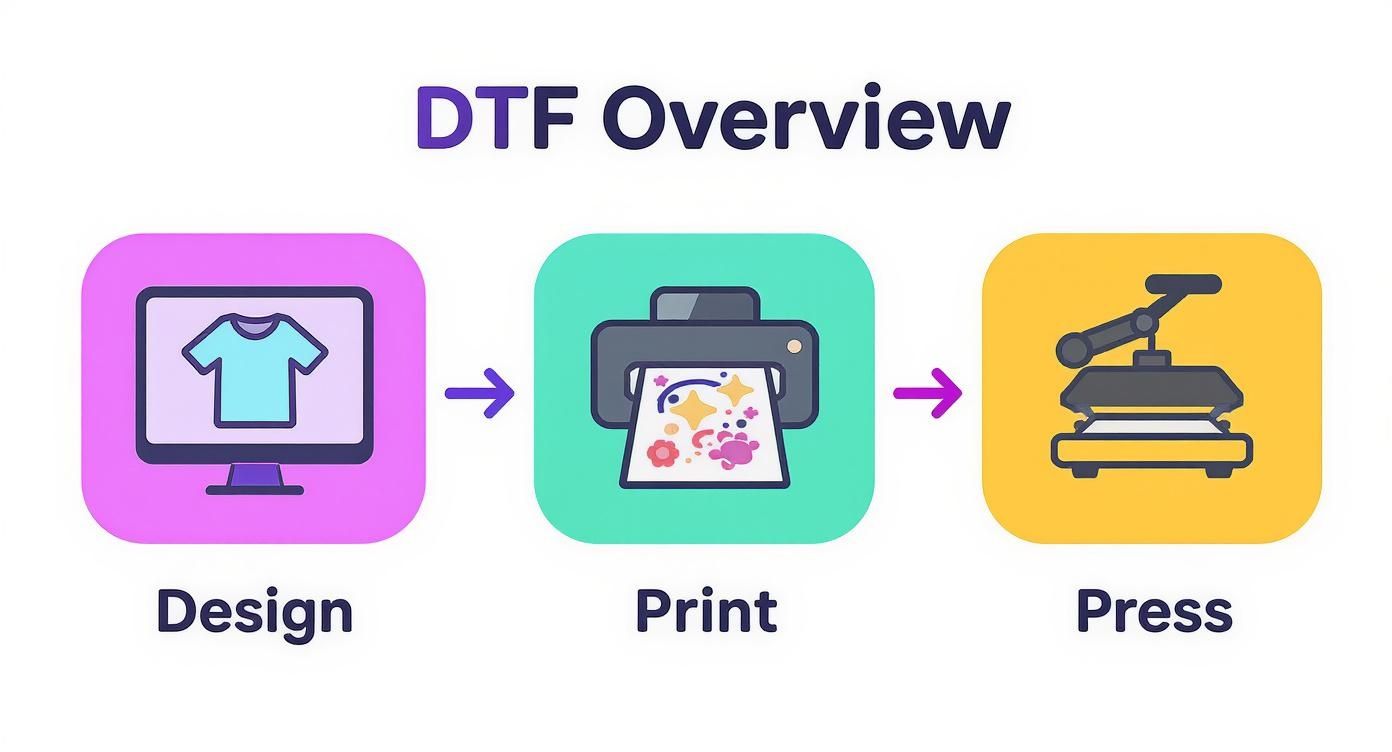
The journey from a digital concept to a finished product is surprisingly straightforward. This efficiency makes it a brilliant choice for both small custom jobs and much larger production runs. Each stage in the process builds on the last, all working together to create a durable, vibrant print that feels great.
Let's walk through each of these steps.
Step 1: Artwork Preparation
It all starts with a digital file. For the best results, your design needs to be a high-resolution image, and crucially, it should have a transparent background. This is a big one – whatever is in the file gets printed, so any background colour you don't want on the final garment has to be completely removed beforehand.
From there, specialised software called a Raster Image Processor (RIP) gets the file ready for the DTF printer. The RIP software is the real brain of the operation. It tells the printer exactly how to layer the inks, especially how to lay down a solid white base. This white layer is what makes colours pop, even on the darkest fabrics.
Step 2: Printing onto PET Film
Once the artwork is prepped, the real magic begins. A specialised DTF printer doesn't print on paper or fabric at all. Instead, it prints onto a unique polyethylene terephthalate (PET) film. This film is engineered to hold the ink perfectly without absorbing it, keeping every last detail sharp and crisp.
The printing happens in a very specific order:
- The Colour Layer: First, the printer lays down all the colours of your design onto the film, almost like a mirror image.
- The White Base Layer: Straight after, a layer of brilliant white DTF ink is printed directly over the colours. This white layer is the secret weapon for printing on dark garments; it acts as a primer, stopping the fabric's colour from washing out your design.
This two-layer method means that whether the transfer is going on a black hoodie or a white tee, the colours stay true and exceptionally bright. The quality of the film is vital here, as it needs to handle the heat of the next few stages without warping. You can get into the nitty-gritty of these materials in our guide to DTF transfer sheets.
Step 3: Applying the Adhesive Powder
With the ink still wet on the film, it’s time to add the "glue" that will permanently bond the design to the fabric. This comes in the form of a fine, granulated thermoplastic polyurethane (TPU) adhesive powder.
The wet ink on the film is coated evenly with this powder. The clever part is that it only sticks to the printed areas, leaving the rest of the film completely clean. Any excess powder is simply shaken off, which means you get clean edges with no unwanted residue on the final garment. Think of it like sprinkling glitter on wet glue—it only sticks where it's meant to.
The adhesive powder is really the unsung hero of the DTF process. It’s what transforms a simple ink print into a durable, stretchy transfer that becomes part of the fabric, rather than just sitting on top of it.
Step 4: Curing the Transfer
Before the transfer is ready for pressing, that adhesive powder needs to be melted and cured. This is done by passing the powdered film through a heat source, usually a curing oven or under a heat press that’s set to hover just above the transfer without actually touching it.
The heat melts the powder, fusing it with the ink layers below to create a smooth, slightly rubbery sheet on the back of the design. This curing step solidifies the transfer, turning it into a stable, ready-to-press graphic that can be stored for later or applied right away. It's a critical step for ensuring the print will last through wash after wash.
Step 5: Heat Pressing onto the Garment
This is the final step, where the design finally meets the fabric. The finished transfer is placed on the garment exactly where you want it. Then, a heat press applies both heat and firm pressure—typically around 160-170°C for about 15-20 seconds.
The heat from the press reactivates the cured adhesive, permanently bonding the ink into the fabric’s fibres. After pressing, you let it cool for a moment before peeling the PET film away, leaving only the vibrant, tough-as-nails design on the garment. The result is a print with a soft feel, fantastic stretchability, and professional-grade durability that’s ready to be worn.
Why Choose DTF for Your Printing Needs?
When you start digging into custom printing, the sheer number of options can feel a bit much. So, what is it about DTF that makes it such a strong contender in a crowded field? It all comes down to a potent mix of versatility, quality, and cost-efficiency that opens up a world of creative and business possibilities.
DTF really stands out because it neatly sidesteps many of the common headaches that creators and businesses run into with other methods. It’s a single, reliable process that delivers sharp, consistent results on an almost unbelievable range of items. Let's get into the real-world benefits that make DTF a go-to solution for so many people.
Unmatched Material Versatility
One of the biggest wins for DTF is its ability to print on just about any fabric you can throw at it. While other methods can be incredibly fussy about the materials they’ll work with, DTF is the complete opposite.
Think way beyond the classic cotton t-shirt. With DTF, you can put incredible, long-lasting designs on:
- Polyester: Absolutely perfect for sportswear, team uniforms, and workwear where you need those moisture-wicking properties.
- Cotton Blends: Hoodies, sweatshirts, and promotional gear made from 50/50 blends are no problem at all.
- Leather and Denim: Add custom graphics to jackets, bags, and accessories with total confidence.
- Canvas and Nylon: You can create branded tote bags, caps, and even umbrellas.
This kind of flexibility means you can offer a much bigger product catalogue without having to splash out on different types of printing equipment. When looking at DTF for your business, it helps to understand how its gear and workflow stack up against other customisation techniques. If you're also considering alternative custom apparel ventures, this guide on choosing a top embroidery machine for small businesses offers valuable equipment insights. Getting this broader view helps you make a smarter decision for your whole setup.
Exceptional Detail and Colour Vibrancy
When it comes to printing intricate, colourful, and photorealistic designs, DTF is in a league of its own. The magic happens because the design is printed onto a special film first, which allows for ridiculously sharp detail and precise colours that are often lost when printing straight onto a porous fabric.
The secret weapon here is the opaque white ink underbase. This layer is printed beneath your colours, acting like a primer to make sure your design looks just as bright and punchy on a black hoodie as it does on a white tee. It completely solves the problem of the garment’s colour making the final print look dull.
With DTF, you never have to water down your creative vision. Intricate patterns, tiny text, and full-colour photos are all reproduced with incredible accuracy, giving your products a premium, professional finish.
This is a massive plus for brands creating eye-catching streetwear or businesses needing to replicate detailed logos on uniforms with perfect precision.
Superior Durability and Feel
A great print doesn't just look good on day one—it has to feel great to wear and stand the test of time. DTF transfers are engineered for both comfort and a long life. Once pressed, the design bonds right into the fabric's fibres, leaving a print that’s surprisingly soft and stretchy.
Unlike some of the old-school transfer methods that could feel thick, stiff, and plasticky, a properly applied DTF print moves with the garment. That means no cracking or peeling, even after you’ve washed it over and over. In fact, DTF prints are often rated to handle 50+ washes without any major fading, making them a seriously durable choice for everyday clothes and heavy-duty workwear. That kind of resilience keeps customers happy and builds a reputation for quality.
Cost-Effective for Small Batches
Traditional methods like screen printing are brilliant for massive runs, but the setup costs make them a non-starter for small orders. Every single colour in a design needs its own screen, and the time and materials for that add up fast. This is where DTF has a massive advantage.
With DTF, the setup is all digital. There are no per-colour setup fees, which makes it incredibly affordable for producing small batches, one-off samples, or even single personalised items. This model is perfect for:
- New clothing brands testing out designs.
- Businesses needing a small run of promotional t-shirts.
- Offering personalised gifts or merch.
This financial efficiency lets you be more nimble, react to trends quicker, and offer a wider variety of designs without the risk of being stuck with piles of unsold stock. It truly levels the playing field, putting high-quality custom printing within everyone’s reach.
DTF vs. DTG and Screen Printing Compared
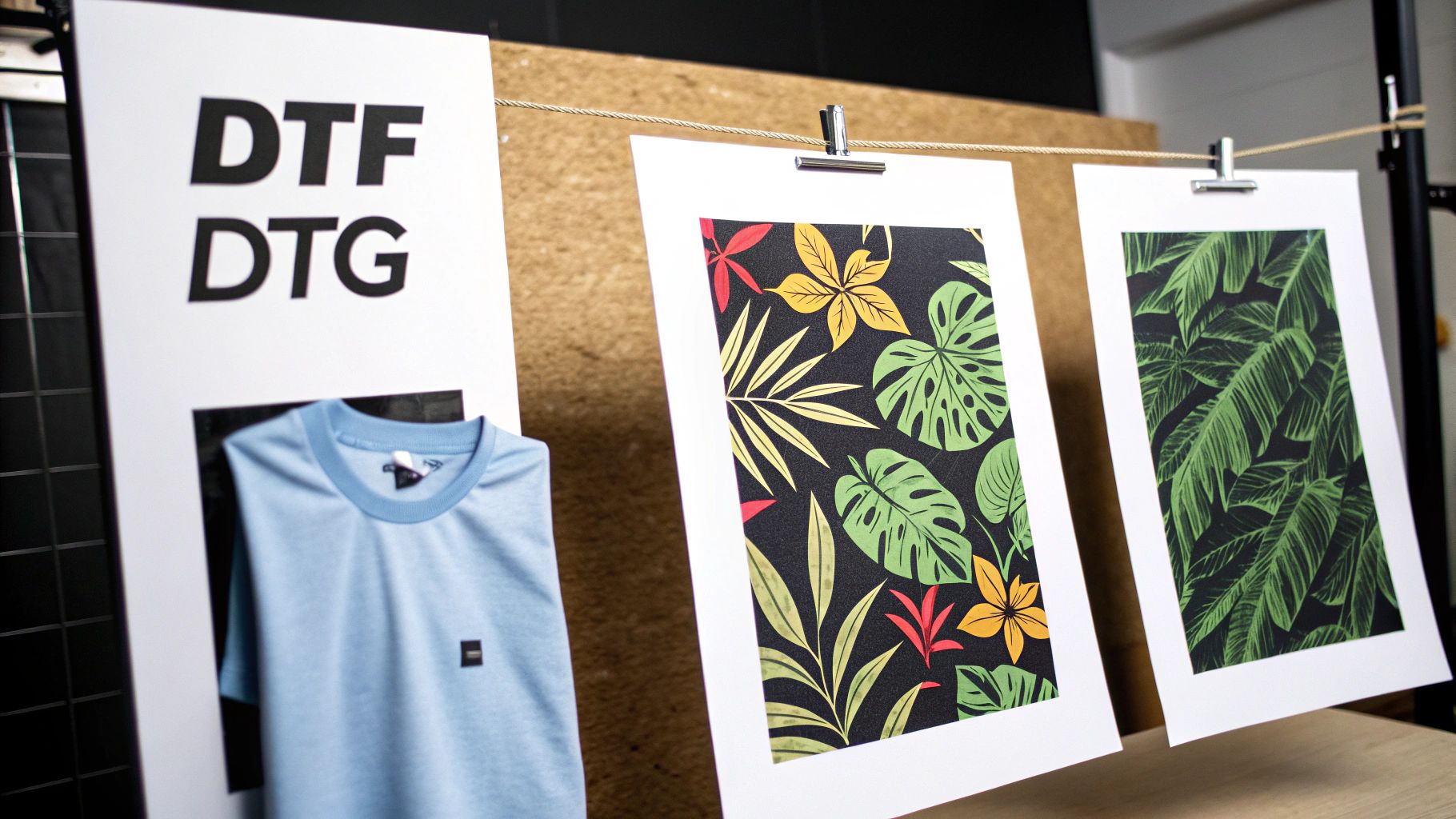
Choosing the right printing method can feel like standing at a crossroads. Each path—DTF, DTG, and screen printing—leads to a different destination, with its own set of strengths and weaknesses. To make the best choice for your project, you need to understand not just what each technique does, but how they stack up on the factors that really matter.
This isn't about finding a single "best" method. It’s about picking the perfect tool for the job. Whether you're launching a new streetwear brand, kitting out a local business with uniforms, or creating a one-off custom gift, the right decision will balance cost, quality, durability, and the type of fabric you’re working with.
Let's dive into a head-to-head comparison to see where DTF truly shines.
Fabric Compatibility: The Great Divide
The first, and arguably most important, point of comparison is the range of materials each method can handle. This is where DTF printing immediately sets itself apart with its incredible versatility. Because the design is printed onto a separate film first, it can be applied to almost any fabric you can think of.
- DTF: Works brilliantly on cotton, polyester, nylon, leather, denim, and tricky blends. This makes it the undisputed champion for anyone needing to print on a diverse range of products, from sportswear to workwear.
- DTG (Direct-to-Garment): This method is much more selective. DTG ink is designed to bond with natural fibres, meaning it performs best on 100% cotton. It can really struggle with polyester and blends, often leading to duller colours and poor wash durability.
- Screen Printing: While more versatile than DTG, screen printing requires different ink formulations for different fabrics. Printing on polyester or other synthetics needs special additives to stop the colours from bleeding, adding extra complexity to the setup.
For businesses wanting to offer a wide array of products without investing in multiple technologies, DTF’s "print-on-anything" capability is a game-changer. If you want to get into the nitty-gritty of how ink bonds directly with fabric, our guide on direct printing to garment technology offers more insight.
Colour Vibrancy and Detail
The ability to produce bright, eye-catching designs with sharp detail is crucial. Here, the process behind each technique creates very different results, especially when printing on dark-coloured garments.
DTF uses a solid white ink base layer printed onto the film, which acts as a fresh canvas for the colours on top. This ensures that the design’s vibrancy isn’t dulled by the colour of the fabric underneath. It’s like painting on a pristine white surface every single time.
In contrast, DTG prints its white underbase directly onto the fabric, which can sometimes soak into the fibres and look slightly less brilliant than a DTF transfer. Screen printing can achieve amazing vibrancy, but it requires a separate screen for every single colour, making complex or photorealistic designs impractical and costly for small batches.
The real difference is that DTF creates the perfect print off the garment and then applies it. This separation allows for consistently sharp details and intense colours that are difficult to match with other methods, especially on varied materials.
Durability and Feel
A print's longevity and how it feels to the touch are just as important as how it looks. A design that cracks, peels, or fades after just a few washes is a poor reflection on your product's quality.
DTF transfers are famous for their durability, often rated for 50+ washes without significant fading or cracking. The print has a soft, flexible feel and fantastic stretch, moving with the fabric rather than fighting against it. This prevents the cracking you might see with older, thicker transfer methods.
Screen prints, particularly those using plastisol inks, are also extremely durable and have long been the industry standard for retail-quality clothing. However, they can sometimes feel a bit heavy or stiff, especially on designs with large, solid blocks of colour.
DTG prints have the softest feel of all because the ink soaks directly into the cotton fibres. While this creates a lovely, premium feel, its durability can be a weakness, especially on garments that aren't 100% cotton. The print can fade more quickly over time compared to the others.
Cost and Production Volume
The final, and often deciding, factor is how cost-effective each method is at different order sizes. This is where the operational differences become crystal clear.
- DTF: Excels in small to medium-sized runs. There are no per-colour setup fees, making it highly economical for one-offs, samples, or orders of up to a few hundred items with complex, multi-colour designs.
- DTG: Also great for small batches and single items thanks to its digital, no-setup process. However, the cost per print can be higher than DTF due to ink consumption and the pre-treatment needed for dark garments.
- Screen Printing: This is the king of high-volume production. The significant upfront cost of creating screens for each colour gets spread across hundreds or thousands of shirts, making the per-item cost extremely low for large orders. For small runs, however, it’s just too expensive.
This economic reality makes DTF a powerful middle-ground solution. It offers affordability for small batches while being scalable enough for larger orders, all without the steep setup costs of screen printing.
To help you visualise these differences, here's a quick side-by-side comparison:
DTF vs DTG vs Screen Printing Feature Comparison
| Feature | DTF Printing | DTG Printing | Screen Printing |
|---|---|---|---|
| Best For | Small to medium runs, varied fabrics | One-offs, 100% cotton garments | Large bulk orders (250+) |
| Fabric Compatibility | Excellent (Cotton, poly, blends, leather) | Limited (Best on 100% cotton) | Good (Needs special inks for synthetics) |
| Colour Vibrancy | Excellent, especially on darks | Good, but can be less vibrant on darks | Excellent, but complex designs are costly |
| Durability | High (50+ washes), flexible, stretchable | Moderate, can fade over time | Very high, industry standard |
| Feel (Hand) | Soft and flexible | Very soft (ink is in the fabric) | Can be heavy with thick ink layers |
| Setup Cost | Low | Low | High (screen costs add up) |
| Cost-Per-Print | Low for small/medium runs | Moderate | Very low for high-volume runs |
| Detail & Complexity | Unlimited colours, photorealistic | Unlimited colours, photorealistic | Limited by number of screens |
This table shows there’s no single winner—each method has its time and place. DTF, however, clearly fills a crucial gap in the market, offering unparalleled flexibility and quality for a huge range of modern printing needs.
Your Essential DTF Equipment Checklist
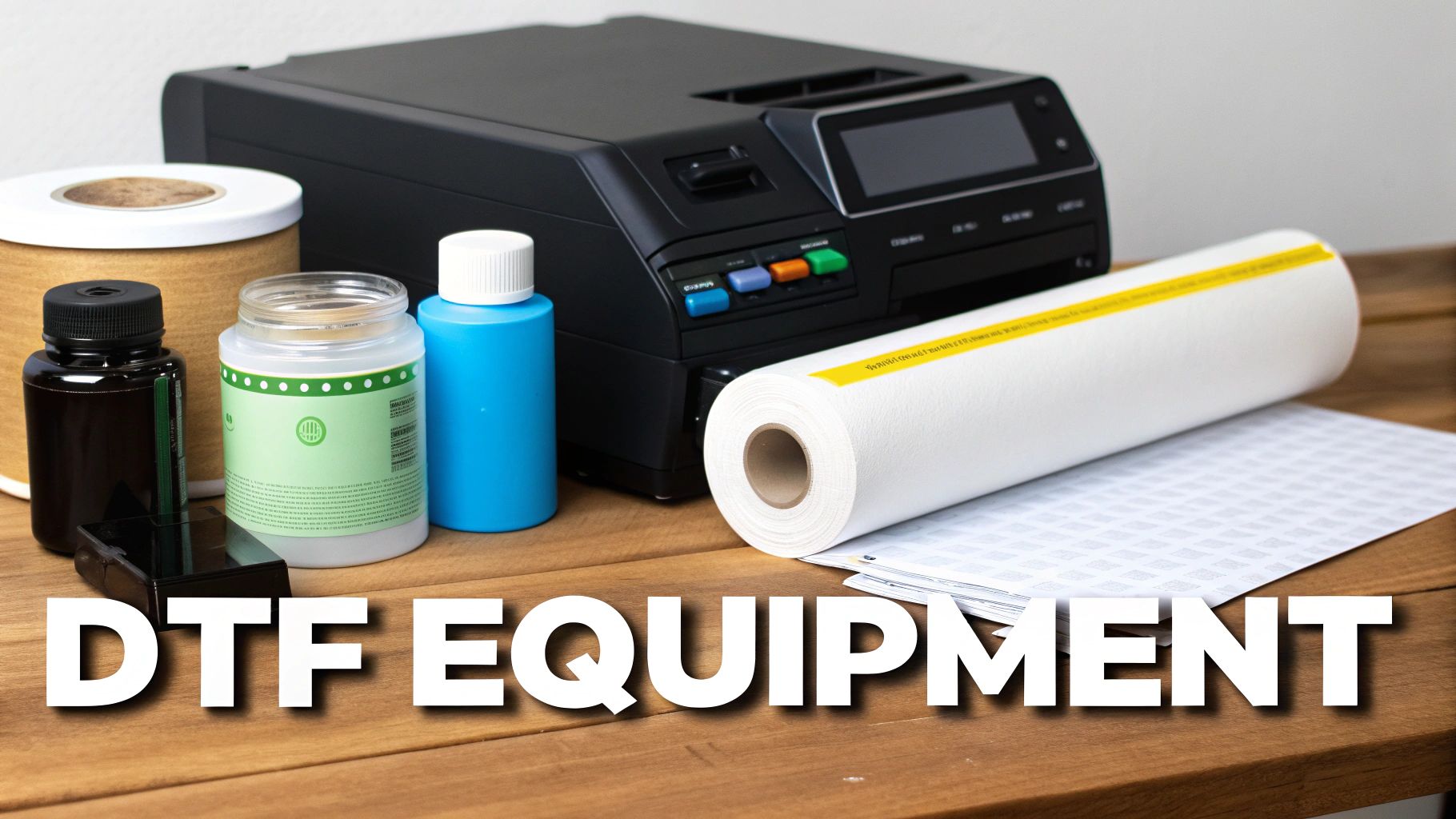
So, you're ready to bring DTF printing in-house? Smart move. Setting up your own operation gives you total control over everything from quality to turnaround times, which is a massive advantage.
While it might seem like a lot to pull together at first, the core setup is actually pretty straightforward. Think of it like gathering ingredients for a new recipe – each piece plays a vital role in creating that perfect finished garment. This checklist breaks down exactly what you'll need, from the big machinery to the everyday supplies.
The Core Machinery
Your main investment will be in a few key bits of hardware. These are the workhorses of any DTF setup, and choosing quality equipment from the start will pay you back tenfold in reliability and print quality.
- Specialised DTF Printer: This isn't your average office printer. A purpose-built DTF printer is designed to handle thick textile inks and print onto special PET film. The most important feature is that it must have channels for CMYK colours plus a dedicated channel for that all-important white ink underbase.
- Curing Oven or Shaker: Once you've applied the adhesive powder, the transfer needs to be cured. For this, you’ll need a small convection oven or a dedicated "shaker" machine, which automates both powdering and curing. This step is what melts the adhesive properly so it can bond to the fabric.
- Heat Press: This is the final, make-or-break step. A high-quality heat press is completely non-negotiable. It needs to apply consistent, even heat and pressure to permanently bond the transfer to the garment. Look for a model with accurate temperature controls and even pressure distribution across the entire platen.
A classic rookie mistake is skimping on the heat press. A cheap or inconsistent press is the fastest way to ruin a perfect transfer, leading to peeling designs and unhappy customers. Invest wisely here; it’s worth every penny.
Essential Consumables
Alongside the machines, you'll need a steady supply of consumables. These are the materials you'll use up with every print job, and their quality has a direct impact on the final look, feel, and durability of your designs. Our guide to picking the right DTF printing machine can also help you match your equipment to the best supplies.
- DTF Inks: You'll need a set of water-based pigment inks made specifically for DTF. This includes Cyan, Magenta, Yellow, Black, and a high-opacity White.
- PET Transfer Film: This is the special coated film you print directly onto. It’s designed to hold the ink perfectly without letting it soak in, then release the design cleanly during the heat press stage.
- Adhesive Powder: This fine thermoplastic polyurethane (TPU) powder is basically the glue. It sticks to the wet ink on the film and melts during curing, creating the strong adhesive layer that bonds your design to the fabric.
The Brains of the Operation
Finally, none of this works without one crucial piece of software. This is what translates your digital file into a physical, printable reality.
Raster Image Processor (RIP) Software: Think of RIP software as the command centre for your entire DTF printing setup. It does far more than just send your file to the printer; it controls the ink levels, automatically generates and manages the white underbase, and ensures all your colours are reproduced accurately. Honestly, you simply can't get a quality DTF print without it.
The broader digital printing market in the UK, which DTF is a fast-growing part of, has shown incredible resilience. After some major disruption, the UK printing industry's turnover was forecast to bounce back to £12.8 billion in 2021, supported by a workforce of around 105,000 employees. This just goes to show how vital and adaptable the sector is.
Got Questions About DTF Printing? We’ve Got Answers
Even after getting the rundown on how DTF works, it’s completely normal to have a few questions buzzing around. The world of custom printing is filled with little details, and getting them right is what separates a decent print from a truly professional one. We’ve put together this section to tackle the most common queries we hear from both newcomers and seasoned creators.
Think of this as your go-to FAQ. We're covering everything from how long a print will actually last to whether you can get started with that printer sitting on your desk. Let's clear up the confusion, bust a few myths, and get you ready to print with confidence.
How Durable Are DTF Prints Compared to Other Methods?
This is usually the first thing people ask, and for good reason. What's the point of a stunning design if it cracks and peels after a couple of washes? The fantastic news is that DTF prints are incredibly durable. When they’re applied correctly, they are built to last and can often outlive the garment itself.
In the real world, a quality DTF transfer can easily handle 50 or more washes without showing any major signs of wear like fading, cracking, or peeling. This impressive lifespan comes down to the thermoplastic adhesive, which literally fuses the ink into the fabric’s fibres, creating a powerful bond.
So, how does it stack up against the old guard?
- Vs. DTG: DTF durability is widely seen as superior to DTG, particularly on polyester and blended fabrics where DTG inks can have trouble bonding properly.
- Vs. Screen Printing: Its longevity is right on par with high-quality, properly cured screen printing, which has long been the gold standard for durable prints.
The real secret to making a DTF print last is all in the application. Nailing the curing of the adhesive powder and using the correct temperature, time, and pressure with your heat press are non-negotiable for a print that’s built to withstand anything.
Can I Use a Standard Inkjet Printer for DTF?
It’s a tempting thought, isn't it? Just repurpose your home office printer and jump into the world of DTF printing. Unfortunately, the answer here is a hard no. You cannot use a standard inkjet printer for DTF, and trying will only lead to a mess, a lot of frustration, and possibly a broken printer.
Your everyday printer just isn't built for the job. The reasons are pretty technical, but they all boil down to this: you need specialised gear.
Here’s why:
- Ink Compatibility: DTF uses special water-based pigment inks that are much thicker than the standard inks in your office machine. A regular printer's system just can't handle that viscosity.
- The White Ink Channel: This is the big one. To get vibrant prints on coloured garments, you need a white ink underbase. Standard printers don't have a dedicated channel or printhead for white ink, so it’s a non-starter.
- RIP Software: DTF printers rely on Raster Image Processor (RIP) software to manage colour channels, control how much ink is used, and create that crucial white base layer. Your standard printer drivers aren't designed for any of that.
In short, trying to cut corners with a regular printer just won't work. A purpose-built DTF machine is the only way to get the job done right.
What Are the Best Applications for DTF Printing?
One of the biggest wins for DTF is its sheer versatility. It’s the perfect solution for jobs where other methods might struggle, making it a fantastic choice for a massive range of projects. It truly comes into its own for small-to-medium-sized runs that need complex, multi-coloured, or even photorealistic designs.
Because it works on almost any fabric type or colour, the creative doors are wide open.
Some of the most popular uses include:
- Custom Apparel for Startups: Perfect for new clothing brands that want to produce t-shirts, hoodies, and sweatshirts with intricate designs without huge setup costs.
- Detailed Logos on Workwear: Ideal for putting crisp, tough logos on polyester polo shirts, high-vis jackets, and other work uniforms that need to stand up to wear and tear.
- Promotional Merchandise: A brilliant choice for creating branded tote bags, caps, aprons, and other promo items for events and corporate giveaways.
- Personalised Sportswear: Its knack for sticking to synthetic fabrics makes it a go-to for customising team jerseys, athletic wear, and gym gear.
DTF really empowers creators to take on projects that used to be too expensive or complicated, paving the way for some truly unique products. Getting the application spot-on often comes down to mastering your heat press. For more on that, check out our in-depth heat press temperature guide to make sure every single transfer is perfect.
Is DTF Printing an Eco-Friendly Option?
Thinking about the environmental impact of your production methods is more important than ever. When you put DTF head-to-head with traditional screen printing, it often comes out as a more environmentally considerate option for a few key reasons.
First off, the process is entirely waterless. This is a huge advantage over screen printing, which guzzles water for preparing screens, mixing inks, and especially for the big clean-up afterwards. This massively reduces the water footprint of your printing operation.
On top of that, the inks used in DTF are typically water-based and have fewer harsh chemicals than the plastisol inks common in screen printing. And while the process does use PET film, waste is kept to a minimum by cleverly arranging—or "ganging"—multiple designs onto a single sheet. All this makes DTF a more sustainable choice, especially for the on-demand and small-batch production that’s becoming so popular today.
Ready to bring your own vibrant designs to life with the power and durability of DTF? At Psyque - DTF Print & Press, we specialise in creating premium, custom apparel with our state-of-the-art DTF setup. Whether you need a single piece or a full run for your brand, explore our collections and see the quality for yourself at https://psyque.co.uk.