
Your Guide to Flawless Print DTF Transfers
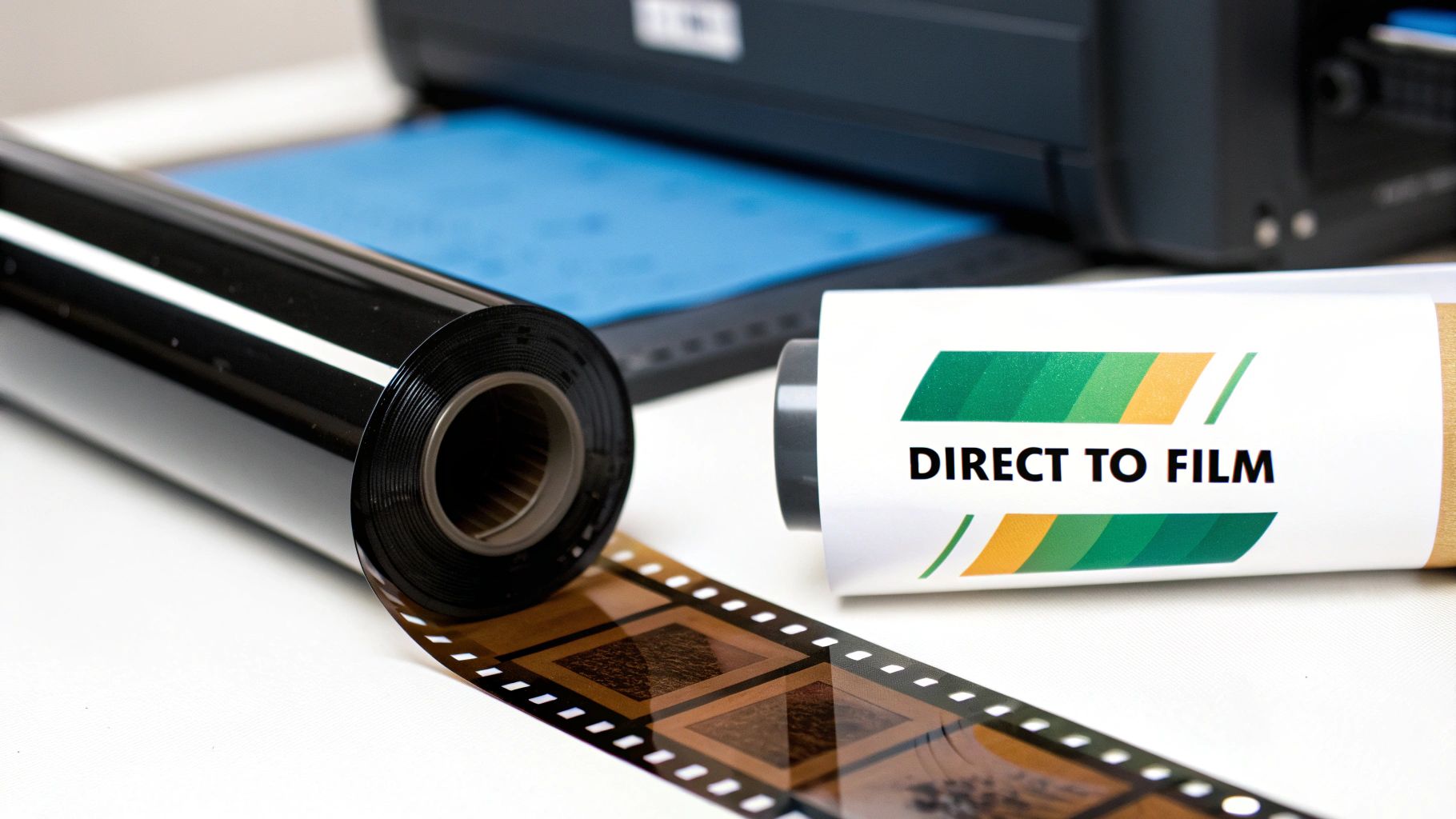
So, what is this Print DTF we keep hearing about? Put simply, it’s a game-changing way to customise clothing and other fabrics. The name stands for Direct to Film, and it works by printing a design onto a special film first, then transferring it onto the material with heat.
Think of it as creating a super high-quality, vibrant, and incredibly durable digital sticker that can be applied to almost any textile you can imagine. This clever method has quickly become a favourite for creating detailed, full-colour graphics that feel soft and flexible on the finished product.
What Exactly Is Print DTF Technology?
Let’s say you have a complex, multi-coloured photo you want to put on a dark polyester jacket. In the past, this would have been a real headache. Older printing methods often struggle with synthetic fabrics or lose their punch on dark colours. This is exactly where print dtf shines, smashing through the barriers that used to hold back custom apparel.
The magic of DTF is that it doesn’t print directly onto the garment. That’s the key difference. Instead, your design is printed onto a sheet of special transparent material called PET (polyethylene terephthalate) film. This film acts as a carrier, holding the design perfectly until you’re ready to press it.
The Key Components At Play
To get that professional, long-lasting finish, a few key elements need to work together perfectly. DTF isn't just about squirting ink onto fabric; it’s a carefully choreographed process from start to finish.
Here are the essential bits of kit that make it all happen:
- Specialised DTF Inks: These aren't your average printer inks. They're water-based pigment inks made for textiles. The secret weapon is a brilliant white ink, which is laid down as a base layer. This is what allows bright colours to look so vivid, even on black t-shirts.
- Adhesive Powder: This fine, granular powder is the unsung hero of the whole operation. Once the design is printed, this powder is sprinkled over the wet ink. When heated, it melts and transforms into a powerful adhesive layer that bonds the design to the fabric fibres.
- PET Transfer Film: This isn't just any old plastic sheet. It’s specially coated to hold onto the DTF inks perfectly during printing, then release them cleanly when you apply heat and pressure. It’s crucial for a sharp, flawless transfer every time.
A great way to think about it is like making a high-tech, permanent sticker. The printer creates the image on the film, the powder adds the "stickiness," and the heat press fuses it into the fabric of your t-shirt for good. If you want to get into the nitty-gritty of the terminology, check out our guide on what DTF stands for.
A Comparison with Traditional Methods
To really appreciate what makes DTF special, it helps to see how it stacks up against the old guard of garment printing. Methods like screen printing and DTG (Direct-to-Garment) each have their place, but DTF brings a unique blend of versatility and quality to the table.
Here's a quick look at how they compare:
Print DTF vs Traditional Printing Methods
| Feature | DTF Printing | Screen Printing | DTG Printing |
|---|---|---|---|
| Fabric Versatility | Excellent (cotton, polyester, blends, leather) | Good (best on cotton) | Limited (best on cotton) |
| Colour Vibrancy | Excellent, especially on darks | Very Good, but complex setup | Good, but can fade on darks |
| Detail & Complexity | Excellent (photographs, fine lines) | Limited (simple graphics best) | Excellent (photographs) |
| Setup Cost | Moderate (per job) | High (screens for each colour) | Low (per job) |
| Best For | Small-to-medium batches, varied fabrics | Large batches of the same design | One-offs, cotton garments |
| Feel on Fabric | Soft and flexible | Can feel thick or "heavy" | Very soft, ink soaks in |
As you can see, DTF fills a crucial gap, offering the colour and detail of DTG but with the fabric versatility that was previously the domain of more traditional transfer methods. It’s the best of both worlds for many modern printing needs.
A Growing Force In The UK Market
This technology isn't just a fleeting trend—it’s a major shift in how we decorate textiles. Its incredible versatility and high-quality results have fuelled its rapid adoption across the board, from small UK print shops to massive apparel brands.
The numbers back this up. The global DTF printing market was valued at $2.72 billion in 2024 and is expected to soar to $3.92 billion by 2030. With Europe holding the largest market share at 36%, the UK’s strong textile industry is right at the heart of this growth. For a deeper dive into the data, you can explore insights on the growth of the DTF printing market from Grand View Research. This proves that DTF is no longer just an alternative; it's becoming a leading choice for modern fabric customisation.
The DTF Journey: From Digital File to Finished Fabric
Turning a digital idea into a piece of art you can actually wear is what the DTF print process is all about. It’s not as simple as hitting 'print' on a desktop printer; it's a multi-stage journey where every single step is vital for getting that vibrant, tough finish everyone’s after. Think of it as a well-rehearsed performance that starts on a computer and ends with a professional-quality garment ready to show off.
Let's walk through exactly how it all happens. We'll break down the entire workflow, from a simple design file to a permanent fixture on fabric, step by step.
Step 1: Prepping the Artwork
Long before any ink touches the film, the journey kicks off with your digital design file. Getting this first bit right is non-negotiable. Why? Because the quality of your final print is a direct reflection of your source file. A blurry or badly prepared design will only ever lead to a disappointing transfer.
For the best possible results, your artwork needs a few things:
- High Resolution: The gold standard is 300 DPI (dots per inch). This is what ensures your design looks crisp and sharp, with no pixelation or fuzziness, even if you’re printing it big.
- Transparent Background: This is a big one. Your design must be saved with a transparent background. This tells the printer to only lay down ink where your actual design is, which means you won't get an ugly white box printed around your graphic.
- The Right File Format: Stick to formats like PNG, PSD, and AI. They're perfect because they handle high resolution and transparent backgrounds beautifully. Steer clear of low-quality JPEGs, which often come with compression fuzz and solid backgrounds.
Step 2: Printing on the PET Film
Once your design file is looking sharp, it’s sent over to a specialised DTF printer. This is where the physical magic begins. Instead of paper, this printer is loaded up with rolls of PET (polyethylene terephthalate) film, which is the special carrier sheet for your design.
The printing itself is pretty clever. First, the printer lays down a full-colour layer of your design using CMYK (Cyan, Magenta, Yellow, and Black) textile inks. Then, in a second pass, it prints a perfectly aligned layer of brilliant white ink right on top of the colours. This white underbase is the secret sauce that makes your design pop on any colour fabric, especially the dark ones.
Step 3: Applying the Magic Powder
With the design freshly printed and the ink still wet, the film moves on to the next critical stage. The whole thing gets coated in a fine, sugar-like substance known as thermoplastic polyurethane (TPU) adhesive powder.
This powder is designed to stick only to the wet ink, creating an even, slightly textured layer over your design. A good way to picture it is like sprinkling glitter on wet glue—it only attaches where you want it. Any extra powder is then shaken off, leaving a perfectly clean transfer. This powder is the powerful bonding agent that will eventually weld your design to the fabric.
This adhesive layer is what gives DTF its incredible versatility. Because the "glue" is part of the transfer itself, it can bond to a massive range of materials—from 100% cotton to tricky polyesters and blends that other methods struggle with.
Step 4: Curing the Transfer
The powdered transfer isn't quite ready for its new home on a t-shirt yet. First, it needs to be cured. The film is passed through a special curing oven or placed under a heat press that hovers just above the surface, usually heated to around 120-150°C.
This blast of heat does two things at once. It melts the adhesive powder, transforming it from a grainy texture into a smooth, even sheet of glue. At the same time, it 'gels' the DTF inks, making them stable and ready for the final press. What comes out the other side is a professional, ready-to-use transfer that’s stable enough to be stored or shipped. This is why so many businesses choose to order pre-made transfers. To get a better idea of the options out there, check out our guide on DTF transfer sheets.
Step 5: The Final Heat Press
This is the grand finale, the most satisfying step in the whole DTF journey. The cured transfer is placed exactly where you want it on the garment. Then, a heat press comes down, applying both intense heat and firm, even pressure.
The heat reactivates that adhesive layer, causing it to melt and sink right into the fibres of the fabric. The pressure ensures an incredibly strong, permanent bond is formed. After a few seconds, the press is opened, the PET film is peeled away (this can be done hot or cold, depending on the film), and your vibrant, detailed design is left perfectly fused to the garment. Job done.
Why Businesses Are Choosing DTF Printing
The buzz around print DTF technology isn't just hype; it's a direct answer to what modern businesses actually need: flexibility, top-tier quality, and costs that make sense. From one-person startups to established brands, companies are quickly realising that DTF printing offers a unique mix of benefits that older methods just can’t compete with. It neatly bridges the gap between different printing worlds, delivering a solution that’s as versatile as it is effective.
One of its biggest draws is the sheer freedom of materials it works with. Unlike Direct-to-Garment (DTG), which is really at its best on 100% cotton, DTF is a true all-rounder. It works brilliantly on cotton, polyester, nylon, leather, and tricky poly-blends, throwing the doors wide open for product customisation.
This flexibility means businesses can expand their product lines without investing in a whole new printing setup for each fabric. Whether you’re creating durable polyester workwear, promotional tote bags, or trendy cotton t-shirts, DTF handles them all with the same reliable, high-quality process.
This simple workflow is the secret to its adaptability.
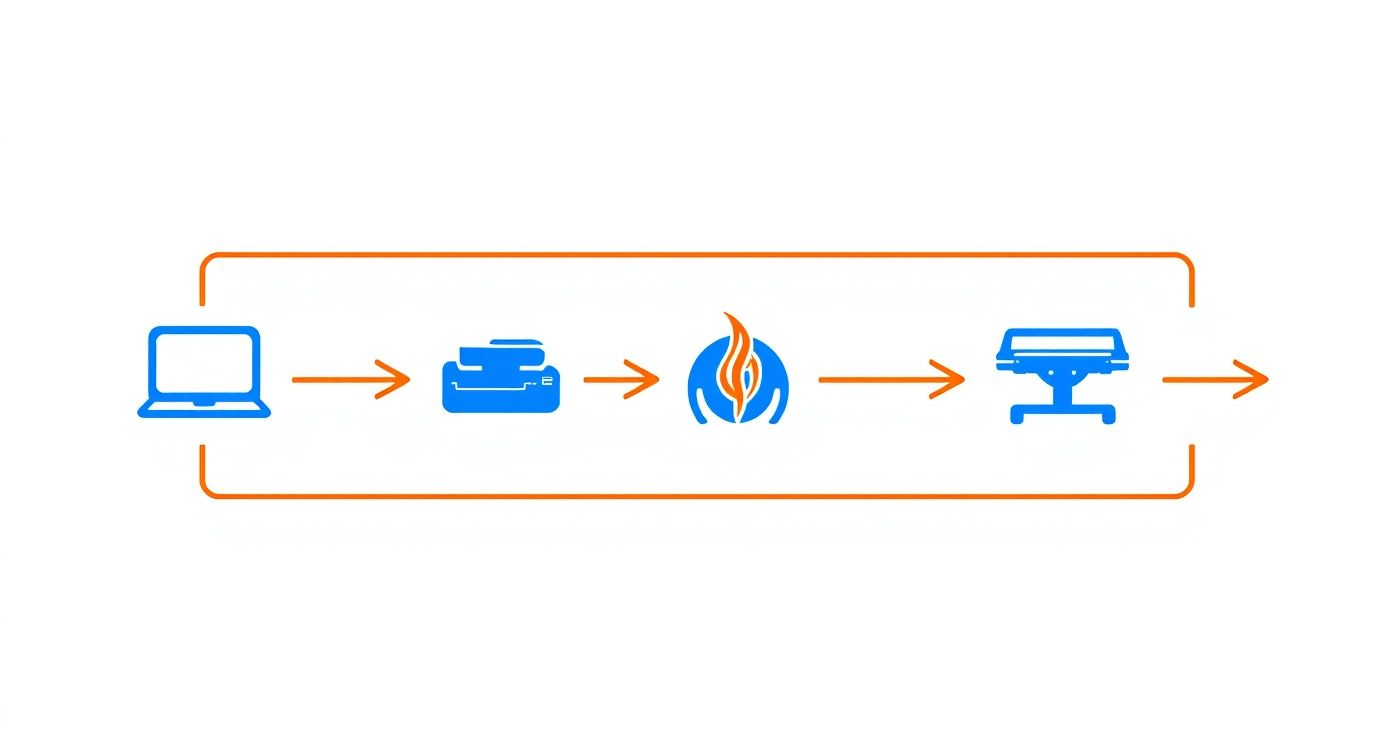
Because the design and adhesive are prepared separately on the film, the final step of heat-pressing it onto almost any fabric is quick, consistent, and incredibly straightforward.
Superior Print Quality and Feel
Let’s be honest, the results from DTF printing are simply stunning. Colours come out incredibly vibrant and sharp, all thanks to a white ink underbase that makes every hue pop, even on the darkest fabrics. This technique can reproduce everything from complex, photorealistic images to fine, intricate details with amazing clarity.
But it’s not just about how it looks. The feel of a DTF print is a huge selling point. The finished design is thin, flexible, and has a soft-hand feel that stretches and moves with the fabric. You don’t get that thick, plasticky sensation that sometimes comes with older transfer methods, meaning the final garment is genuinely comfortable to wear.
A DTF print isn't just sitting on the fabric; it's bonded with the fibres. This integration creates a finish that’s not only visually impressive but also incredibly durable, ready to handle daily wear and countless washes without cracking or fading.
For artists and designers, DTF printing provides a direct and reliable way to monetize digital art by turning pixels into premium physical products. It’s a fantastic method for bringing digital creations to life on real-world merchandise.
Durability That Lasts
Impressive durability is another cornerstone of DTF’s appeal. The combination of specialised textile inks and a powerful adhesive powder creates a bond that is built to last. A properly applied DTF transfer can easily withstand dozens of wash cycles, often outliving the garment itself.
This incredible resilience makes it the perfect choice for a whole range of demanding applications:
- Workwear: For uniforms and trade gear that need to withstand tough conditions.
- Sportswear: Ideal for stretchy, synthetic fabrics that see a lot of action.
- Fashion Brands: Ensures premium products maintain their look and feel over time.
- Promotional Goods: Creates merchandise that serves as a lasting advertisement.
Economic and Scalable Production
Finally, DTF printing just makes good financial sense, especially for small to medium-sized runs. Unlike screen printing, there are no expensive screen setup fees, which makes it perfect for producing orders with complex, multi-coloured designs without a massive upfront investment.
The model is also wonderfully scalable. You can print a single custom piece just as easily as you can print hundreds, all with the same consistent quality. For businesses wanting to maximise every inch of film and minimise waste, grouping multiple designs together is a game-changer. You can learn more about how to do this in our guide to DTF gang sheets.
It’s interesting to note that while the wider UK printing industry revenue is projected to settle around £9.2 billion by 2025, textile-focused sectors like DTF are bucking the trend and showing strong growth. This signals a clear shift towards more modern, adaptable technologies, positioning print DTF as a key player for the future.
Your Essential DTF Printing Toolkit
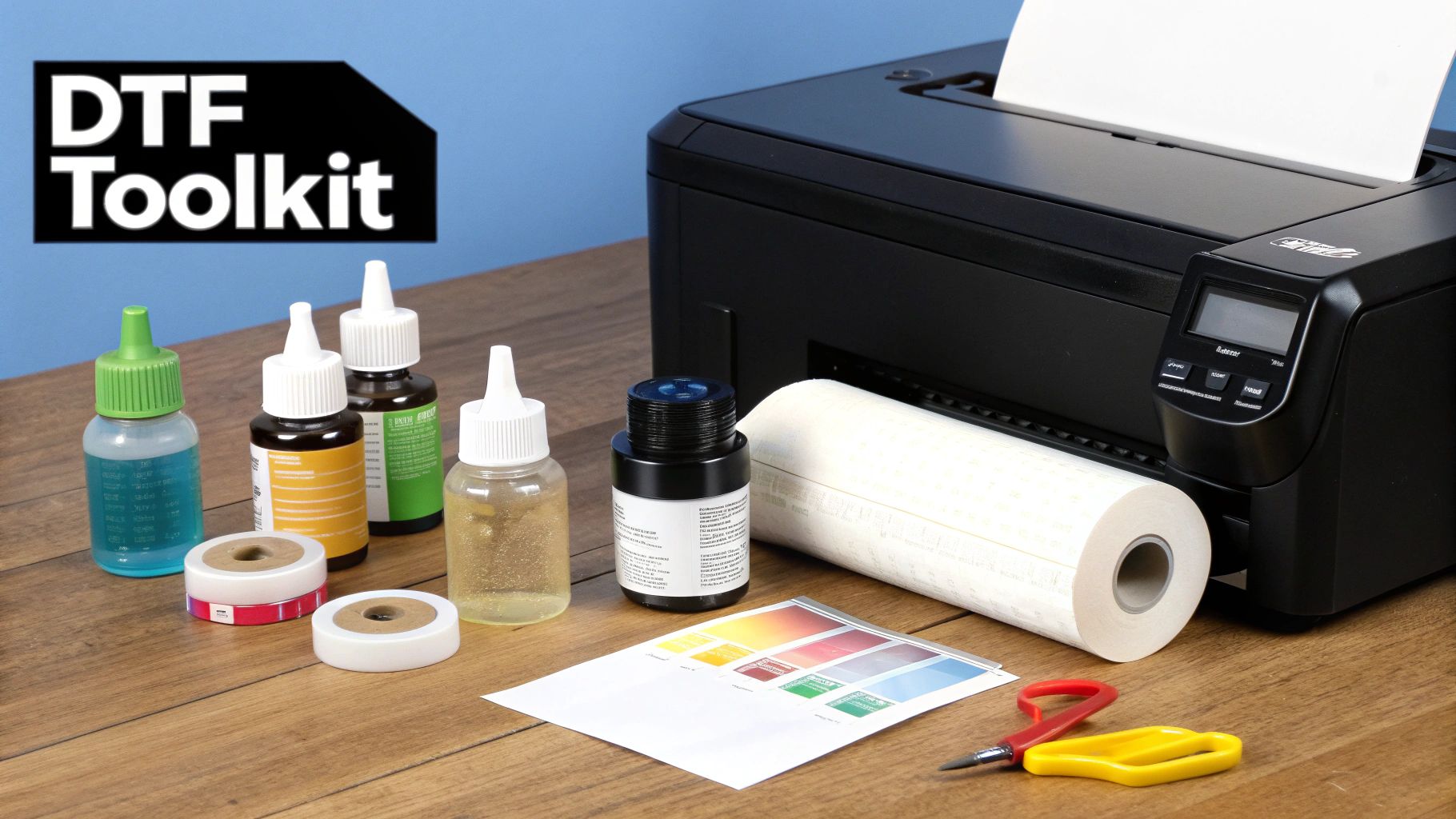
To really get why a professional print dtf transfer feels so good and lasts so long, it helps to peek behind the curtain at the tools of the trade. This isn't your average desktop printer setup; a pro DTF workflow is a carefully orchestrated dance between specialised machines and materials.
Every single piece of this puzzle has a vital job, all working together to turn a digital file into a vibrant, tough, and stretchy transfer that’s ready for anything.
The Specialised DTF Printer
The heart and soul of the whole operation is the DTF printer. Think of it less like an office printer and more like a purpose-built engine designed for one thing: printing brilliant designs onto a special transparent film.
These printers are packed with multiple ink channels—often six or more—to handle the standard CMYK colours plus the absolute game-changer: white ink. The ability to lay down a thick, solid layer of white is what lets your designs pop on dark or coloured fabrics. Without it, colours would look dull and washed out. For a deeper dive into the tech, our guide on the modern DTF printing machine has you covered.
The Consumables: Ink, Film, and Powder
Aside from the printer, there are three essential sidekicks that make the magic happen. Each plays a distinct but crucial role.
- DTF Inks: These aren't just any old inks. They're special water-based pigments made to be flexible. This elasticity is key, as it stops the final print from cracking when the T-shirt or hoodie gets stretched.
- PET Transfer Film: This is the temporary home for your design. It's a clear sheet with a special coating that grabs onto the ink perfectly during printing but lets go completely when it's time to press it onto the fabric.
- Adhesive Powder: This fine, white powder is the secret sauce. It’s a thermoplastic that sticks only to the wet ink. When heated, it melts and transforms into a powerful glue, bonding the design permanently to the garment’s fibres.
Think of it like a three-person team. The ink creates the art, the film holds it in place, and the powder provides the muscle to make it stick for good. Take one away, and the whole process falls apart.
The Non-Negotiable Heat Press
You might be surprised to hear it, but a top-notch heat press is just as vital as the printer itself. This machine is what delivers the perfect combination of high heat and even pressure needed to fuse the transfer onto the fabric for good.
Using a cheap, flimsy press is a recipe for disaster. It can create cold spots, leading to parts of your design peeling off after the first wash. A professional press guarantees that every square inch of the design gets the exact same treatment, activating the adhesive properly and creating a bond that lasts. This is why a household iron just can't compete.
Your Essential DTF Printing Checklist
To bring it all together, here’s a quick rundown of the gear needed to get a professional DTF operation off the ground.
| Component | Primary Function | Key Consideration |
|---|---|---|
| DTF Printer | Prints the design onto the PET film with CMYK and white inks. | Must have dedicated channels for white ink and handle textile pigments. |
| DTF Inks | Water-based pigments that create the vibrant, flexible image. | Elasticity is crucial to prevent cracking on stretched fabrics. |
| PET Transfer Film | Acts as the carrier sheet for the ink and adhesive powder. | The coating quality determines how cleanly the transfer releases. |
| Adhesive Powder | A thermoplastic powder that melts to bond the print to fabric. | The particle size (micron) affects the final feel and durability. |
| Heat Press | Applies precise heat and even pressure to cure the transfer. | Consistent temperature and pressure are vital for a lasting bond. |
| RIP Software | Manages ink layers, colour profiles, and print instructions. | Essential for controlling the white underbase and achieving accuracy. |
This setup ensures every transfer, from the first to the thousandth, meets the highest standards of quality and durability.
RIP Software: The Brains of the Operation
Last but not least is the unsung hero of the toolkit: the Raster Image Processor (RIP) software. This clever bit of software is the translator between your design file and the printer. It’s what gives the operator pinpoint control over everything.
The RIP software dictates ink droplet size, manages colour accuracy, and, most importantly, orchestrates the white and colour ink layers. It ensures the white underbase is laid down perfectly beneath the colours, giving you those sharp edges and brilliant hues that define a quality DTF print. Without it, getting professional results would be a shot in the dark.
Real-World Examples of DTF Printing in Action
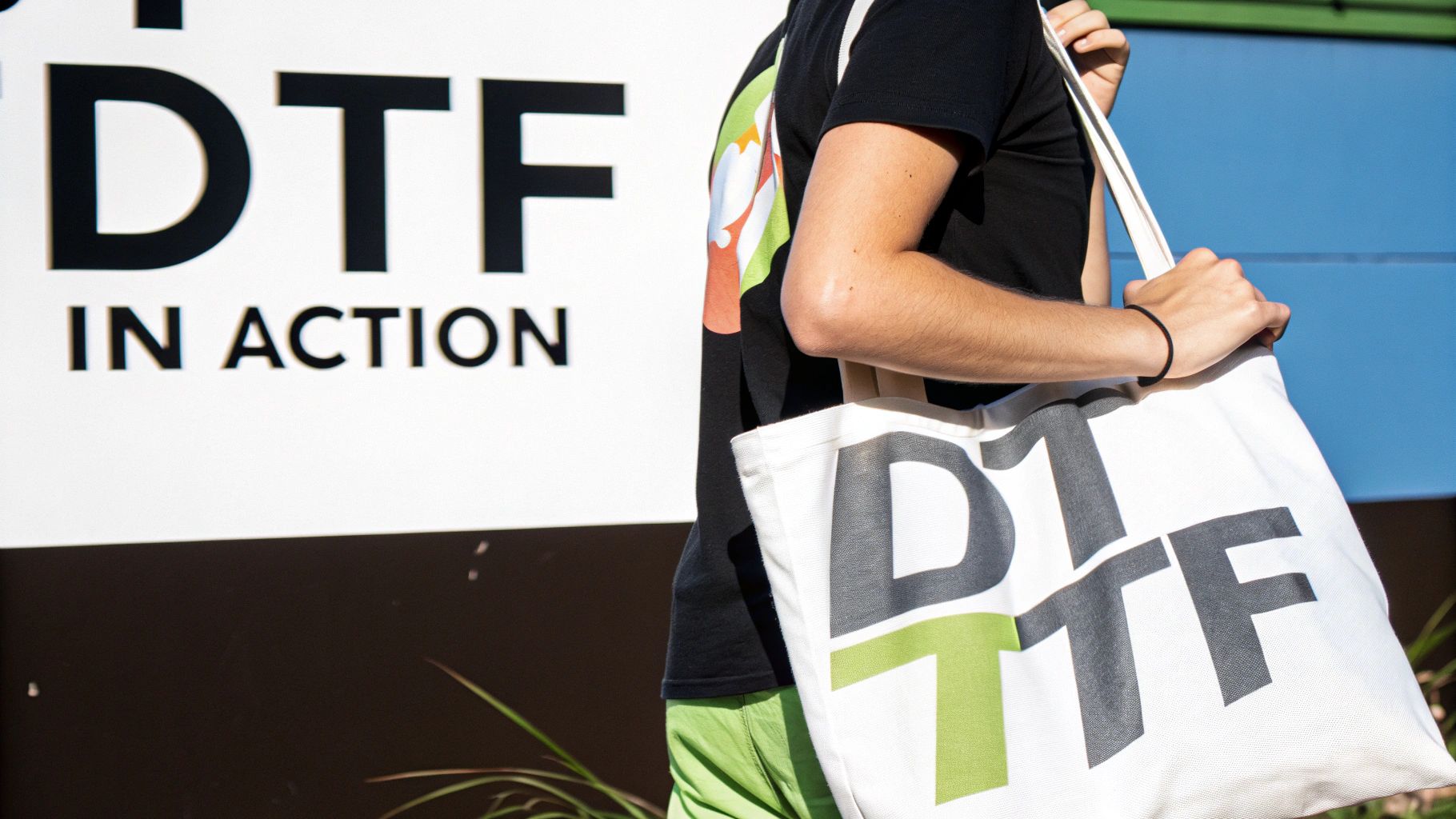
The technical stuff behind print dtf is impressive, sure, but the real magic happens when you see it out in the wild. This isn't just theory; it's the engine driving countless creative projects and commercial wins, bringing bold designs to life on everything from high-street fashion to hardworking uniforms.
So, let's step away from the specs and look at how actual businesses and creators are using DTF printing to make a real impact. These examples show just how versatile this technology truly is.
Independent Fashion and Streetwear Brands
For small fashion labels and streetwear startups, DTF printing is a total game-changer. It gives them the freedom to produce small, highly detailed batches of clothing without the massive upfront investment that screen printing demands. This agility is absolutely crucial for testing out new designs and jumping on trends fast.
Picture this: a new streetwear brand wants to drop a limited run of hoodies with a complex, photorealistic graphic. DTF lets them print just 50 units with flawless colour accuracy and detail. This keeps their inventory lean and cuts down on waste, empowering them to go toe-to-toe with bigger players by offering unique, top-quality gear.
DTF’s ability to handle small, multi-colour orders cost-effectively is its superpower. It removes the financial barriers that once stood between a great idea and a finished product, letting creativity lead the way.
And it's not just a niche method. The Direct to Film printing market in the UK was valued at around USD 192.2 million in 2025 and is forecast to hit USD 249.0 million by 2030. This boom shows just how many businesses are turning to DTF for reliable, high-quality customisation. You can dig deeper into the UK DTF market outlook from Grand View Research.
Durable Branded Workwear
Beyond the fashion scene, DTF printing is a true workhorse in the corporate world. Companies need uniforms that not only look professional but can also take a beating day in and day out. Because DTF transfers are incredibly durable, they're perfect for these demanding environments.
Think about a construction company getting its team kitted out. Their logos have to go on thick jackets, hi-vis vests, and tough polo shirts. DTF prints stretch right along with the fabric and stand up to endless washing and abrasion, making sure the company's branding stays sharp for the long haul.
Eye-Catching Promotional Merchandise
When you’re at an event or running a marketing campaign, making a memorable impression is everything. DTF is the ideal tool for creating vibrant, desirable promotional merchandise that people will actually want to keep and use.
Here are just a few common applications:
- Tote Bags for Events: Printing full-colour sponsor logos on canvas tote bags for trade shows.
- Custom Hats and Caps: Applying intricate brand logos to the tricky, curved surfaces of headwear.
- Team Sportswear: Creating custom kits for local sports clubs, complete with individual names and numbers.
Since a print dtf transfer can stick to pretty much any fabric, the possibilities for promotional gear are almost endless. This flexibility lets businesses create a cohesive and high-quality range of merchandise that gets their brand noticed.
Getting Your Custom Print DTF Order Right
So, you're ready to turn your digital creations into real-world, ready-to-press transfers? Fantastic. Ordering custom DTF prints is pretty simple, but paying attention to a few key details at the very beginning will make all the difference between a good result and a perfect one.
It all starts with your file. Think of it like cooking: if you start with subpar ingredients, you can't expect a Michelin-star meal. The same goes for printing. A blurry, low-resolution file will only ever give you a blurry, low-resolution transfer.
Prepping Your Artwork for Printing
Before you even think about hitting that upload button, give your design file a quick health check. This isn't rocket science, but it’s easily the most crucial step in the whole process. Getting this right guarantees your design looks as sharp on a t-shirt as it does on your screen.
Here are the absolute must-haves for any print-ready file:
- Resolution is Everything: Your artwork needs to be at 300 DPI (dots per inch). This is the gold standard for high-quality printing, ensuring every line is crisp and every detail is crystal clear.
- Get the Format Right: Always save and upload your design as a PNG with a transparent background. Other vector formats like AI or PSD are also great. Just steer clear of JPEGs, as they usually have a solid background that will get printed as an unwanted box around your design.
- Transparency is Non-Negotiable: A transparent background tells our printers to only print the design itself, not the empty space surrounding it. Without it, you'll end up with a solid block of colour right behind your graphic.
Taking a moment to submit a high-quality file is the single best thing you can do to ensure a professional outcome. It removes any guesswork for our team and ensures the transfer you get back is a perfect match for your vision.
Navigating the Ordering Process
Once your file is prepped and looking sharp, the rest of the journey is easy. It’s really just about telling us exactly what you need so we can print your transfers flawlessly. From picking the right size to making the most of your print area, a few smart choices can go a long way.
For a complete walkthrough, check out our guide on how to order DTF prints. We’ve put everything in there to help you place your order with total confidence, so you get exactly what you need without any fuss.
Maximise Your Value with Gang Sheets
Want to get more bang for your buck? Look no further than gang sheets. This is just a clever way of arranging multiple designs—or different sizes of the same design—onto a single large sheet of transfer film. Instead of ordering lots of individual prints, you can fit logos, sleeve graphics, and big back designs all onto one sheet.
This approach is incredibly cost-effective. It slashes waste and brings your cost-per-print way down, making it a perfect strategy for small businesses, clothing brands, or anyone wanting to produce a variety of designs without breaking the bank. Just arrange your artwork on a canvas matching the sheet size you plan to order, and you're good to go.
Common Questions About DTF Printing
As you dive into the world of custom apparel, it’s only natural for questions to pop up. DTF printing is a seriously powerful technique, but getting a handle on the practical details—like how long the prints last and what you need to apply them—is what separates an amateur job from a professional one. Let's clear up some of the most common queries we hear.
One of the first things people ask is about longevity. How tough are these prints, really? The answer: incredibly tough. When they’re applied correctly, DTF transfers can easily withstand 40-50 wash cycles without cracking, peeling, or fading. That’s because the specialised inks and adhesive powder don't just sit on the surface; they fuse right into the fabric, creating a strong yet flexible bond that moves with the material.
How DTF Stacks Up Against DTG Printing
Another hot topic is how DTF compares to its cousin, Direct-to-Garment (DTG) printing. While both methods deliver absolutely stunning, full-colour graphics, they have different strengths. Knowing when to use which will make all the difference for your project.
Here’s a simple breakdown of where they differ:
- Fabric Compatibility: This is the big one. DTG is at its best on 100% cotton or blends with a high cotton content. DTF, on the other hand, is the ultimate all-rounder. It works beautifully on cotton, polyester, nylon, leather, and just about any blend you can throw at it.
- The Final Feel: DTG ink soaks directly into the fabric’s fibres, which gives it a super-soft, breathable finish with almost no texture. A DTF print sits slightly on top of the garment, resulting in a smooth and flexible feel that’s a lot like a high-end screen print.
- Colour Vibrancy on Darks: Both techniques use a white underbase to make colours pop on dark fabrics. However, DTF often pulls ahead with slightly more vibrant and opaque colours, since the entire design is printed on the film before it ever touches the garment.
A good way to think about it is this: DTG is like tattooing the fabric—the ink becomes a part of the fibres. DTF is more like applying a high-tech, permanent decal that bonds seamlessly to the surface. Both look fantastic, but they get there in different ways.
Why a Heat Press Is Absolutely Essential
Finally, we get this question all the time: "Can I just use my home iron?" The short answer is a hard no, and for very good reason. A professional heat press is a non-negotiable part of the process because it provides two critical things an iron simply can't: consistent, even heat and uniform, heavy pressure.
An iron has hot spots and can’t deliver the firm, even pressure needed to properly melt the adhesive and bond it deep into the fabric's weave. If you try it, you’ll almost certainly end up with a print that peels off after the first wash. A quality heat press guarantees that every single inch of your design gets the exact temperature and pressure it needs for a permanent, durable finish that will look great for years.
Ready to create apparel with stunning quality and durability? At Psyque, we make it easy to bring your vision to life with professional-grade DTF transfers. Order today and see the difference for yourself. https://psyque.co.uk